Your Guide to Argan Oil for Hair Growth and Thickness
When you hear people talk about argan oil for hair growth, it’s easy to imagine it as some kind of magic potion. The truth is a little more practical, but just as impressive. Argan oil doesn't just magically make your hair grow faster; instead, it creates the absolute perfect environment for your hair to grow healthier, which is the real secret to achieving more length.
It's all about building a strong foundation. The oil nourishes your scalp, strengthens the hair you already have to stop it from snapping off, and shields it from daily damage. Think of it as the ultimate support system for helping your hair reach its full, beautiful potential.
Why Argan Oil Is a Game Changer for Hair Growth
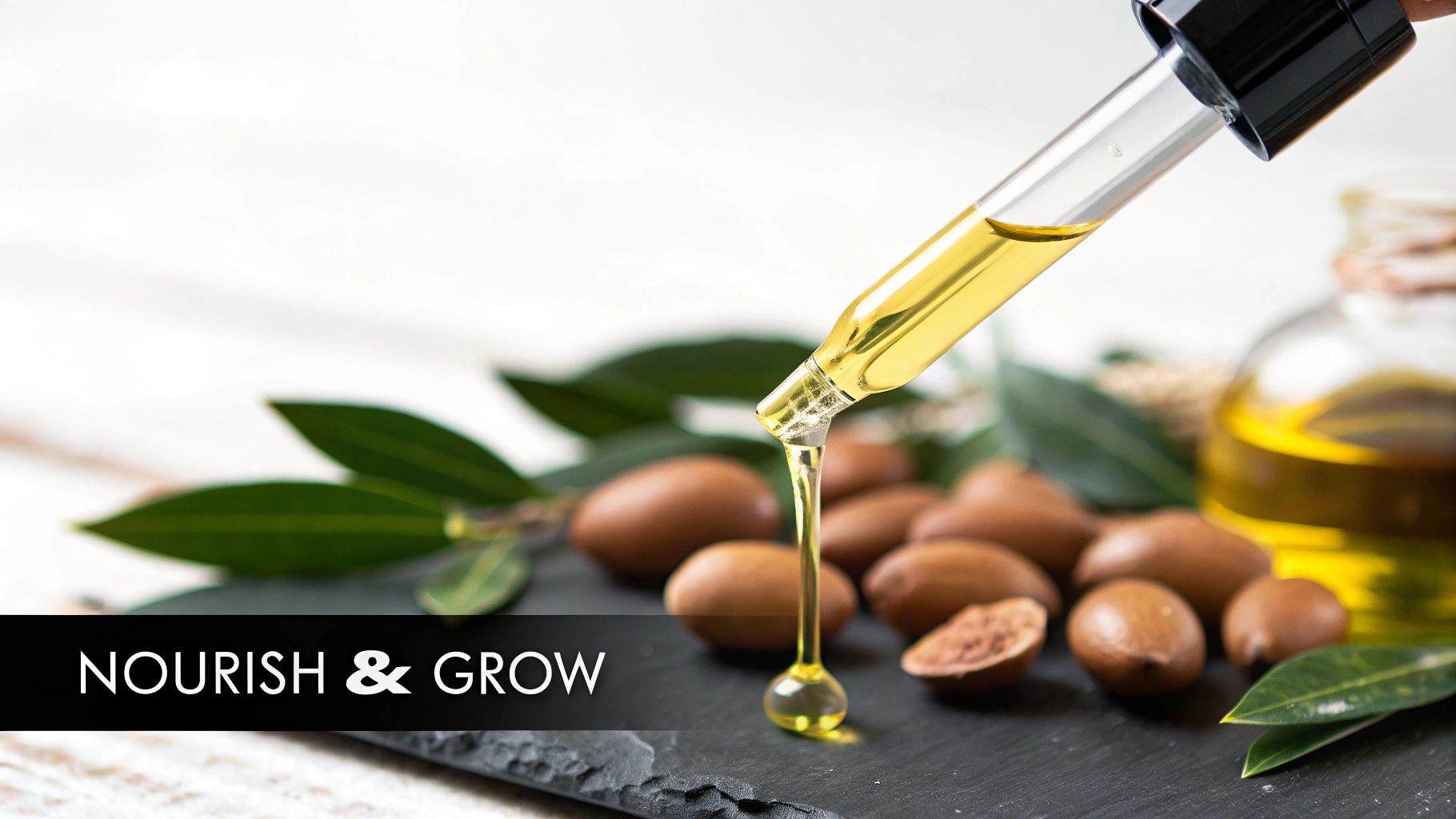
To really get why argan oil is so good for your hair, we need to peek under the hood. This "liquid gold" from Morocco is brimming with a unique mix of compounds that work on both your scalp and the hair shaft. It’s a two-pronged approach that fosters strong, resilient growth from the very start.
The Science Behind the Shine
The real magic of argan oil is in its chemistry. It’s perfectly formulated by nature to tackle the very things that get in the way of hair growth—like a dry, flaky scalp, inflammation, and weak, brittle strands that break before they get a chance to grow.
-
Essential Fatty Acids: Argan oil is full of oleic and linoleic acids. These are the good fats that act like a super-moisturizer for your hair, lubricating each strand to make it more flexible and less prone to snapping. This is key for preventing split ends and breakage.
-
Vitamin E Power: This is where scalp health really comes into play. Argan oil is rich in Vitamin E (tocopherol), a powerful antioxidant. It acts like a bodyguard for your hair follicles, neutralizing damage from things like UV rays and pollution that can slow down growth.
-
Soothing Phenols: The natural phenols found in the oil have incredible antioxidant and anti-inflammatory benefits. A calm, happy scalp is the only kind of scalp that can grow strong hair, and these compounds help keep irritation at bay.
The goal is to fortify the hair you already have, minimizing the breakage that makes it feel like your hair isn't growing at all. By creating stronger, more flexible strands, argan oil helps you retain length over time.
Evidence of Its Impact
While people in Morocco have sworn by argan oil for centuries, modern science is finally catching on. A recent 2023 study put it to the test and found that a formula containing just a 3% concentration of argan oil led to a visible increase in hair length in only 21 days—even outperforming the control group.
Researchers pointed directly to the oil's potent mix of tocopherol and fatty acids as the reason for its success in strengthening follicles and protecting hair. It’s solid proof of what so many of us have seen for ourselves. If you're curious, you can learn more about the study's hair growth findings and its detailed methodology.
Ultimately, adding argan oil to your routine is a proactive move. It’s about creating a healthy scalp, protecting your strands from damage, and giving your hair the deep nourishment it needs to thrive.
Prepping Your Hair and Scalp for an Argan Oil Treatment
To get the absolute best results from your argan oil, you have to do a little prep work. It’s the difference between oil that just sits on the surface and oil that actually gets down to your roots to do its job. Think of it like priming a canvas before you paint—a little effort beforehand makes all the difference.
The whole point is to create the perfect environment for the oil to be absorbed. That means getting rid of anything that might stand in its way, like dirt, product buildup, or excess scalp oil.
Start with a Clean Slate
You wouldn’t put a fancy face serum on over a full face of makeup, right? The same idea applies to your scalp. Slathering argan oil over a dirty scalp is a waste of good oil because all that gunk will block it from reaching the hair follicles where all the magic happens.
Before you start your argan oil routine, a good clarifying wash can work wonders to get rid of any stubborn residue. Just be sure to use a gentle formula. The goal is a clarified, not stripped, scalp. Harsh shampoos can backfire, causing your scalp to produce even more oil to compensate.
A Quick Tip from Experience: If you have sensitive skin, always do a patch test first. Just dab a tiny drop of argan oil on a discreet spot, like behind your ear or on your inner arm. Wait a full 24 hours to make sure you don't have any reaction before going all in.
Why Damp Hair Works Best
This is a key step that many people miss. While applying oil directly to a dry scalp is great for targeted treatments, when you’re applying it to the lengths of your hair, you want your strands to be slightly damp.
Here’s why: a little bit of water helps to gently lift the hair's outer layer, the cuticle. This creates tiny openings for the argan oil to seep into the hair shaft instead of just coating it.
After you wash your hair, gently squeeze out the excess water. I highly recommend using a microfiber towel or even an old t-shirt to blot your hair dry. They’re much kinder than standard terrycloth towels and help prevent frizz and breakage. You're aiming for hair that feels damp, not sopping wet. This allows the argan oil to lock that moisture in, leaving your hair feeling incredibly soft.
- Cleanse Gently: Start by washing away any buildup without stripping your hair’s natural moisture.
- Towel-Dry Smart: Use a soft, microfiber towel to pat your hair until it's about 70% dry.
- Detangle with Care: Grab a wide-tooth comb and gently work through any knots, starting from the ends and moving up toward your roots to minimize breakage. And if you're curious about incorporating other powerful botanicals, our guide on the benefits of rosemary oil is a great next read.
Taking a few minutes for these prep steps ensures that every drop of argan oil you use can work as effectively as possible.
Ready to put that liquid gold to work? Once your hair and scalp are prepped, it's time for the fun part. The great thing about argan oil is its versatility—there’s no single “right” way to use it for hair growth. You can switch up your method based on your hair type, how much time you have, or simply what your hair is craving that day.
I'll break down four of my favorite, most effective methods. Think of them as different tools in your hair care kit, each one designed for a specific job, from stimulating the scalp to deep conditioning and repairing damage. The goal is to find what feels right for you and fits easily into your life.
This little decision tree can help you figure out the best approach based on how your hair is feeling right now.
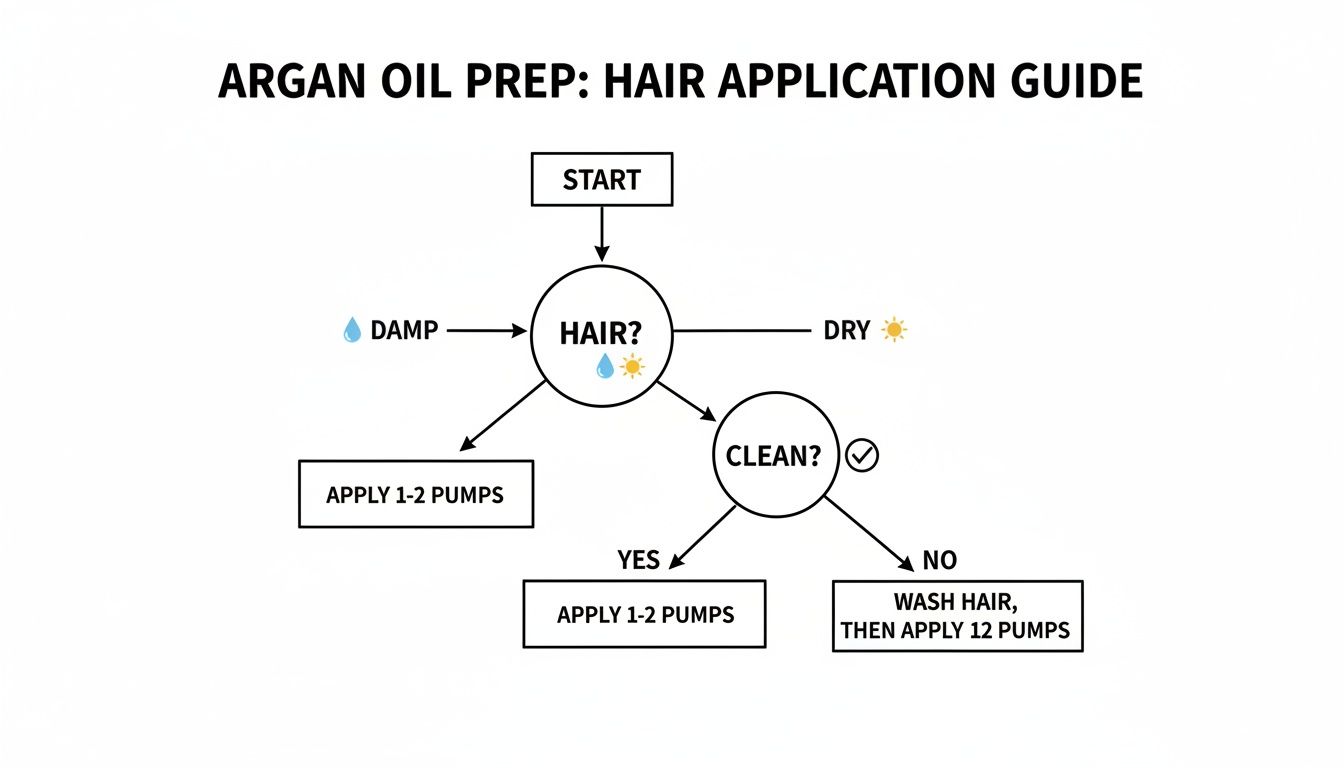
As you can see, the main takeaway is that a clean scalp is your best starting point, whether your hair is damp or dry.
The Stimulating Scalp Massage
Healthy hair growth always starts at the source: your scalp. A focused scalp massage is the most direct way to get argan oil’s nutrients right to the hair follicles. Plus, the massage itself is incredible for boosting circulation, which helps deliver all that good stuff to your roots.
For this, I find it's best to work with dry, unwashed hair. Just dispense 5-7 drops of argan oil onto your fingertips and rub your hands together to warm it up a bit.
Then, using the pads of your fingers (never your nails!), gently massage the oil into your scalp with small, circular motions. Take your time, working your way across your entire head for a good 5-10 minutes. It’s more than a hair treatment; it's a genuinely relaxing moment just for you.
The Deep-Nourishing Pre-Shampoo Treatment
If your hair is feeling brittle, parched, or just plain stressed out, a pre-shampoo treatment (often called a "pre-poo") can be a total game-changer. This technique involves applying the oil before you wash your hair. It creates a protective shield around the hair shaft, so your shampoo can't strip away too much of its natural moisture.
This is where you really see argan oil’s protective side shine. It's especially brilliant for guarding against the protein loss that comes from coloring or heat styling. In fact, one study showed that hair pre-treated with argan oil before a chemical process had dramatically less protein damage. If you're curious about the science, you can read the full research about hair protein preservation.
To try it, simply work a generous amount of oil through dry hair, from roots to ends. How much? A teaspoon is usually enough for fine hair, while thick or curly hair might need closer to a tablespoon. Let it soak in for at least 30 minutes before you shower, then shampoo and condition like you normally would.
The Frizz-Taming Leave-In Conditioner
For daily smoothness and a touch of moisture, argan oil is a fantastic leave-in conditioner. A truly high-quality oil is so lightweight that it won’t leave your hair greasy or weighed down—as long as you use it correctly. It's the perfect fix for taming flyaways and adding a healthy, natural-looking shine.
The secret to using argan oil as a leave-in is to start with a tiny amount. You can always add more, but you can't easily take it away!
Begin with just 2-3 drops. Rub it between your palms until you have a thin, even film. Gently skim your hands over the mid-lengths and ends of your towel-dried hair, concentrating on any areas that get extra frizzy or dry. You can even use a single drop on dry hair to calm flyaways during the day.
The Intensive Hot Oil Treatment
When you need a serious dose of deep conditioning, nothing beats a hot oil treatment. It feels like a spa day for your hair. Gently warming the oil helps it penetrate the hair shaft more effectively, delivering intense hydration and helping to repair damage from the inside out. I highly recommend this as a weekly or bi-weekly ritual for anyone with very dry, color-treated, or heat-damaged hair.
Here’s how to do it right:
- Warm the Oil: Place about a tablespoon of argan oil in a small, heat-safe bowl. Sit that bowl inside a larger one filled with hot water for a few minutes. You want it warm, not hot.
- Apply Thoroughly: Section your hair and work the warm oil in from scalp to ends, making sure every strand gets some love.
- Trap the Heat: Pop on a shower cap, then wrap a warm, damp towel over it. The gentle heat and steam open up the hair cuticle, helping the oil absorb even better.
- Wait and Wash: Let the treatment sit for at least 30-60 minutes. Afterward, shampoo and condition as usual. You might need to shampoo twice to get all the oil out.
To help you decide which approach to try first, here’s a quick comparison of the four methods.
Choosing Your Argan Oil Application Method
| Method | Primary Benefit | Best For Hair Type | Recommended Frequency |
|---|---|---|---|
| Scalp Massage | Stimulates follicles & circulation | All types, especially for hair growth focus | 2-3 times per week |
| Pre-Shampoo Treatment | Protects & prevents moisture loss | Dry, damaged, or color-treated hair | 1-2 times per week |
| Leave-In Conditioner | Tames frizz & adds shine | All types, especially frizzy or fine hair | Daily, as needed |
| Hot Oil Treatment | Deeply repairs & moisturizes | Very dry, brittle, or coarse hair | Once every 1-2 weeks |
Each of these techniques offers a unique way to harness the benefits of argan oil. Finding your favorite is all part of the journey to healthier hair.
Of course, the quality of your oil makes all the difference. To ensure you're getting the purest, most nutrient-rich version, starting with a high-quality, cold-pressed option like our Ella & Eden Organic Argan Oil is the best foundation you can build.
Building Your Personal Argan Oil Hair Routine
Knowing how to use argan oil is one thing, but seeing real results for hair growth comes down to one simple thing: consistency. A one-off treatment feels amazing, but a regular, dedicated routine is what truly builds stronger, healthier hair over time.
The goal is to create a simple habit that slots right into your life without feeling like another chore. It's all about personalizing your approach. Your perfect argan oil routine will look different from someone else’s, and that’s a good thing! It should be built around your hair’s unique needs, your schedule, and what you enjoy.
Crafting a Routine for Your Hair Type
Your hair's texture and how oily it naturally gets are the biggest factors in designing your ideal schedule. A heavy-handed approach can easily weigh down fine hair, while a sparse application might not be enough for thick, thirsty curls.
Let’s look at a couple of real-world examples to get you started.
For Fine or Oily-Prone Hair
The main concern here is pretty clear: avoiding greasy roots and limp, lifeless strands. Your focus should be on targeted, less frequent applications that deliver all the good stuff without the weight.
- Weekly Scalp Massage (1x per week): This is your best friend. On wash day, use just 3-4 drops of argan oil for a stimulating scalp massage before you even think about shampooing. This feeds the follicles directly and washes out completely, leaving zero residue behind.
- Lightweight Leave-In (As needed): Forget the roots. Just warm a single drop of oil between your palms and smooth it over damp ends after a shower. It’s perfect for sealing in a bit of moisture and taming flyaways.
For Dry, Thick, or Curly Hair
This hair type is constantly thirsty and can handle—and will love—more intensive treatments. Your routine should be all about deep hydration and protection to keep frizz at bay and prevent breakage.
- Pre-Shampoo Treatment (1-2x per week): Before you wash, coat your hair from the mid-lengths to the ends with a generous amount of argan oil. Let it soak in for 30-60 minutes. This little step protects your strands from the drying effects of some shampoos and locks in serious moisture.
- Leave-In Conditioner (On wash days): After washing, work 4-6 drops through your damp hair. It’s a game-changer for defining curls, smoothing frizz, and adding a healthy, natural shine.
Your hair will tell you what it needs. If it feels dry, maybe add an extra pre-shampoo treatment. If it starts to feel a little weighed down, scale back. Listening to your hair is the most important part of this whole process.
Supercharging Your Argan Oil Routine
Pure argan oil is a powerhouse on its own, but it also plays beautifully with other natural ingredients. This is where you can get creative and mix up customized blends to target your specific concerns.
For instance, if hair growth is your top priority, try adding 2-3 drops of rosemary essential oil to your argan oil during a scalp massage. Rosemary oil is well-known for its ability to stimulate circulation right at the follicle.
Another fantastic partner is castor oil. It’s much thicker and loaded with ricinoleic acid. You can read all about castor oil's benefits for hair in our guide. A simple blend of two parts argan oil to one part castor oil makes for an incredibly nourishing pre-shampoo treatment, especially for severely dry or damaged hair.
The key is to start with a high-quality, pure base like Ella & Eden's organic argan oil and build from there.
Common Mistakes to Avoid on Your Hair Growth Journey
Starting a new hair routine is exciting, but it's also easy to get frustrated when you don't see a dramatic change overnight. Let's talk about what you can realistically expect when using argan oil for hair growth. While your hair might feel noticeably softer and look shinier almost immediately, actual new growth is a long game.
Patience is everything here. You'll likely need to stick with it for 3 to 6 months before you can see a real difference in thickness or length. Think about it: your hair grows in cycles, so you're nourishing the follicles now for the hair that will appear weeks down the road.
Using Too Much Oil
This is, without a doubt, the most common pitfall. More isn't better when it comes to a concentrated oil like argan. Dousing your hair in it will only leave it looking greasy and weighed down, which is especially true for those with fine or thin hair. It's the quickest way to get discouraged and give up.
A little goes a very long way.
- For a scalp massage, 5-7 drops is the sweet spot.
- To seal your ends, you only need 1-2 drops.
My best advice? Always start with less than you think you'll need. You can always add another drop, but you can't take it away once it's on your hair.
Applying to a Dirty Scalp
Imagine your scalp is the soil for a garden. You wouldn't try to plant seeds in hard, compacted dirt, right? Applying your argan oil to a scalp covered in product buildup, sweat, and natural oils is the same thing. The oil just can't get through all that gunk to reach the follicles where it needs to work.
To get the most out of your treatment, make sure you're working with a clean canvas. Apply the oil to a clean, dry scalp, maybe the day before your next wash day. This gives it a clear path to do its job.
Don't sabotage your own efforts. A clean scalp is non-negotiable for an effective treatment. Even a simple clarifying wash once a week can make a huge difference, creating the perfect environment for your argan oil to work its magic.
Inconsistency and Giving Up Too Soon
I see this all the time. Someone gets really excited, uses argan oil every other day for two weeks, doesn't see a foot of new hair, and decides it's a bust. Hair growth is a slow, biological process that simply can't be rushed.
Commit to your routine for at least three months before you decide if it's working for you. A great way to stay motivated is to take pictures. Snap a photo in the same spot with the same lighting once a month. Seeing those small, incremental changes over time is often the best fuel to keep you going on your argan oil for hair growth journey.
Got Questions About Argan Oil? Let's Talk.
Even after laying out the steps, I know a few questions tend to come up again and again. Let's tackle some of the most common ones so you can feel completely confident about making argan oil a staple in your hair routine.
"Will Argan Oil Make My Hair Greasy or Cause Breakouts?"
This is probably the number one concern I hear, especially from people with fine or oily-prone hair. And it's a fair question! The good news is that pure argan oil is non-comedogenic, which is just a fancy way of saying it’s highly unlikely to clog your pores.
The secret to avoiding that greasy feeling is all about the amount you use. For a scalp treatment, you really only need 3-5 drops. If you're still hesitant, a great trick is to apply it just to the mid-lengths and ends, or simply use it as a pre-shampoo treatment so you know it will be thoroughly washed out.
"How Is Argan Oil Different from Castor or Rosemary Oil?"
It helps to think of them as different players on the same team, each with a special skill.
Argan oil is the ultimate all-rounder—a fantastic moisturizer and protector. Its high concentration of Vitamin E and essential fatty acids makes it perfect for nourishing and shielding the hair shaft from damage.
Castor oil is much heavier and is famous for its ricinoleic acid content, which many believe helps improve circulation right at the scalp. Rosemary oil is the one that's been studied for its potential to inhibit DHT, a hormone often connected to certain types of hair loss.
They actually work beautifully together. For a really powerful scalp massage, try adding a few drops of rosemary oil to your argan oil.
"Should I Put Argan Oil on Wet or Dry Hair?"
This is a great question, and the answer completely depends on what you're trying to achieve.
- On damp hair: Using a little bit after you wash is a game-changer. It helps lock in all that moisture, acting as a brilliant detangler and leave-in conditioner.
- On dry hair: A single drop can instantly tame frizz, smooth down flyaways, and give your hair a beautiful, healthy-looking shine.
- For scalp treatments: I always recommend applying it to a dry scalp before you shower. This allows the oil to penetrate directly without being diluted by water, giving you the maximum benefit.
There's no single "right" way. The best approach is to experiment and see what your hair loves most. This versatility is exactly why argan oil is such an incredible tool for supporting healthy hair growth.
"Does 'Cold-Pressed' and 'Organic' Really Matter?"
Yes, it makes a huge difference. It all comes down to preserving the good stuff.
The cold-pressing method extracts the oil without heat. This is critical because high temperatures can break down the delicate antioxidants and fatty acids—the very compounds that give the oil its power.
Choosing organic means you're getting an oil that's free from synthetic pesticides or other harsh chemicals. When you use a high-quality, unrefined oil, you can be sure you're giving your hair and scalp the purest, most potent form of nourishment possible, with no unwanted extras.
Ready to build your routine on a foundation of quality? The Ella & Eden Organic Argan Oil is 100% pure, cold-pressed, and unrefined—delivering all the natural goodness your hair needs to thrive.