


Black Castor Oil Benefits for Hair Growth and Strength
You've probably heard the buzz around black castor oil, especially in natural hair care circles. It's a go-to for so many people because it's incredible at fortifying weak hair, soothing a dry scalp, and creating the right conditions for healthy growth. If you’re dealing with brittle strands, breakage, or just want to bring back some serious shine, this might be exactly what you need.
What Makes Black Castor Oil a Hair Care Powerhouse?
While it comes from the same source as regular castor oil—the Ricinus communis plant—black castor oil is a completely different beast, and it's all thanks to how it's made. The traditional method, which has deep roots in Jamaica, involves roasting the castor beans first before pressing them.
This roasting step is the secret sauce. It creates a nutrient-rich ash that gets mixed into the final oil, giving it that signature dark color, smoky scent, and a higher alkaline pH.
Think of it this way: regular cold-pressed castor oil is like a pure, hydrating shot of moisture. Black castor oil, on the other hand, is a much richer, more clarifying treatment. Its alkalinity helps gently open up the hair's cuticle, which allows all the good stuff inside the oil to sink in deeper for maximum impact.
Let's break down the key differences between the two.
Black Castor Oil vs Regular Castor Oil At a Glance
This table gives a quick side-by-side look at what sets these two powerful oils apart.
| Feature | Black Castor Oil (e.g., Jamaican) | Regular Cold-Pressed Castor Oil |
|---|---|---|
| Processing | Beans are roasted, then pressed. Contains ash from roasting. | Beans are pressed without heat (cold-pressed). No ash. |
| Color & Scent | Dark brown to black with a distinct, smoky aroma. | Pale yellow and clear with a mild, nutty scent. |
| pH Level | Alkaline (higher pH). | Slightly acidic (lower pH). |
| Primary Action | Clarifies the scalp and opens hair cuticles for deep nourishment. | Seals the hair cuticle to lock in moisture. |
| Best For | Thick, coarse, or low-porosity hair; scalp cleansing. | Finer hair types; sealing ends; eyebrow/lash conditioning. |
While both oils are fantastic, choosing the right one depends entirely on your hair type and what you’re trying to achieve.
The Power of Ricinoleic Acid
So, what makes this oil work so well? It really comes down to its star player: ricinoleic acid. This unique omega-9 fatty acid makes up about 90% of the oil's composition, giving it that thick, honey-like texture we all know.
Ricinoleic acid is incredible for boosting circulation right at the scalp. Better blood flow means more oxygen and nutrients are delivered directly to your hair follicles, which is essential for growing stronger, more resilient hair. This isn't a new discovery, either—ancient Egyptians were documenting its use for hair care in medical texts around 1550 BC.
The real magic of black castor oil lies in its ability to both clarify and condition. Its unique alkaline nature helps to cleanse the scalp of buildup, while its rich fatty acid profile deeply moisturizes, creating a perfectly balanced foundation for hair to flourish.
This two-in-one action is what makes it so special. It's not just piling on moisture; it's prepping your scalp and hair to actually receive and hold onto that moisture. For anyone struggling with persistent dryness, breakage, or dullness, this can be a game-changer.
To put it simply, the benefits of black castor oil boil down to a few key actions:
- Deep Moisturization: It pulls moisture into the hair shaft and then seals the cuticle to keep it there, tackling dryness from the inside out.
- Scalp Clarification: That higher pH helps break down product buildup and excess oil, leaving you with a clean, balanced scalp.
- Strengthening Strands: By nourishing the hair and improving its elasticity, it makes your strands less prone to snapping and splitting.
At the end of the day, black castor oil is more than just an ingredient; it's a time-honored treatment that has been trusted for generations. You can explore more about what makes this ingredient so special in our guide on the simple and powerful benefits of castor oil.
The Science: How Black Castor Oil Actually Works
To really get why so many people swear by black castor oil, we need to look past the hype and get into what's happening at a microscopic level. It isn't magic—it's just good science. A unique combination of properties works together to create an amazing environment for your hair to thrive.
The real hero in this story is a rare fatty acid called ricinoleic acid. It’s the star of the show, making up about 90% of the oil's composition. This one ingredient is responsible for most of the benefits you see and feel in your hair.
Think of your scalp as the soil and your hair follicles as the seeds. For a garden to flourish, the soil has to be healthy and well-nourished. Ricinoleic acid helps create that fertile ground for your hair in a few powerful ways.
It Gets the Blood Flowing
One of the coolest things ricinoleic acid does is kickstart circulation right where you apply it. When you take the time to gently massage black castor oil into your scalp, you're not just relaxing—you're physically helping to stimulate blood flow to the hair follicles.
This is a huge deal. Better circulation means a supercharged delivery of oxygen and vital nutrients directly to the root of each hair. This rush of nourishment strengthens the follicle, helps anchor the hair more firmly, and supports a healthy growth cycle. So, it's not that the oil itself is a miracle growth potion; it's that it creates the ideal, nutrient-dense conditions for your follicles to do their job properly.
This direct line of resources is what helps wake up dormant follicles, encouraging them to move into an active growth phase. Over time, this can lead to the appearance of fuller, thicker hair.
It Creates a Healthy, Balanced Scalp
Beyond just feeding the follicles, black castor oil acts as a guardian for your scalp's overall health. An unbalanced scalp—whether from product buildup, excess oil, or bacteria—can cause all sorts of problems.
This is where the oil’s protective properties really shine:
- It Fights Off Unwanted Guests: Black castor oil is naturally antimicrobial and antifungal. This means it helps keep the bad bacteria and fungi in check, which are often the culprits behind dandruff, itchiness, and even inflamed follicles (folliculitis).
- It Calms Things Down: Inflammation is a major hidden stressor for your scalp that can mess with the hair growth cycle and even cause shedding. The ricinoleic acid is a potent anti-inflammatory, helping to soothe irritation and calm a stressed-out scalp.
By tackling these core issues, black castor oil helps reset your scalp's entire ecosystem. A calm, clean, and balanced scalp is the only foundation from which truly strong, healthy hair can grow.
Think of black castor oil as both a "fertilizer" and a "protector" for your scalp. It feeds the follicles with better blood flow while defending against the microbes and inflammation that get in the way of healthy hair.
It Acts Like a Moisture Magnet for Your Hair
While a healthy scalp is priority number one, the benefits don't stop at the root. The oil works its way down the entire hair shaft, and one of the first things you'll notice is a serious boost in hydration. This is because the oil is both a humectant and an emollient.
Picture a single strand of your hair as a dry, thirsty sponge. Black castor oil acts like a moisture magnet, literally pulling hydration from the air right into the hair shaft. This helps quench brittle, dry hair from the inside.
But attracting moisture is only half the battle. The oil’s thick, rich texture then forms a light, protective seal around the outside of the hair. This coating locks all that newfound hydration in, preventing it from escaping. This one-two punch of attracting and then sealing in moisture is what dramatically improves your hair's elasticity.
When your hair is properly hydrated and elastic, it can bend, stretch, and withstand styling without snapping. This is the secret to reducing breakage and split ends. The result isn't just hair that feels softer—it's hair that is genuinely stronger and can finally retain its length.
The Top 5 Hair Benefits of Black Castor Oil
We've talked about what black castor oil is, but let's get to the good stuff: what can it actually do for your hair? It's one thing to understand the science, but it’s another to see and feel the results in your own strands. This isn't just theory; it's about the very real improvements you can expect when you make this potent oil a regular part of your routine.
So, let's break down the top five benefits, looking not just at the what but the how behind each one.
1. It Encourages Fuller, Thicker-Looking Hair
Let’s be clear: no oil can magically change your hair's genetic growth rate. But what black castor oil can do is create the absolute best environment for your hair to reach its full potential. It works by removing the roadblocks that slow things down.
The star of the show is ricinoleic acid, which helps kickstart circulation right at the scalp. Think of it like delivering a rush of oxygen-rich nutrients directly to your hair follicles—the tiny engines that build every single strand. This nourishment helps wake up sluggish follicles and fortifies the ones already working, leading to hair that looks and feels denser over time.
2. It Deeply Moisturizes Hair and Fights Breakage
If you're dealing with chronically dry, brittle hair, you know how it sabotages your efforts to gain length. Black castor oil tackles this head-on with a powerful one-two punch: it’s both a humectant (drawing moisture in) and an emollient (sealing it there).
First, it pulls moisture deep into the hair shaft. Then, its rich, thick consistency forms a protective coating around the hair's cuticle. This seal is everything. It locks that hydration in, which dramatically improves your hair's elasticity and flexibility.
- Better Elasticity: Hair that can bend and stretch without snapping is hair that grows long.
- Fewer Split Ends: By smoothing and sealing the cuticle, the oil helps prevent ends from fraying and splitting.
- Less Shedding: When strands are strong and flexible, they're far less likely to break off during combing, styling, or just daily life.
When your hair finally stops breaking, you get to keep the length you've worked so hard for.
3. It Helps Soothe and Clarify the Scalp
A healthy scalp is the bedrock of healthy hair, and this is where black castor oil really shines. The roasting process gives it a higher alkaline pH, which acts as a gentle clarifying agent for your scalp. It helps break down the gunk—product buildup, excess oil, and flakes—that can clog follicles and get in the way of growth.
It also has natural antimicrobial properties that help keep your scalp’s microbiome in check. That means it can help dial down the culprits behind common issues like dandruff and itchiness.
By both cleansing the scalp's surface and calming any underlying irritation, black castor oil fosters a perfectly balanced environment. When your scalp is clean and soothed, your follicles can finally do their best work.
This makes it an incredible treatment for anyone struggling with a scalp that just won't calm down.
4. It Boosts Natural Shine and Softness
Ever wonder why your hair looks dull? It's often because the outer layer, the cuticle, is rough and raised. When the tiny "shingles" on your hair shaft are lifted, they can't reflect light evenly, leaving your hair looking flat and lackluster.
Black castor oil gets to work smoothing those cuticles right back down. As it coats each strand, it fills in the microscopic gaps, creating a sleek, uniform surface. This polished surface is way better at reflecting light, giving your hair a gorgeous, healthy-looking sheen that doesn't look greasy. That same smoothing action is what makes your hair feel incredibly soft, taming frizz and making it much easier to manage.
5. It Strengthens Fragile Edges
The delicate hairs around your hairline—your edges—are often the first to show signs of damage, whether from tight hairstyles or harsh products. Thanks to its deeply nourishing and strengthening abilities, black castor oil has become a holy grail for protecting this fragile area.
By delivering a concentrated dose of nutrients and boosting blood flow, it helps anchor these fine hairs more securely at the root. It also improves their elasticity, making them more resilient to the daily pulling and tension that can cause thinning and breakage. With regular, gentle application, you can help fortify your edges and support a fuller, healthier hairline.
How to Use Black Castor Oil in Your Hair Routine
Knowing what black castor oil can do is one thing, but actually putting it to work in your routine is where you’ll see the magic happen. This stuff is rich and thick, so a little truly goes a long way. The key is using the right application method to get all that nourishing goodness without weighing your hair down.
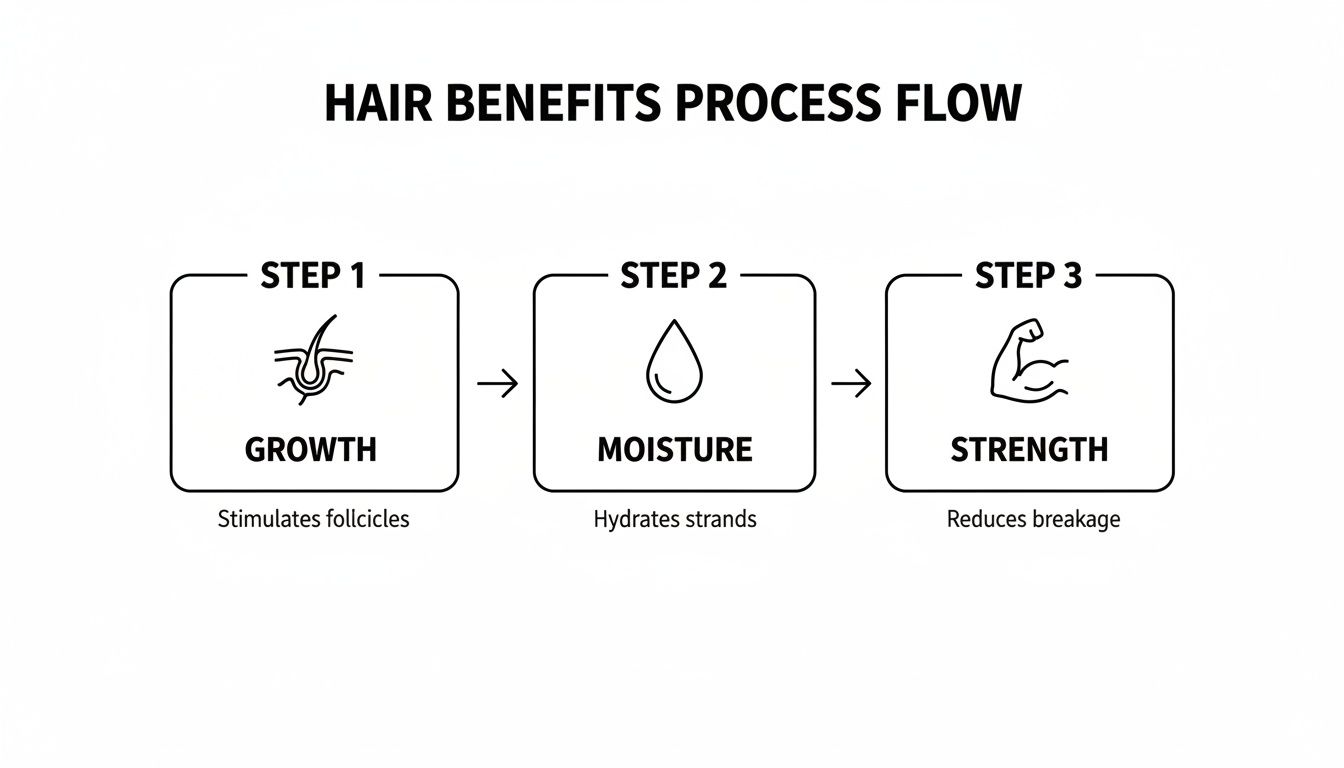
This simple flow shows how it's a domino effect: stimulating growth at the scalp, infusing strands with moisture, and finally, building up strength for hair that doesn't just look good, but is genuinely healthy.
Create a Growth-Stimulating Scalp Treatment
Let's start at the source. A healthy scalp is the bedrock of strong, vibrant hair, and this is where black castor oil really shines. A dedicated scalp massage isn't just a moment of self-care; it actively wakes up your follicles by boosting circulation and delivering nutrients right where they’re needed most.
Here’s a simple routine to try 1-2 times per week:
- Warm the Oil: Gently warm a tablespoon or so of black castor oil. The easiest way is to place the bottle in a bowl of hot water for a couple of minutes. This thins it out just enough to make it easier to work with.
- Section Your Hair: Part your hair into a few sections. This gives you direct access to your scalp so you're not just coating your hair.
- Apply and Massage: Use your fingertips—never your nails!—to work the warm oil directly onto your scalp. Spend 5-10 minutes massaging with slow, circular motions. Give a little extra attention to any areas you feel need it, like your hairline or crown.
- Let It Absorb: Give the oil at least 30 minutes to sink in. If your scalp is feeling particularly parched, you can make it an intensive overnight treatment by popping on a shower cap before bed.
- Wash Thoroughly: When you're ready, shampoo and condition as usual. Heads up: you might need to lather up twice to get all the oil out.
Use It as a Pre-Poo to Protect Your Strands
We all know shampoo is necessary for a clean scalp, but the cleansing process can sometimes strip your hair of its natural oils, leaving it brittle and vulnerable. This is where a "pre-poo" (pre-shampoo) treatment comes in. By applying black castor oil beforehand, you create a protective shield around your strands.
This trick is a lifesaver for anyone with curly, coily, or color-treated hair that tends to get dry. Just apply a light coat of the oil from the middle of your hair down to the ends about 20-30 minutes before hopping in the shower. It helps your hair hold onto moisture, cuts down on tangles, and minimizes breakage while you wash.
Perform a Deeply Hydrating Hot Oil Treatment
For a true spa-like treatment that drenches your hair in moisture, nothing beats a hot oil treatment. The warmth helps the oil penetrate the hair shaft on a deeper level, repairing damage and restoring elasticity from the inside out.
Think of a hot oil treatment as a supercharged deep conditioner. It not only moisturizes but also seals the hair cuticle, which is what locks in hydration, tames frizz, and gives you that brilliant, lasting shine.
To do it yourself, warm a few tablespoons of black castor oil and apply it generously to clean, damp hair, making sure every strand is covered. Wrap your hair in a shower cap and then a warm towel to trap the heat. Kick back and relax for 30-60 minutes before rinsing it all out. For an even more potent blend, you can explore the benefits of pairing it with rosemary oil in your hair care rituals.
Seal Your Ends to Retain Length
The ends of your hair have been with you the longest, which also makes them the most fragile part of each strand. They’re ground zero for split ends and breakage. Sealing them is a non-negotiable step if you want to hang onto your length, and black castor oil is the perfect tool for the job.
After you've applied your leave-in conditioner or moisturizer to damp hair, warm just 1-2 drops of black castor oil between your palms. Gently glaze the oil over the last couple of inches of your hair. This simple step locks in all the moisture from your products and forms a barrier against daily wear and tear.
Choosing the Best Black Castor Oil for Your Hair
Stepping into the world of black castor oil can feel like navigating a crowded market, with countless bottles all promising amazing results. But the truth is, not all oils are created equal. To get the powerful benefits you're looking for, you need to know how to spot the truly high-quality stuff.
Think of it like shopping for olive oil. You know the "extra-virgin, cold-pressed" options are the best because they’re the least processed and packed with the most nutrients. The same exact logic applies here—the purity of your oil directly determines the results you'll see.
How to Read the Label Like a Pro
To truly nourish your hair, you want an oil that's as close to its natural source as possible. Aggressive processing and harsh chemicals can strip away the very fatty acids and vitamins that make black castor oil so effective.
Here’s what to look for on the label to make sure you're getting a top-tier product:
- Unrefined & Cold-Pressed: While black castor oil inherently involves roasting the beans, the key is what happens next. The term "unrefined" is your signal that no high heat or chemicals were used in the final extraction. This gentle process keeps the oil's nutrient profile intact.
- Certified Organic: This is a big one. An organic seal guarantees the castor beans were grown without synthetic pesticides or fertilizers. This means you’re not massaging unwanted chemical residues into your scalp, which is critical for a product designed to be absorbed.
- Hexane-Free: Hexane is a cheap chemical solvent used to squeeze every last drop of oil from seeds. Opting for a hexane-free product ensures a cleaner, purer oil made through mechanical pressing, not chemical baths.
A high-quality oil is an investment in your hair's health. Prioritizing purity with terms like "organic" and "unrefined" ensures you receive the maximum nutrient content without any unwanted additives, making every drop more effective.
Safe Usage and Potential Side Effects
Once you've got your hands on a quality oil, using it correctly is key. Black castor oil is incredibly safe for most people, but its famously thick, rich consistency means you need to be smart about how you apply it.
First things first: always do a patch test. Before you go all-in on your scalp, dab a small amount of oil on a discreet patch of skin, like your inner arm. Wait a full 24 hours to make sure you don't have an unexpected sensitivity or allergic reaction.
While rare, side effects usually pop up from overuse. If you have very fine hair, for instance, slathering on too much thick oil can weigh your strands down or even lead to clogged pores on your scalp. The golden rule is moderation. Start small—once or twice a week is plenty—and pay attention to how your hair and scalp feel.
For those who want the benefits without the heaviness, a professionally formulated hair growth oil with multiple beneficial ingredients can be a fantastic alternative, offering a powerful yet lighter blend.
Ultimately, listening to your hair is the best guide you have. When you pair a pure, high-quality oil with a thoughtful routine, you’re setting yourself up for a seriously nourishing hair journey.
Got Questions About Black Castor Oil? Let's Get Them Answered.
It's one thing to read about the benefits, but it's another to figure out how a new product actually fits into your life. When you're ready to get started, the practical questions always pop up.
Let's walk through some of the most common things people ask about black castor oil. Think of this as a little cheat sheet to help you use it with confidence and get the results you're looking for.
How Long Does It Actually Take to See a Difference?
This is always the first question, and for good reason! The honest answer? It really depends on what you're trying to achieve and how consistent you are. While you'll probably feel a difference in softness right away, the bigger changes take a bit more patience.
- For Moisture and Less Breakage: You'll likely notice your hair feels softer and is easier to manage within 2-4 weeks of using it once or twice a week. That immediate dose of moisture makes a quick impact.
- For a Healthier Scalp: If you're dealing with a dry, flaky, or irritated scalp, give it about 4-6 weeks. This gives the oil enough time to help balance things out and create a healthier environment.
- For Hair Growth and Thickness: This one is a marathon, not a sprint. Hair only grows about half an inch a month, so you'll need to stick with it for at least 3-6 months to see any noticeable new growth or increased density.
Think of it like tending to a garden. You don’t plant a seed and see a flower the next day. Consistent watering and care are what lead to beautiful, healthy growth over time.
Can I Just Leave It In My Hair Overnight?
Yes, absolutely! An overnight treatment can be a game-changer, especially if your hair is feeling extra thirsty or your scalp is really dry. Letting the oil sit for hours gives those rich fatty acids plenty of time to sink in and do their work.
But before you do, here are a few pro tips to make sure you do it right:
- Protect Your Pillowcase: Black castor oil is thick and can definitely leave a mark. Always wrap your hair in a silk scarf, bonnet, or a dedicated sleep cap to protect your bedding.
- A Little Goes a Long Way: You don't need to drench your hair. A thin, light coating on your scalp and strands is all it takes. Using too much just makes it a pain to wash out and can potentially clog your pores.
- Check In With Your Scalp: If your scalp is naturally oily or you're prone to breakouts, a full night might be too much. Try starting with a shorter "pre-poo" treatment of 1-2 hours and see how your scalp feels before going all night.
For most people, a weekly overnight deep treatment is a fantastic way to bring back life, moisture, and strength to tired hair.
Is Black Castor Oil Too Heavy for Fine or Low Porosity Hair?
This is such a smart question. The thick, rich texture of black castor oil can definitely seem a little scary if you have fine hair that gets weighed down easily or low porosity hair that resists moisture.
But here’s the secret: you can absolutely still get the benefits. It's all about adjusting how you use it.
- Try It as a "Pre-Poo": This is my favorite method for finer hair types. Just work a small amount into your scalp and hair about 30 minutes before you plan to shampoo. You get all the scalp-clarifying and moisturizing goodness without any heavy residue left behind.
- Dilute It: Don't be afraid to mix it up! Blend a few drops of black castor oil with a much lighter oil, like jojoba or sweet almond. This creates a less heavy-duty oil that low porosity hair can absorb more easily.
- Make It a Scalp-Only Treatment: Instead of coating your entire head, just focus on massaging a small amount directly into your scalp to nourish the roots.
The trick for fine or low-porosity hair isn't to avoid black castor oil, but to use it more strategically. By focusing on the scalp or using it as a pre-shampoo wash-out treatment, you get all the perks without sacrificing your hair's volume.
What's the Real Difference Between JBCO and Other Black Castor Oils?
You'll see Jamaican Black Castor Oil (JBCO) everywhere, and it's easily the most famous version. The name "JBCO" really just points to the traditional method of production that started in Jamaica—roasting the castor beans, grinding them into a mash, and then boiling it all in water to skim the extracted oil off the top.
The main difference between something labelled "JBCO" and another "black castor oil" often boils down to where the beans were grown and the specifics of the roasting process. Brands that are authentically JBCO take pride in using beans sourced from Jamaica and sticking to those traditional, often manual, methods. This process can create a higher ash content from the roasting, which many believe boosts the oil's clarifying and purifying effects on the scalp.
At the end of the day, whether the label says JBCO or black castor oil, the most crucial thing to look for is quality. You want a product that is pure, unrefined, organic, and hexane-free. That’s how you know you’re getting the real, nutrient-dense stuff.
Ready to feel the difference a truly pure, high-quality oil can make? The Ella & Eden collection is built on the power of clean, single-ingredient essentials that deliver results you can see and feel. Discover our commitment to simple, effective self-care.

