


Organic Argan Oil: Why It’s Called Liquid Gold (And Why That Actually Makes Sense)
Organic argan oil isn’t just another beauty oil.
It’s pressed from the kernels of the Moroccan argan tree — a tree that survives in some of the harshest climates on earth. That resilience shows up in the oil itself. It’s rich. Nutrient-dense. Protective.
When it’s certified organic and cold-pressed, you’re getting it in its most intact form — no synthetic pesticides, no chemical solvents, no aggressive processing. Just the oil, the way nature made it.
And that difference matters more than most people realize.
Unlocking the Secrets of Liquid Gold
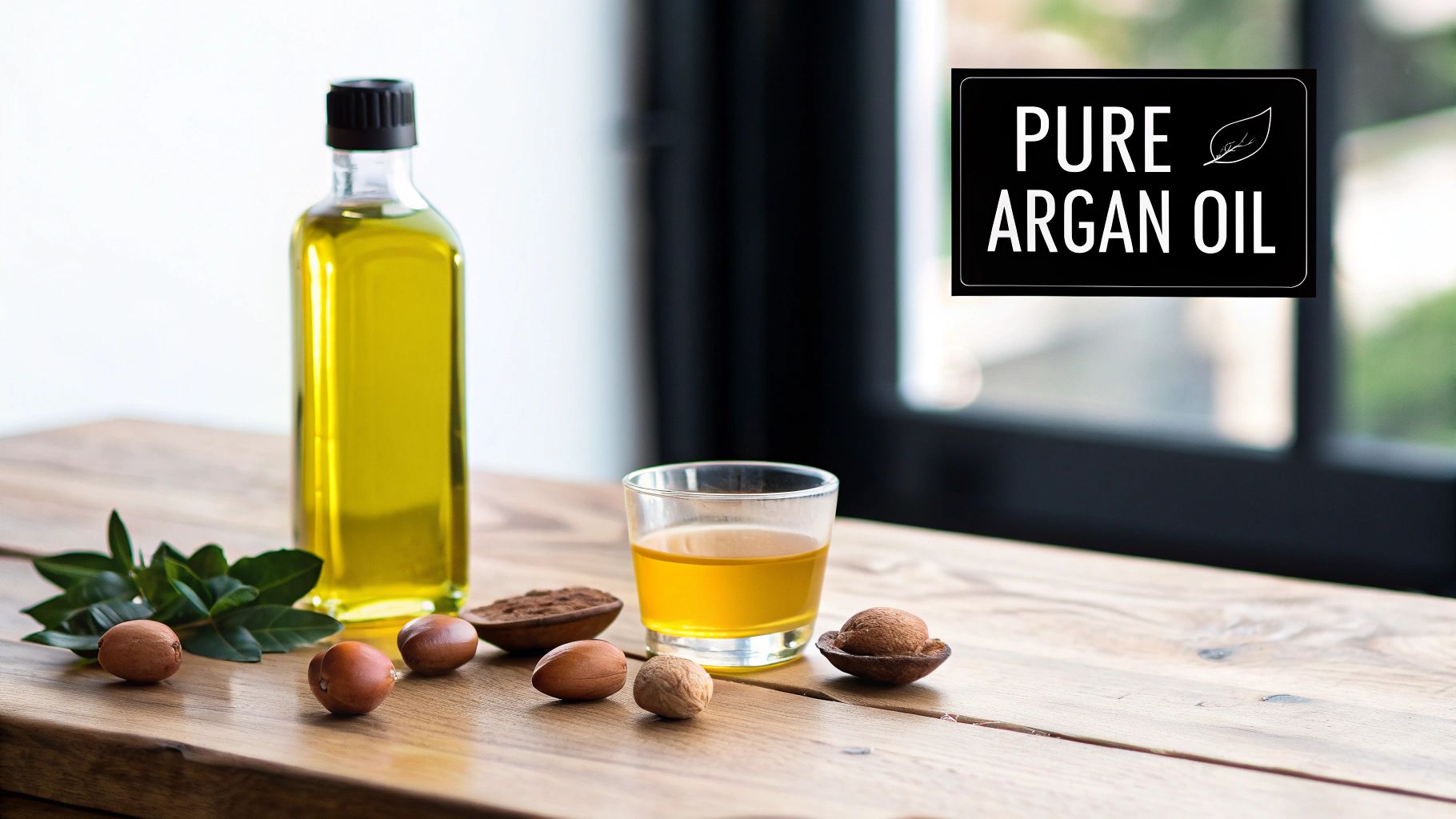
For hundreds of years, Berber women in Morocco have relied on this precious oil as a cornerstone of their beauty rituals. This tradition grew from the harsh, arid landscape where only the toughest plants, like the argan tree, can survive. This rich history adds a layer of heritage to every bottle, connecting our modern routines back to ancient wisdom.
The popularity of organic argan oil has exploded in the clean beauty scene. Think of it like the difference between a freshly made, cold-pressed green juice and a sugary, processed concentrate. The cold-pressing method used for high-quality argan oil gently coaxes the liquid out without using heat or chemicals. This minimal intervention is key to preserving its powerful, naturally occurring nutrients in their most potent state.
Why Organic Certification Matters
When you see a certified organic argan oil, you’re looking at a promise of purity. That certification is your assurance that the product is free from unwanted additives and was produced with sustainable methods that protect the environment and the final quality of the oil. This dedication to purity is exactly why it's become a staple for anyone aiming for minimalist, effective self-care.
This shift toward clean ingredients has fueled incredible global demand. The argan oil market worldwide hit USD 327 million in 2023 and is expected to soar to USD 507 million by 2030. This boom is almost entirely driven by its use in personal care, where organic options are highly valued for their purity and effectiveness. You can dig into more insights about the argan oil market on Grand View Research.
To give you a clearer picture, here's a quick rundown of what makes organic argan oil so special.
Organic Argan Oil at a Glance
| Attribute | Description |
|---|---|
| Origin | Exclusively from the kernels of the Argania spinosa tree, native to Morocco. |
| Extraction Method | Cold-pressed to preserve nutrients; no heat or chemicals used. |
| Key Nutrients | Rich in Vitamin E, antioxidants (like ferulic acid), and essential fatty acids. |
| Texture | Lightweight, non-greasy, and easily absorbed by skin and hair. |
| Scent | A mild, nutty aroma that indicates purity (deodorized oils lose some benefits). |
| Organic Standard | Grown and processed without synthetic pesticides, herbicides, or GMOs. |
This table highlights just how much is packed into this one simple ingredient.
The Foundation of Clean Beauty
So, what makes it so essential for a modern routine? Organic argan oil is celebrated for being both incredibly versatile and wonderfully gentle. It fits perfectly into a clean, minimalist beauty philosophy because one single ingredient can do the work of many.
Its key benefits include:
- Deep Hydration: It delivers lasting moisture to skin and hair without that heavy, greasy feeling.
- Nutrient-Rich Profile: It’s loaded with Vitamin E, antioxidants, and essential fatty acids.
- Soothing Properties: It helps calm irritation and strengthens the skin's natural protective barrier.
Organic argan oil isn't just another ingredient; it's a complete, single-source solution. Its ability to nourish, protect, and restore makes it a must-have for anyone looking to simplify their routine without sacrificing results.
This powerful blend of cultural heritage, gentle processing, and science-backed nutrients is exactly why organic argan oil has earned its place as a revered staple. Now, let’s take a closer look at how its components work their magic on your skin and hair.
The Science Behind Argan Oil's Skin and Hair Benefits
The love for organic argan oil isn't just based on tradition or hype; it's backed by some pretty incredible science. To really get why it works so well, we need to look under the hood at the specific compounds that team up to nourish, protect, and restore your skin and hair.
Think of argan oil as a tiny, highly-skilled "repair crew" for your cells. Each compound in the oil has a distinct job, and it’s their teamwork that delivers those beautiful, glowing results. This isn't about a single magic bullet, but a symphony of nutrients working in perfect harmony.
The main players are essential fatty acids, a powerhouse dose of Vitamin E, and a whole host of potent antioxidants. Let’s dive into what each one actually does for your skin and hair.
The Power Duo of Fatty Acids
At its heart, argan oil’s magic lies in its beautifully balanced fatty acid profile, with oleic acid and linoleic acid running the show. These aren't just fillers; they're the essential building blocks for healthy cell membranes, which are crucial for keeping your skin and hair moisturized and strong.
-
Oleic Acid (Omega-9): This is the master moisturizer. It’s incredibly good at helping other beneficial ingredients sink deeper into the skin and hair shaft, getting hydration right where you need it. It’s what gives the oil its rich, conditioning feel without weighing you down.
-
Linoleic Acid (Omega-6): Our bodies can't make this one, so we have to get it from outside sources. Linoleic acid is vital for maintaining the skin's natural protective barrier, helping to lock in moisture and soothe inflammation. This makes it a hero for anyone with dry, sensitive, or irritated skin.
This perfect balance is precisely why organic argan oil feels so deeply nourishing yet sinks in almost instantly, leaving behind a glow, not a greasy film. It works with your skin's natural structure, helping it do its job better.
Vitamin E: The Ultimate Protector
One of the most talked-about components of argan oil is its unusually high concentration of Vitamin E (also known as tocopherols). This isn't just any vitamin; it’s a powerful antioxidant that acts like a personal bodyguard for your skin and hair, shielding them from daily environmental damage.
Every single day, we're exposed to free radicals—those rogue molecules from UV rays and pollution that cause cell damage, leading to premature aging and dullness. Vitamin E steps in and neutralizes these attackers before they can cause trouble.
This protective role is key to maintaining a youthful, healthy appearance. By fighting off environmental stress day after day, Vitamin E helps preserve your skin’s collagen and keeps hair fibers strong, supple, and shiny.
The Supporting Cast of Antioxidants
On top of its impressive Vitamin E content, argan oil is also packed with other powerful antioxidants like ferulic acid and polyphenols. This team works together to amplify the oil's protective power, giving your skin and hair a complete defense system.
If Vitamin E is the lead security guard, think of these other antioxidants as the backup crew, making sure no threat slips through the cracks. This is especially important when it comes to hair.
How Argan Oil Transforms Hair:
-
Seals the Cuticle: The fatty acids coat each strand of hair, smoothing down the outer layer, known as the cuticle. This simple action is what tames frizz and gets rid of flyaways.
-
Locks in Moisture: By sealing that cuticle, the oil prevents precious moisture from escaping. This keeps your hair hydrated, flexible, and much less likely to snap or break.
-
Adds Natural Shine: A smooth, sealed hair cuticle reflects light beautifully. This is what creates that brilliant, healthy-looking shine—the kind you can’t get from silicone-based products.
So, the science is crystal clear. Organic argan oil delivers these incredible results because of its rich, complex makeup. Every nutrient has a critical part to play, making this one ingredient a complete powerhouse for deep hydration, serious protection, and a truly radiant look.
How to Choose Authentic Organic Argan Oil
Walking into the world of organic argan oil can feel a bit like navigating a maze. With so many bottles on the shelf, all claiming to be the real deal, how do you know you're getting the potent, pure oil you're looking for?
The truth is, not all argan oil is created equal. Think of it like buying extra virgin olive oil—you instinctively know the cheap, clear plastic bottle isn't going to deliver the same flavor or health benefits as a high-quality, cold-pressed oil in a dark glass bottle. The same logic applies here. Your mission is to find an oil that's been handled with care from nut to bottle, preserving every drop of its goodness.
Decoding the Label: Your First Clue
Your first stop in the search for authenticity is the label. It’s more than just marketing; it’s a window into the oil’s quality and origin. A few key phrases are non-negotiable and act as your first line of defense against a subpar product.
Look for these four non-negotiable terms:
-
100% Pure Argania Spinosa Kernel Oil: This is the most important one. The ingredient list should be incredibly short: just this one line. If you see water, silicones, fragrances, or any other oils, put it back. It’s not pure.
-
Certified Organic: This is your assurance that the argan trees were grown and their nuts harvested without any synthetic pesticides or gnarly chemicals. An official seal, like the one from the USDA, is verifiable proof that the oil is truly clean.
-
Cold-Pressed: This is a huge deal. Cold-pressing is a gentle, mechanical process that extracts the oil without using heat or chemical solvents. This method is crucial because it protects the delicate vitamins, antioxidants, and fatty acids that make argan oil so powerful. Heat destroys these compounds.
-
Unrefined: Unrefined means the oil is in its most natural, potent state. It keeps its original nutrient profile, its natural color, and its characteristic scent. Refined oils are often bleached and deodorized to create a uniform product, but that process strips away many of the very things you want for your skin and hair.
A Quick Guide to Spotting the Real Deal
It's easy to get fooled by clever marketing. High-quality argan oil has a distinct personality—from its scent to how it feels on your skin. Low-quality or fake oils often try to imitate these traits but usually fall short. This table breaks down the key differences to help you become a pro at spotting authentic argan oil.
Authentic Organic Argan Oil vs Imitations
| Characteristic | Authentic Organic Argan Oil | Low-Quality or Fake Oil |
|---|---|---|
| Scent | Light, slightly nutty, and earthy. The scent fades quickly after application. | Overpowering and unpleasant (rancid), completely scentless (deodorized), or smells strongly of toasted nuts (culinary grade). |
| Color | A beautiful, light golden-yellow hue. | Very pale or almost clear (over-filtered or diluted), or a dark, murky brown. |
| Texture | Smooth, silky, and lightweight. Absorbs easily into the skin. | Greasy, sticky, or watery. Sits on top of the skin and doesn't absorb well. |
| Packaging | Always in a dark glass bottle (amber, cobalt blue) to protect from light. | Often sold in clear plastic or clear glass bottles, which exposes the oil to light damage. |
| Ingredients | Just one: 100% Argania Spinosa Kernel Oil. | A long list with added fillers like water, silicones, fragrances, or other cheaper oils. |
Once you know what to look for, the imposters become much easier to spot. Trust your senses and always check that ingredient list.
Using Your Senses to Verify Authenticity
Beyond what the label tells you, your own senses are fantastic tools for verifying the quality of organic argan oil. Genuine "liquid gold" has a unique profile that fakes just can't replicate.
Think of it as a quality check you can perform right at home. The look, feel, and scent of the oil provide immediate clues about its purity and processing method.
First, let's talk about the scent. Authentic, unrefined cosmetic argan oil has a very distinct light, nutty, almost earthy aroma. It’s a subtle scent that should disappear just a few minutes after you massage it into your skin.
If the oil has a strong, sour, or unpleasant odor, it’s likely gone rancid. On the flip side, if it has absolutely no smell at all, it has probably been deodorized, a process that strips away nutrients. And if it smells strongly of toasted nuts, that's culinary argan oil—great for drizzling on a salad, but not what you want for your skin.
Color, Texture, and Packaging Clues
Next up, the color. Pure, cold-pressed argan oil has a lovely, light golden-yellow glow. If the oil in the bottle looks very pale or almost as clear as water, it’s a sign that it has been heavily filtered, refined, or even diluted with a cheaper oil. That beautiful golden color is a visual indicator of its rich antioxidant content.
The texture is another dead giveaway. Real argan oil should feel incredibly smooth and silky, never greasy. It sinks into your skin fairly quickly, leaving it soft and hydrated, not slick or sticky. If the oil just sits on the surface of your skin feeling heavy, something isn't right.
Finally, take a hard look at the packaging. Light and air are the enemies of precious oils like argan. Any reputable brand will package their oil in a dark glass bottle—think amber or cobalt blue—to protect it from UV light, which can degrade the oil and reduce its potency. If you see argan oil sold in a clear plastic bottle, walk away. It’s a sure sign of a low-quality product.
For a perfect example of what to look for, you can learn more about our sourcing and commitment to purity in every bottle of Ella & Eden organic argan oil.
The Sustainable Journey from Tree to Bottle
Every single bottle of organic argan oil has a story, and it starts long before it ever gets to your home. That story begins in the sun-baked, arid lands of southwestern Morocco—the only place on Earth where the ancient Argania spinosa tree grows.
These trees are so essential to the region's survival that the Arganeraie Forest, their natural habitat, is a protected UNESCO Biosphere Reserve. This is about more than just trees; it’s about safeguarding a fragile ecosystem and a way of life that has thrived for centuries. When you understand this journey, you see how a simple beauty oil becomes a purchase you can feel good about.
Guardians of the Grove
The real heart of the argan oil industry lies with the local Berber women. For generations, they have been the keepers of this tradition, passing down the meticulous, time-consuming methods of harvesting and extraction. This isn't some huge, automated factory operation. It’s a community-driven craft built on patience and incredible skill.
The whole process starts when the ripe argan fruit falls naturally from the trees. The women gather the fruit, dry it in the sun, and peel away the pulp to reveal a tough inner nut. Here’s where the real magic happens: each nut is cracked by hand, one by one, between two stones to get to the one to three tiny, oil-rich kernels inside.
This traditional, manual approach is absolutely crucial for creating the highest quality organic argan oil. It guarantees that only the best kernels make the cut and that the oil is never exposed to high heat or harsh chemicals that would strip it of its powerful nutrients.
Empowering Communities and Preserving Culture
When you choose an ethically sourced argan oil, you’re doing more than just buying a product—you're directly supporting the women and communities behind it. Most authentic argan oil comes from women's cooperatives, which were set up to ensure these artisans earn fair wages, have safe working conditions, and get a share of the profits.
This cooperative model does so much more than just provide a paycheck. It’s a powerful engine for female empowerment, giving women financial independence, access to literacy programs, and a respected voice in their local economy. It helps preserve a rich cultural heritage while navigating a modern, global market.
This ethical approach is the backbone of the industry. Morocco produces between 4,000 and 6,000 tonnes of argan oil each year, and the demand for organic oil is booming, with the market growing at an impressive 22.0% CAGR. This growth, which brought in over USD 100 million in 2022, is fueled by shoppers like you who care about the traditional, sustainable practices these cooperatives champion. You can explore more about the thriving Moroccan argan oil market on SNS Insider.
The infographic below shows you a few simple, sensory ways to spot high-quality argan oil—a direct result of this careful, traditional process.
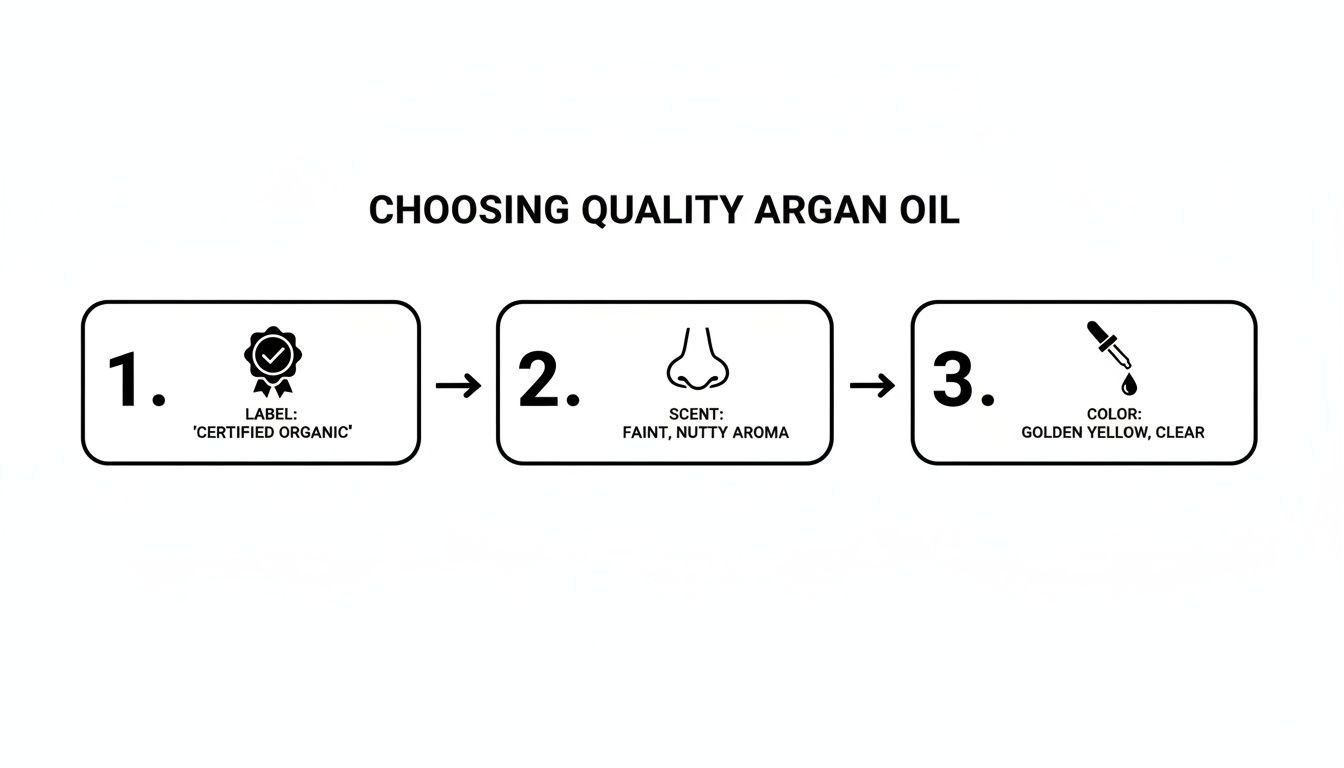
These clues—the certified label, the light nutty scent, and the beautiful golden color—are the final confirmation of the oil’s pure and sustainable journey. Knowing where your oil comes from helps you appreciate not just what it does for your skin and hair, but also its role in supporting a vibrant culture and a protected ecosystem. You can learn more about how we uphold these ethical standards by reading the Ella & Eden story.
Integrating Argan Oil into Your Daily Rituals
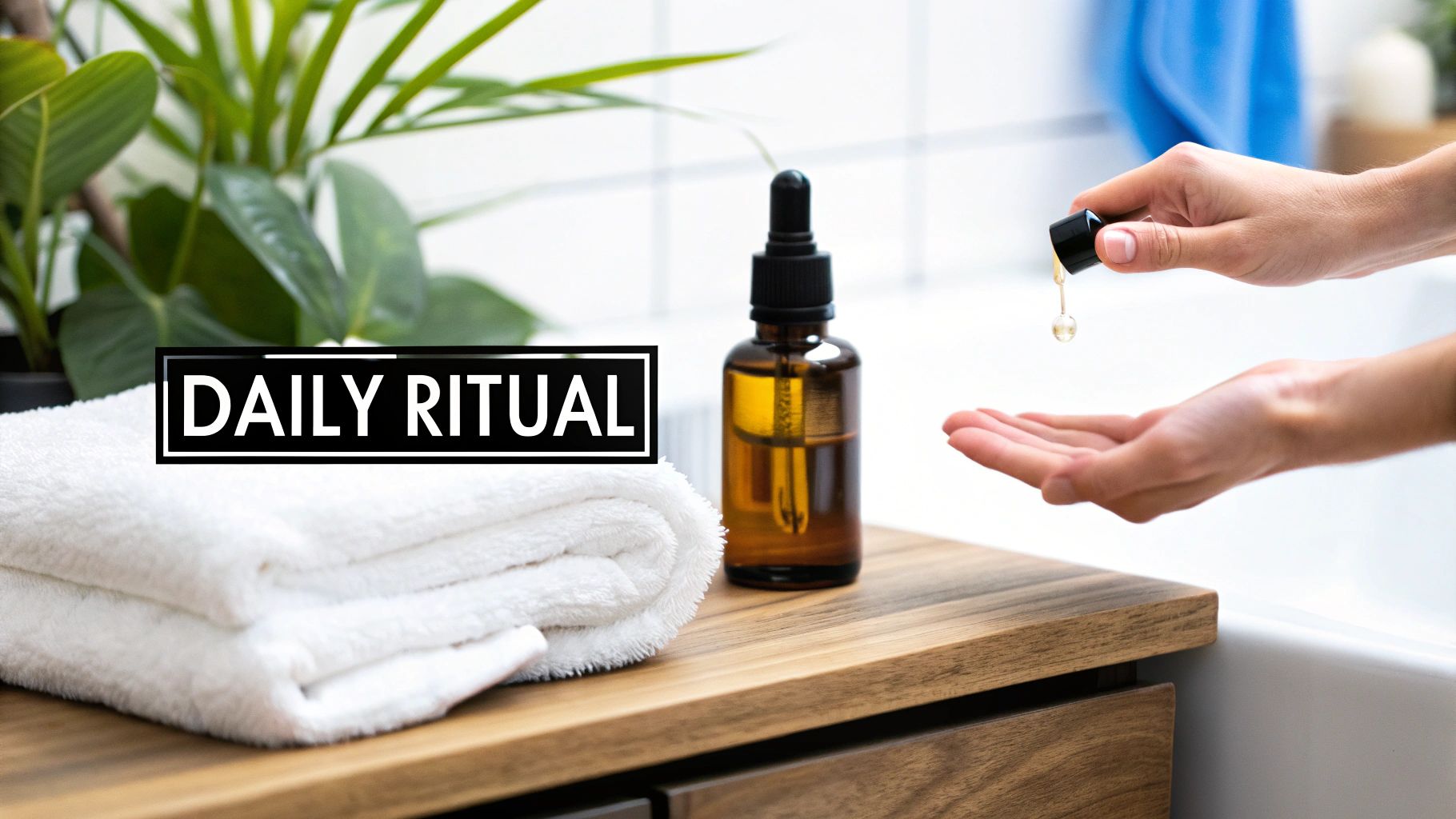
Now that you know the incredible story behind organic argan oil, let's talk about how to actually bring it into your life. This is where the magic really happens. The beauty of this oil is its sheer versatility—a single bottle can gracefully replace a whole collection of other products, simplifying your routine while delivering incredible results.
Think of argan oil less like a complex, single-use treatment and more like a trusted, multi-purpose staple. Whether you’re dreaming of glowing skin, silky hair, or stronger nails, weaving it into your day is effortless. The only rule? Start small. A few drops are usually all it takes to unlock its potent, nourishing power.
For Glowing, Hydrated Skin
Your skin absolutely drinks up the balanced fatty acids and Vitamin E found in argan oil. This makes it a perfect daily companion for your face. Because it's so lightweight, it absorbs beautifully without a hint of greasy residue or clogged pores, which is why it works wonders for almost every skin type, from parched and sensitive to oily and combination.
Here are a few simple ways to give your skin what it's craving:
- As a Daily Moisturizer: Warm 2-3 drops of oil between your palms and gently press it onto your clean, still-damp face and neck. Applying it to damp skin is a game-changer—it helps seal in that precious moisture, leaving you with a soft, dewy glow that truly lasts.
- An Overnight Restorative Serum: Before you turn in for the night, use a slightly more generous amount, maybe 3-4 drops, as the very last step in your skincare routine. Massage it in with gentle, upward motions to get the circulation going. As you sleep, the oil gets to work repairing your skin's barrier and replenishing moisture at a deep level.
- A Smooth Makeup Primer: All you need is a single drop. Pat 1 drop onto your skin before your foundation. It creates this silky, flawless canvas that helps makeup glide on seamlessly and keeps it from settling into fine lines throughout the day.
For Healthy, Lustrous Hair
Getting beautiful hair with organic argan oil is just as easy. Its ability to seal the hair cuticle is the real secret behind taming frizz, boosting shine, and protecting your strands from the daily grind. The key is to nourish, not to drown, your hair, so always start with less than you think you need.
You can dive deeper into its many uses and benefits by exploring the everyday luxury of argan oil in our detailed guide.
The lightweight nature of argan oil makes it perfect for hair. Unlike heavier oils that can weigh strands down, argan oil coats the hair with a fine, non-greasy layer that smooths frizz and adds a brilliant, natural-looking shine.
Follow these simple steps for hair that looks and feels healthier:
- Leave-In Conditioner: After a shower, while your hair is still damp, rub 1-2 drops between your palms. Gently work your fingers through the mid-lengths and ends, paying special attention to any dry or frizzy spots. Steer clear of the roots to keep your hair full of life and volume.
- Nourishing Scalp Treatment: A happy scalp is the foundation of great hair. Once a week, treat it by massaging 4-5 drops directly onto your scalp. Let it soak in for at least 30 minutes (or even overnight for a deep treatment) before shampooing to soothe dryness and create a balanced environment for growth.
- Finishing Oil for Shine: For that final, polished touch, use argan oil to tame flyaways and add a bit of gloss. Warm 1 tiny drop in your hands and lightly smooth it over the surface of your dry, styled hair. You'll get instant, non-sticky shine.
For Stronger Nails and Softer Cuticles
Don’t let your hands miss out! The same nutrients that work wonders on your skin and hair are fantastic for nails and cuticles. A little bit of consistent care can help fight off brittleness and keep the skin around your nails supple and healthy.
This little ritual takes less than a minute but makes all the difference.
- The Ritual: Place one tiny drop of organic argan oil on each nail bed.
- The Massage: Gently massage the oil into each cuticle and over the entire nail.
- The Timing: The best time to do this is right before bed, giving the oil all night to absorb and work its magic.
With these simple, effective rituals, one bottle of pure organic argan oil becomes your go-to partner for head-to-toe care. It's the perfect centerpiece for a clean, minimalist routine that lets your natural beauty shine.
Why Purity and Sourcing Matter for Your Argan Oil
We've covered a lot of ground in this guide, from the argan tree's Moroccan origins to its modern role as a clean beauty staple. But let's bring it all home. Choosing the right argan oil isn't just a small detail—it's everything. It’s the difference between a product that works and one that just sits on your shelf.
The market is flooded with oils, but the truly exceptional ones stand apart. When you see terms like 100% pure, certified organic, and cold-pressed, don't just skim past them. These are non-negotiable markers of quality, your guarantee that the oil is free from cheap fillers, pesticides, and the nasty chemicals that can irritate your skin and cancel out the benefits.
The Power of Conscious Choices
There’s a real beauty in single-ingredient skincare. It means you’re getting pure, undiluted power in every single drop. This minimalist philosophy ensures your skin and hair get a concentrated dose of all the good stuff—Vitamin E, antioxidants, and those essential fatty acids—without anything getting in the way.
And it goes deeper than that. Ethical sourcing connects your beauty routine to a much bigger story of empowerment and sustainability. When you choose a brand that works directly with women's cooperatives in Morocco, you’re supporting fair wages, helping preserve ancient harvesting traditions, and protecting the fragile argan forest. Your purchase becomes a powerful statement.
This commitment to quality isn't just about what's in the bottle—it's about the entire lifecycle of the product. From the tree to your shelf, every step matters in delivering an oil that is both effective for you and respectful to its origin.
A Growing Demand for Purity
It’s clear this focus on clean, traceable ingredients is catching on. The U.S. argan oil market is exploding, which tells us people are getting serious about pure and effective self-care.
In fact, demand is expected to jump from USD 285.4 million in 2025 to a staggering USD 472.6 million by 2035. And get this: cosmetic-grade argan oil accounts for 68.5% of that market. With e-commerce leading the way, it’s never been easier to get your hands on premium organic argan oil for a clean, minimalist routine. You can dig into these market trends and projections on Fact.MR to see just how big this shift is.
At the end of the day, investing in a high-quality organic argan oil is an investment in your own well-being and in a healthier planet. It's the final piece of the puzzle for building a self-care ritual that is simple, clean, and genuinely effective.
Your Questions About Organic Argan Oil, Answered
If you’re just getting started with organic argan oil, you probably have a few questions. That's a good thing! Understanding exactly what you're putting on your skin and hair is the first step to getting the results you want. Let's clear up some of the most common questions I hear.
Will Organic Argan Oil Clog My Pores?
This is easily the number one concern, especially if you have oily or acne-prone skin. The great news? Pure argan oil scores a 0 out of 5 on the comedogenic scale.
That means it’s considered non-comedogenic, so it’s extremely unlikely to clog your pores. In fact, its high concentration of linoleic acid can actually help regulate your skin’s own oil production, bringing more balance instead of adding grease. It’s a fantastic hydrator that won’t lead to breakouts.
What's The Difference Between Cosmetic and Culinary Argan Oil?
They both come from the same argan tree, but the way they're made changes everything. The key difference is a single step: roasting.
-
Cosmetic Argan Oil: This is what you use on your skin and hair. It's pressed from raw, un-roasted argan kernels. This gentle, cold-pressing technique keeps all the delicate, skin-loving nutrients like Vitamin E and antioxidants fully intact. It has a very light, almost unnoticeable nutty scent.
-
Culinary Argan Oil: This version is made for eating. The kernels are lightly roasted before pressing, which gives the oil a deep, nutty flavor that’s delicious in food. However, that heat breaks down some of the very compounds that make it so powerful for skincare.
It's a bit like the difference between raw and cooked vegetables. Both have value, but the raw version often holds onto more of its heat-sensitive vitamins. For your face, you always want the "raw" cosmetic oil to get the full benefits.
How Long Does It Take to See Results?
This is a two-part answer. Some benefits are immediate, while others take a little more time and consistency.
You’ll feel a difference right away. After the very first use, your skin will feel softer and more hydrated. On hair, it instantly helps smooth frizz and adds a gorgeous, healthy-looking shine.
The long-term magic, like a stronger skin barrier, softer fine lines, or more resilient hair, comes with steady use. Give it a few weeks. As your skin and hair continually absorb the oil’s nutrients, they'll have the building blocks they need to repair and strengthen from within.
Is Argan Oil Safe For Color-Treated Hair?
Yes, it’s not just safe—it’s one of the best things you can use! Chemical treatments and hair color can leave the hair cuticle rough and porous, which leads to that dreaded dry, brittle feeling.
Argan oil’s fatty acids get to work smoothing and sealing that cuticle. This locks in moisture, protects the hair shaft from more damage, and even helps your color stay vibrant for longer. It brings back that soft, flexible feeling to processed hair.
At Ella & Eden, we're all about the power of pure, simple ingredients. Our single-ingredient, cold-pressed Organic Argan Oil embodies that philosophy perfectly. Discover the difference that purity makes and add this liquid gold to your routine today.

