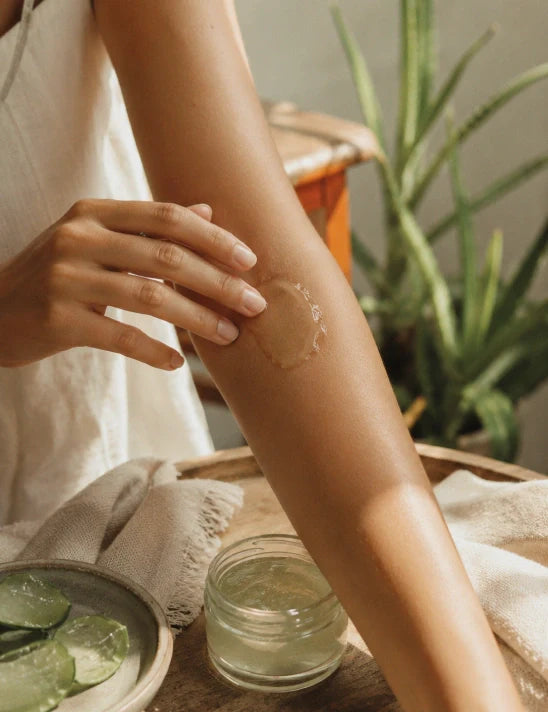
Maximize Your Curls: Aloe Vera Gel for Curly Hair Secrets
You've probably been there. Your curls look good right after wash day, then an hour later they start to puff, lose shape, or feel coated by a product that promised moisture but delivered heaviness. That's usually when aloe vera gel for curly hair enters the conversation.
The appeal is simple. Aloe can give curls slip, softness, and light control without the dense feel that many butters and conventional gels leave behind. But it isn't magic, and it isn't automatically right for every head of hair. The difference between bouncy definition and sticky frustration usually comes down to how you use it, what you layer it with, and whether your hair likes it.
This is the practical version of the aloe conversation. No growth hype. No one-size-fits-all routine. Just what aloe does well for curls, where it falls short, and how to make it work in a clean, simple regimen.
Why Aloe Vera Is a Game-Changer for Curls
If you're searching for a styler that defines curls without flattening them, aloe makes sense. Its popularity isn't random. A widely cited hair-care overview notes that aloe vera gel contains water, 20 minerals, 12 vitamins, 18 amino acids, and 200 phytonutrients in one dense plant-based gel, which helps explain why curly-hair sources often reach for it for definition, moisture, and light hold instead of a heavy coating from traditional stylers.

Why curls respond so well to it
Curly hair usually needs two things at the same time. It needs moisture so strands stay flexible, and it needs some hold so curl clumps keep their shape as they dry. Aloe sits neatly in that middle ground.
Instead of coating the hair in a thick film, aloe tends to support a softer finish. That matters if your curls fall apart under heavy creams or turn rough under strong gels. Used well, aloe helps hair look smoother, feel more hydrated, and keep more natural movement.
Practical rule: Aloe works best when you want your curls to look like curls, not like product.
There's another reason people keep coming back to it. Aloe layers well in minimalist routines. You can use it after conditioner on wet hair, pair it with a leave-in if your strands need more slip, or use a little oil over it to help hold moisture in place. That flexibility makes it useful for curlies who want fewer bottles on the shelf, not more.
What it does better than heavy stylers
Aloe is especially helpful when your main problem is frizz plus loss of definition, not lack of raw hold. If you use a thick gel and your hair feels stiff, or if rich creams leave your roots limp, aloe can feel like a reset.
It's also a smart choice when your conditioner does most of the nourishing work and you just need a light finishing styler. In that kind of routine, a good rinse-out conditioner does the softening, and aloe helps preserve the pattern. If your hair still feels rough after washing, start there first with a solid conditioner for silky smooth hair, then use aloe as the lighter styling step instead of expecting it to do everything.
What aloe does not do
Aloe isn't a replacement for every product. It won't give all curl types the same level of hold, and it won't rescue hair that's already overloaded with residue. On very dry or highly porous hair, aloe alone may feel too light unless it's paired with something more cushioning underneath.
That's a key value of aloe vera gel for curly hair. It doesn't try to be a butter, a treatment mask, and a hard-hold gel all at once. It does a narrower job. It helps curls stay hydrated enough to clump, smooth enough to reflect light, and defined enough to hold shape without feeling buried.
Creating Your Custom Aloe Vera Styler
Aloe became a staple in curly routines because people found it easy to turn into a repeatable DIY styler. By 2018, curly-hair publications were already describing it as a “curl gel” alternative, and independent guides shared simple formulas built around 8 oz distilled water and 1 teaspoon aloe vera gel. That's still a useful place to start.
Start with a minimalist base
If you want the cleanest possible version, use a simple diluted blend.
- Combine 8 oz distilled water and 1 teaspoon aloe vera gel.
- Mix until the texture is even.
- Apply a small amount to freshly washed, wet hair.
- Scrunch or smooth through sections.
- Let your curls dry before deciding whether you need more hold.
This base works because it keeps aloe light. It's a better match for fine curls, waves, or anyone who gets sticky buildup easily.
Less is usually more with aloe. If you can feel a tacky layer sitting on the hair, your mix is probably too rich for your texture.
Build for your actual hair goal
Once you know how your hair responds to plain aloe, you can adjust from there. The easiest way is to change only one variable at a time.
| Hair Goal | Base Recipe | Add-In (per 4 oz gel) | Benefit |
|---|---|---|---|
| Light definition for waves | Aloe diluted with distilled water | A few drops of jojoba oil | Helps reduce drag and keeps the finish lighter |
| Softer wash-and-go curls | Pure aloe gel or lightly diluted aloe | A small amount of leave-in conditioner | Adds slip and softness |
| Shine and frizz control | Aloe gel base | A few drops of argan oil | Gives a smoother finish and helps seal moisture |
| Dry ends support | Aloe gel layered into a simple mix | A small amount of castor oil | Adds richness for areas that lose moisture fast |
| Scalp-first routine | Diluted aloe blend | No add-in at first | Lets you test tolerance before layering more products |
The point isn't to create a complicated formula. The point is to make aloe behave the way your hair needs it to behave.
Smart add-ins without turning it into sludge
Oils can improve an aloe styler, but they can also ruin it if you overdo them. A few drops can soften the finish. Too much can leave a gummy film that sits on top of the hair and dulls definition.
For a simple guide to choosing an oil based on your texture and goals, the Ella & Eden guide to oils for curly hair growth is useful because it helps you think in categories like scalp balance, shine, and sealing, instead of treating every oil the same.
A good DIY aloe formula should feel like this
Use these checkpoints after your first test:
- Your curls clump easily: The formula is giving enough slip.
- Hair feels soft after drying: You didn't overdo the aloe or oil.
- There's light hold, not shellac: Aloe is acting as a styler, not a hard cast product.
- You don't see residue on day two: The blend is compatible with your leave-in and cream.
If your mix feels perfect in your hand but bad on your head, trust your hair. Aloe routines work best when they stay simple enough to troubleshoot.
The Right Way to Apply Aloe for Your Curl Type
Most aloe mistakes happen before drying even starts. People apply too much, use it on hair that isn't wet enough, or layer it over products that already leave a film. Technique matters more than hype here.

The non-negotiable step
Apply aloe to wet hair, ideally after conditioning. Curly-hair guidance consistently recommends using it on wet strands, often layered over leave-in products and oil to help seal hydration and reduce frizz. That wet-hair step is what helps aloe spread more evenly and support smoother curl formation instead of drying into a sticky surface.
If your hair is only damp, aloe is more likely to catch in spots and leave some sections stringy while others get overloaded. Wet hair gives you dilution, slip, and better distribution.
Match the method to your texture
Different curl types need different amounts and different hand techniques.
For wavy and fine curly hair
Keep the layer thin. Smooth a small amount over the surface with praying hands, then scrunch upward. This encourages clumps without collapsing the root.
A diluted aloe mix usually works better here than thick gel straight from the bottle. Fine hair tends to show residue quickly, so your goal is shape, not saturation.
For medium-density curls
Use aloe in sections, then rake lightly or smooth it through with flat palms. Finish by scrunching. If your curls tend to frizz at the crown, apply a touch more there instead of coating every inch equally.
This hair type often does well with aloe over leave-in conditioner, especially when you want softness with moderate definition.
For coily or very dry hair
Aloe usually performs better as part of a layered routine. Put it over a leave-in or moisturizing cream, then seal selectively on the ends if needed. Don't assume more aloe equals more moisture. On very thirsty hair, aloe alone can feel too bare.
Porosity changes the formula
Porosity matters almost as much as curl pattern.
- Low porosity hair: Use a smaller amount and lean toward a more diluted formula. Heavy layering can sit on the surface and make hair feel coated.
- High porosity hair: Aloe often needs support underneath or over the top. A leave-in can help with softness, and a sealing oil can slow moisture loss.
- Mixed porosity hair: Treat your roots and ends differently. Many people need less product near the scalp and more support through the older, drier lengths.
If you're still working out how much moisture your hair needs, this guide on how to moisturize natural hair is a helpful companion because it frames moisture as a process of applying, layering, and retaining, not just adding one wet product and hoping for the best.
Wet application is what makes aloe feel elegant. Dry application is what makes many people think they hate it.
A simple application sequence that works
Try this order on wash day:
- Cleanse and condition.
- Leave your hair wetter than you think you need to.
- Apply leave-in only if your hair benefits from it.
- Smooth aloe over sections.
- Scrunch for springy definition, or use praying hands for elongation.
- Let the cast form if it appears.
- Once fully dry, gently scrunch to soften the finish.
That last step matters. Some hair gets a light cast from aloe. That doesn't always mean the routine failed. It may just need to be softened after drying.
Troubleshooting Common Aloe Vera Issues
Aloe has a “natural equals foolproof” reputation that it doesn't deserve. It can work beautifully, but it can also leave hair stiff, filmy, or uncomfortable if the formula or application is off. Consumer reports and clinical references also note that aloe can be irritating for some people and that leave-on use may need patch testing, especially when products are layered and become too sticky or residue-prone.

When aloe makes hair feel hard
There are two different problems people lump together. One is a normal cast. The other is brittleness.
A cast feels firm on the outside but softens once you scrunch it out. Brittleness feels dry all the way through and usually means the routine is unbalanced. That can happen if you used aloe without enough conditioning support or layered it over a product combination your hair doesn't tolerate.
Try this reset:
- If it's just a cast: Wait until hair is fully dry, then scrunch gently.
- If hair feels rough inside the curl: Use less aloe next time and add moisture underneath.
- If ends feel rigid: Don't keep reapplying aloe day after day. Refresh with water first.
When you get flakes or sticky residue
Flakes don't always mean your aloe is “bad.” They often mean your aloe doesn't mix well with another product in the routine, or you applied too much to hair that wasn't wet enough.
Check these likely causes:
- Too many layers: Cream, oil, and aloe can leave a film if the combo is too dense.
- Patchy application: Product catches where hair is driest and dries unevenly.
- Formula mismatch: Some gels sit badly over certain leave-ins.
A simple fix is to scale back. Use fewer products and test aloe with one companion product at a time. If your hair is high porosity and you still want a sealing step, the guide to oils for high porosity hair can help you choose a lighter or richer finish based on how quickly your hair loses moisture.
If aloe gives you residue, don't assume you need more moisture. You may just need fewer layers.
When your scalp feels itchy or reactive
This is the issue people ignore because aloe has such a soothing reputation. But “soothing for many” doesn't mean “safe for everyone.” If your scalp tingles, stings, or feels itchy after use, stop using it and patch test before trying again.
Look at the whole formula, not just the aloe. Added fragrance, preservatives, or colorants in some gels may be the actual problem. If your scalp is sensitive, test aloe on a small area first and decide whether it belongs on your scalp, only on your lengths, or nowhere in your routine.
The cleanest aloe routine is the one your hair and scalp can tolerate consistently. Not the one that sounds the most natural on paper.
Answering Your Top Aloe Vera Hair Questions
Does aloe vera gel grow curly hair
This is where aloe gets overstated. A 2022 systematic review found only limited evidence for aloe vera in dermatology overall, and stronger trials are still needed, so it shouldn't be presented as a proven hair regrowth treatment.
What aloe can do more realistically is support the conditions that help curls keep length. When hair stays softer and less brittle, you often lose fewer strands to breakage. For curly hair, that can look like “more growth” even when the actual change is better length retention.
Is pure aloe better than store-bought gel
Not always. The better choice is the one your hair tolerates and that fits your routine. Pure aloe can be appealing if you want a minimal ingredient list, but some people find it too reactive, too inconsistent, or too light on its own.
Store-bought gels can work well if the formula is simple and doesn't leave your hair dry or coated. The key is to judge by performance on your curls, not by whether the product looks more natural.
Can you put aloe on the scalp
You can, but only if your scalp agrees with it. Some people like aloe for a fresh, hydrated feel at the scalp. Others notice itching or irritation quickly. If your scalp is reactive, patch testing matters more than trend advice.
For many curl routines, aloe performs best on the lengths and ends where definition is the main goal. Scalp use is more individual.
How often should you use aloe vera gel for curly hair
Use it based on response, not on a rigid schedule. If your hair dries soft, defined, and clean-feeling, aloe can stay in rotation. If your strands start to feel coated, stiff, or dull, pull back and simplify.
Aloe is one of those ingredients that works best when you stop before too much. Curly hair usually rewards balance more than intensity.
Who gets the best results from aloe
Aloe often shines on curls that want light definition, moisture support, and less weight. It can be a strong fit for waves, looser curls, and curl patterns that get dragged down by thick stylers. Very dry, coarse, or highly porous hair can still use it, but usually with more layering and more restraint.
That's the honest view of aloe vera gel for curly hair. It's a useful cosmetic styler with a clean, flexible feel. It's not a miracle growth treatment, and it's not universally foolproof. Used with wet application, a simple formula, and the right amount for your texture, it can make curls look calmer, softer, and more defined without turning your routine into a chemistry project.
If you want to keep your routine simple and ingredient-conscious, Ella & Eden is worth exploring for clean, multi-purpose oils and straightforward hair care guidance. Their approach fits well with the kind of aloe routine that works best for curls: fewer layers, better ingredients, and products chosen for a clear purpose instead of extra clutter.