How to Use Castor Oil as Massage Oil: A Clean Beauty Guide
Somewhere between a dry, tight lower leg massage and a scalp treatment that leaves everything greasy, a lot of people decide castor oil just isn't for them. The usual complaint is fair. It's thick, slow-moving, and easy to overdo.
But that thickness is also the reason many people keep coming back to it.
Used with a lighter hand and a smarter blend, castor oil can become one of the most useful bottles in a clean beauty routine. It works especially well when you want cushion, a protective feel on dry skin, or a richer oil for smaller treatment areas instead of a fast, all-over slip. The key is not using it like a lightweight body oil. The key is learning its personality.
Embracing a Time-Honored Self-Care Ritual
A lot of minimalist beauty routines start the same way. You want fewer products, fewer ingredients, and one bottle that can do more than one job. Castor oil fits that instinct well. It's a single-ingredient, plant-derived oil that people still reach for in body care, scalp care, and seal-in moisture routines because it feels substantial on the skin.
That reputation isn't new. Evidence of castor oil appears in Egyptian tombs dating back to around 4000 B.C., and it's also mentioned in the Ebers Papyrus around 1550 B.C., a reminder that this oil has been part of topical self-care for a very long time. If you enjoy beauty rituals with some continuity behind them, that long history is part of the appeal.

Why it feels so different
Castor oil is pressed from the seeds of Ricinus communis, and those seeds contain roughly 40% to 60% oil, which helps explain why the ingredient has remained important in topical products over time. Its standout fatty acid is ricinoleic acid, which is closely tied to the dense, glossy, slow-moving feel people notice immediately on skin.
That's why castor oil as massage oil can feel either luxurious or frustrating, depending on how you use it. If you expect the light glide of grapeseed or jojoba, it can feel too heavy. If you want a richer, more protective oil for dry areas, it often feels exactly right.
Castor oil rewards precision. A little in the right place often works better than a lot everywhere.
A modern use for an old oil
In practice, castor oil works best when you stop asking it to be an all-purpose slip oil for every body and every skin type. It shines in focused rituals. Think feet, elbows, lower back, cuticles, scalp, or dry patches that need a slower, more sealing finish.
If you want a broader look at where it fits into everyday beauty use, Ella & Eden's guide to the benefits of castor oil is a useful companion read.
How to Choose a High-Quality Castor Oil
The bottle matters. With an oil this dense and this direct, quality shows up fast in how it feels, how it smells, and whether you want to keep using it.
For massage and topical self-care, keep your label reading simple. You want a straightforward castor oil with as little confusion around the ingredient list as possible. If you're buying for sensitive skin, a shorter label is often easier to evaluate.
What to look for on the label
A few terms are worth understanding before you buy:
- Cold-pressed means the oil is extracted without the kind of high-heat processing that many clean beauty shoppers prefer to avoid. If you want a quick explainer on what that term means in oil selection, this guide on what cold-pressed oil means is helpful.
- Organic is often appealing when you're trying to keep your routine simple and ingredient-conscious.
- Hexane-free is another label many people look for when they want a more stripped-back, solvent-conscious product choice.
If you already know you prefer blending castor oil instead of using it alone, a paired option like Orku organic castor and jojoba oil can make practical sense because jojoba is one of the easiest balancing oils to keep on hand.
Patch testing is not optional
Castor oil is widely discussed for topical use, but the evidence for many claimed uses is limited, and the FDA approval noted in StatPearls is for oral stimulant-laxative use, not for the broad range of traditional topical claims people often make online, according to this StatPearls summary.
That same caution matters for skin feel. Because castor oil is so viscous, it can feel occlusive on some skin types. For sensitive, reactive, or acne-prone skin, patch testing and dilution are the safest place to start.
A simple patch test
Use this method before a full massage:
- Apply a small amount behind the ear, along the jaw, or on the inner forearm.
- Leave it on and watch how your skin responds.
- Notice texture as well as irritation. Redness matters, but so does a clogged, overly coated feeling.
- Test your intended blend, not just the pure oil, if you plan to dilute it.
Non-negotiable step: If your skin already reacts easily, test castor oil the same way you'd test any active-feeling or heavy product. Tradition doesn't replace skin compatibility.
Creating Your Perfect Castor Oil Massage Blend
Pure castor oil has a strong personality. It grips. It cushions. It stays where you put it. That can be excellent for focused work and awkward for broad massage.
The trick is not to fight that texture. Work with it by diluting it on purpose.

What blending solves
NOAA CAMEO lists castor oil as a pale-yellow viscous liquid with density of about 0.95 to 0.96 g/cm3 and water solubility under 1 mg/mL, which helps explain why it doesn't spread like lighter oils and why it tends to form a dense film on skin. For massage, warming it and blending it with a lighter carrier can improve glide and reduce that sticky, draggy feeling, as noted in the NOAA CAMEO castor oil entry.
In clean beauty terms, dilution isn't a downgrade. It's customization.
Good carrier pairings
Different carriers change the feel in different ways:
- Jojoba oil gives a more balanced, less heavy finish.
- Sweet almond oil adds a soft, nourishing glide that many people enjoy for body massage.
- Fractionated coconut oil lightens the overall feel and helps the blend move more easily over larger areas.
If you're new to building body oil blends, this quick guide to what a carrier oil is makes the pairing logic easier to understand.
Castor Oil Dilution Guide for Massage
| Goal | Castor Oil Ratio | Carrier Oil Pairing | Benefit |
|---|---|---|---|
| Relaxing full-body massage | Lower castor oil portion | Fractionated coconut or jojoba | Better slip and easier spread over larger areas |
| Deep hydration for dry skin | Medium castor oil portion | Jojoba or almond | Richer finish with more staying power |
| Localized muscle work | Higher castor oil portion | Jojoba | Slower movement and more cushion for focused massage |
| Feet, elbows, and rough areas | Mostly castor oil or a rich blend | Jojoba or almond | Protective feel on very dry zones |
| Sensitive or acne-prone skin trial | Small amount of castor oil | Jojoba | Lighter feel and lower chance of a heavy residue |
A practical way to mix
Start small in your palm or in a clean glass bottle. If the blend still feels tacky, add more of the lighter oil. If it disappears too quickly during massage, increase the castor oil slightly.
That's the craft of using castor oil as massage oil. You're not chasing one perfect recipe. You're matching the blend to the body area, the skin type, and the result you want.
Use less than you think you need first. With castor oil, overapplication usually creates drag, not better glide.
Castor Oil Massage Techniques for Skin and Hair
Technique changes everything with this oil. A blend that feels heavy when rubbed in quickly can feel very comforting when applied with slower, more deliberate strokes.
That matters because castor oil performs best when you use it for a purpose instead of treating it like a generic body oil.

For a relaxing body massage
Use a diluted blend for this. Warm a small amount between your hands, then begin with long, slow strokes on arms, legs, shoulders, or back. Keep your palms flat and move steadily instead of quickly. Castor-heavy blends don't reward speed.
A few practical rules help:
- Start on slightly damp skin if you want a softer glide.
- Use less product on large areas than you would with a lighter oil.
- Reapply in tiny amounts only where your hands begin to catch.
For the neck and shoulders, broad sweeping motions followed by slower circular work can feel more comfortable than constant kneading. The richer texture gives your hands more control, especially if you're working tension without wanting the oil to disappear immediately.
For targeted muscle or joint areas
Castor oil often proves most useful. Its slower movement can support more focused contact on places like the lower back, feet, elbows, or around tight muscles.
Use your fingertips or heel of the hand and work in firm, controlled circles. Then switch to short directional strokes over the specific area. Keep the oil layer thin. Too much will make your hands slide past the tissue instead of staying connected to it.
On sore areas, thinner layers usually feel better than glossy layers. You want contact, not slip for the sake of slip.
For scalp massage
Castor oil can be useful on the scalp when you respect its weight. A pure application is often too much for fine hair or anyone who dislikes a coated root area, so a diluted blend is usually easier to manage.
Apply a small amount to fingertips, not directly from the bottle all over the scalp. Press gently and move in slow circles with the pads of your fingers. Focus on the scalp itself rather than dragging oil through the full hair length unless your ends are especially dry.
A good rhythm looks like this:
- Part the hair in sections.
- Dot a small amount along a parting.
- Massage in circles with fingertip pads.
- Repeat only where needed instead of saturating the whole head.
This method gives you more scalp contact and less product overload.
For brows and lashes
People often lump this use in with massage, but it needs a different level of care. Keep it minimal and hygienic.
Use a clean spoolie or a very small applicator. Apply only a trace amount to brows. For lashes, be especially cautious about migration into the eyes. If you know your eye area is reactive, skip this use and stick with scalp or body application instead.
For facial massage
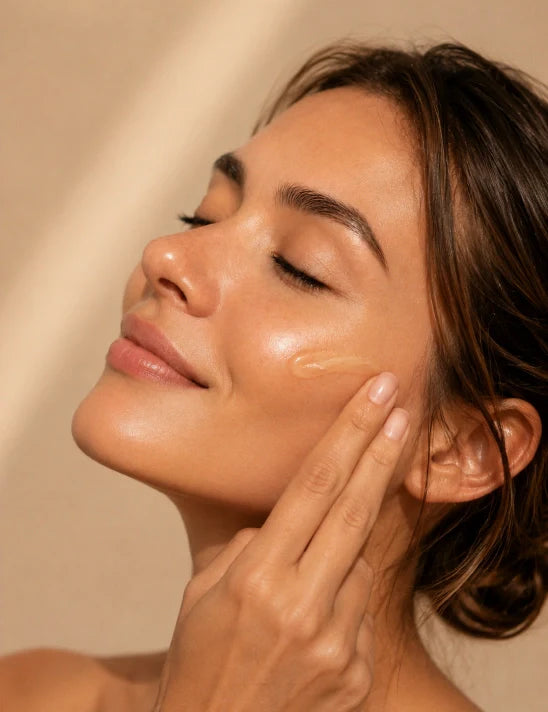
Face use is where good intentions often go sideways. Castor oil's rich, sealing feel can be too much for some complexions, especially if skin is oily, congestion-prone, or sensitive. If you want to try it on the face, choose a heavily diluted blend and use it more like a support ingredient than the whole formula.
Short facial massage works better than coating the skin heavily and leaving it shiny for hours. Keep pressure light, avoid rubbing over irritated areas, and stop if your skin feels hot, itchy, or uncomfortably coated.
The Complete Ritual and Aftercare
The most pleasant castor oil ritual starts before the oil touches your skin. This is one of those products that rewards setup. If you rush, it feels messy. If you prepare well, it feels grounding.
Lay down a towel you don't mind dedicating to oil use. Wear clothing you can wash easily. Keep a second cloth nearby for your hands, bottle drips, or any area where you've applied too much.

Warming the oil safely
Warmth can make a castor oil blend feel more comfortable and easier to spread, but gentle warming is enough. Many online routines encourage heated packs or long wear times, yet medical literature doesn't strongly support those topical claims. Safer guidance is to warm the oil in your hands or use a proper warmer, avoid uncontrolled heat sources like heating pads directly on oiled skin, and remember that the oil can stain fabrics.
That's an important trade-off. Comfort from warmth is reasonable. Aggressive heat is not a better ritual.
What to do after the massage
Aftercare depends on where you used it and how rich your blend was.
- For body massage leave a light layer on if your skin feels comfortable, then blot excess with a soft towel.
- For feet, elbows, or very dry patches let it sit longer under loose cotton clothing if you want more of a sealing effect.
- For scalp use plan ahead for washing if you used more than a very small amount.
- For face use remove any clear excess rather than letting a heavy layer sit if your skin tends to feel congested.
Keeping the ritual calm, not messy
A few habits make castor oil much easier to live with:
- Use a dedicated towel for each session.
- Dispense into your palm first rather than pouring over the body.
- Wipe bottle threads before closing the cap.
- Store away from fabrics you care about.
The best castor oil ritual doesn't leave you sticky and annoyed. It leaves your skin comfortable and your cleanup simple.
Frequently Asked Questions
Can I use castor oil as massage oil on my face
You can, but not everyone should. Facial skin often responds better to a diluted blend than to pure castor oil. If you're acne-prone, sensitive, or easily congested, start cautiously and patch test first.
How often should I do a castor oil massage
Frequency depends on the area and your skin's response. For very dry spots, some people like regular use. For scalp or facial routines, less is often more. Let your skin and hair tell you whether the routine feels nourishing or too heavy.
Is castor oil comedogenic
This article can't assign a comedogenic rating without verified data, so the most useful answer is practical. Castor oil is very viscous and can feel occlusive on some skin types. If your skin clogs easily, dilution and patch testing matter more than internet labels.
Is it safe to use during pregnancy
If you're pregnant, it's wise to ask your healthcare provider before using castor oil in any ritual that's being promoted for body support beyond simple cosmetic use. A lot of topical claims around castor oil circulate online without strong clinical backing.
Why is castor oil so easy to find in beauty products
Because it isn't a niche ingredient. Castor oil is a globally significant commodity, with major production in India, China, and Brazil, and it has a long history in traditional wellness systems including Ayurveda, which helps explain why it remains common in personal care products, as described in this Pharmacognosy Reviews overview.
Is pure castor oil always better than a blend
No. For many people, a blend is the better choice. Pure castor oil can be excellent for rough patches or focused massage. A lighter blend often works better for full-body use, sensitive skin, and scalp application.
If you're building a simpler, multi-purpose routine, Ella & Eden offers clean beauty oils and educational guides centered on practical, ingredient-first self-care.