Jojoba Oil for Scars: What the Evidence Actually Shows
You're standing in front of the mirror, tracing a dark acne mark or a thin old scar, and wondering whether a simple bottle of jojoba oil could make it look calmer, smoother, or less obvious. That question makes sense. Clean-beauty shelves are full of gentle, single-ingredient oils that promise support without the sting, complexity, or stigma of a medical treatment.
The honest answer is more specific than most product pages admit. Jojoba oil for scars has the strongest logic when skin is still healing, still remodeling, or still dealing with inflammation, not when a scar is old, white, raised, or indented. If you want a fragrance-free routine that respects sensitive skin and keeps expectations grounded, this guide walks you through what jojoba can do, what it can't do, and where it fits in a real scar-care plan.
Why People Reach for Jojoba Oil When Scars Bother Them
A lot of people don't start with a dermatologist's office. They start with a bathroom mirror, a clean-beauty shelf, and a mark they can't stop noticing. It might be a post-acne spot that's lingering longer than expected, a surgical line that still feels tender, or a childhood scar that suddenly looks more visible in harsh light.
That's where jojoba oil gets attention. It feels simple, low-drama, and familiar, which matters if your skin reacts to fragrance, heavy creams, or layered actives. For shoppers who prefer minimalist routines, jojoba looks like the kind of ingredient that can slip into a nightly ritual without making the skin feel coated or complicated.
The bigger reason people keep asking about jojoba oil for scars is that it sits at the intersection of comfort and hope. It promises hydration, softness, and a more supported healing environment, all without sounding like a prescription.
Practical rule: if the scar is still changing, jojoba is more plausibly useful than if the mark has been stable for years.
That distinction matters because consumer advice often lumps every scar together. Fresh post-breakout marks, surgical healing, and old textured scars are not the same skin problem, even if they all get called “scars” in everyday conversation. This guide is for the person who wants the biology, not just the marketing language.
What Jojoba Oil Is and Why Skin Recognizes It

A fresh scar often feels like skin that is still learning how to settle down. In that stage, the surface can be dry, tight, or easily irritated, which is why a simple, skin-friendly ingredient can matter. Jojoba fits that role because it behaves more like the skin's own surface lipids than a heavy plant oil does.
Jojoba is technically a liquid wax ester, not a true oil. It comes from the Simmondsia chinensis shrub, and its structure is unusually close to human sebum, which is the skin's natural lubrication system. That similarity helps explain why it often absorbs cleanly and why it does not leave the heavy, slippery feel that can bother acne-prone or reactive skin.
The comparison is useful because skin is less likely to treat jojoba like a foreign layer. It works alongside the skin's barrier instead of sitting on top of it in a way that feels occlusive or overly rich. For people dealing with a mark that is still remodeling, that kind of compatibility can be a practical advantage.
Why texture and processing matter
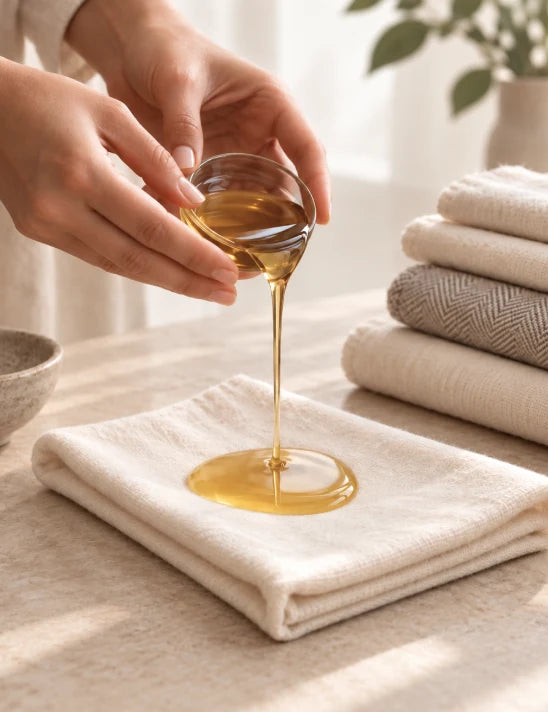
The bottle matters, too. Cold-pressed, unrefined, golden jojoba is the version sought by shoppers who want to keep the ingredient as close as possible to its natural state. More processed, clarified, or heavily decolorized versions may still be usable, but they are less aligned with a simple, whole-ingredient routine.
Jojoba is often discussed alongside a few supportive nutrients, including vitamin E, B-complex vitamins, and trace minerals such as zinc and copper. That nutrient profile is part of why the ingredient is associated with comfort, barrier support, and repair-friendly care.
A clean-feeling formula matters most when skin is already irritated, because the goal is to support the surface, not overwhelm it.
For readers who want a broader look at topical use beyond scars, the brand's own guide on jojoba oil for skin is a useful companion read for understanding how it fits into daily care.
What the Research Says About Jojoba and Scar Repair

The strongest evidence around jojoba points to skin repair pathways, not scar erasure. A 2024 ex-vivo human-skin study found that topical jojoba wax reduced the inflammatory cytokines IL-6, IL-8, and TNFα versus untreated skin, while also increasing signals linked to repair, including type III collagen and hyaluronic acid production. Those findings matter because scar care starts with what happens in the wound environment, inflammation, barrier strain, and the early rebuilding of the skin matrix.
Earlier in vitro work points in the same direction. Jojoba liquid wax showed extremely low cytotoxicity in skin cells, accelerated scratch-wound closure in both keratinocytes and fibroblasts, and stimulated collagen I synthesis through calcium-dependent signaling pathways. Another study on wound healing found the same ingredient activated pathways tied to closure and remodeling while not increasing MMP-2 or MMP-9, which matters because excessive MMP activity can break down newly forming tissue.
A practical way to read this research is to separate a fresh, remodeling mark from an old, established scar. A newer mark is still active tissue, so soothing inflammation and supporting the barrier can still influence how it settles. A mature scar has already finished much of its structural work, so a topical oil is much less likely to change the architecture, even if it helps the surface feel calmer.
Good news, real news
The good news is that jojoba has measurable biological effects in systems connected to healing. The news is that these findings do not prove it removes established scars in humans. A fresh mark, a healing post-acne spot, or skin still in the remodeling phase is a very different situation from an older scar whose structure has already stabilized.
That distinction matters for anyone comparing options like microneedling for scar texture. Procedures that physically signal the skin to remodel are aimed at structure, while jojoba is better suited to surface comfort, barrier care, and a less irritated healing environment.
The cleanest read on the evidence is simple. Jojoba looks most credible as a supportive repair ingredient, especially when the skin is inflamed or newly injured, rather than as a standalone scar reversal treatment.
Which Scar Types Might Respond and Which Probably Won't

Some scars are still open to influence. Others are basically finished building their structure. That's why the best way to judge jojoba oil for scars is to ask what stage the skin is in, not just what the mark looks like.
Most plausible matches
Fresh post-acne marks tend to be the first place people notice a difference. These spots are often still dealing with redness, dryness, or low-grade inflammation, and jojoba fits that context because it supports the skin surface without feeling aggressive. Post-surgical scars can also benefit during early recovery, as long as the skin is fully closed and the routine stays gentle.
Early-stage stretch marks sit in a similar gray zone. They're not the same as scars from injury, but they do involve tissue remodeling, so a hydrating, barrier-friendly oil can make the skin feel more supple while it's still changing.
Less likely matches
Older, mature scars are a different story. Hypertrophic scars, keloids, and deep atrophic scars have structural changes that topical oil alone is unlikely to reverse. In those cases, jojoba may make the surface feel more comfortable, but it isn't rebuilding tissue from the inside out.
If you're trying to decide whether a scar is the kind that should be treated with oil or with a procedure, a useful benchmark is whether the skin is still in motion. Once a scar has settled, topical support has a narrower role.
For anyone comparing at-home care with procedural options, a practical starting point is a guide like microneedling for scar texture from Face Studio and Wellness Center, because it helps separate surface comfort from actual texture change.
Simple test: if the mark still changes color, feel, or tenderness over time, topical support is more relevant than if it's been unchanged for years.
A Safe Routine for Using Jojoba Oil on Scars
A good jojoba routine should feel calm, not fussy. Start with a patch test on a small area for 24 to 48 hours, especially if your skin is reactive or you're applying it near a healing area. If the skin stays comfortable, move to the scar itself after cleansing with a gentle, non-stripping cleanser.
Apply jojoba to slightly damp skin so it helps seal in hydration. A small amount, usually 2 to 4 drops, is enough for one scar or a small area. Massage it in with light circular motions along the scar line rather than rubbing hard across the skin.
A routine that stays skin-friendly
Use it once or twice daily, depending on how your skin feels. Morning application works best before sunscreen, while nighttime application can be paired with a simple moisturizer if your skin likes that extra cushion. If you wear makeup, let the oil settle first so the finish doesn't pill or slide.
The brand's guide on how to use jojoba oil is a helpful reference if you want to keep the ritual minimal and consistent.
A few practical do's and don'ts keep the routine safe:
- Do keep the bottle capped and clean, because contaminated dropper tops can undo a gentle routine.
- Do apply only to closed skin, since open wounds need medical-style wound care, not a sealing oil.
- Don't use too much, because excess oil can sit on surrounding pores and feel heavy.
- Don't layer on multiple strong actives at once, especially if you already use retinoids or exfoliants.
If you're also using vitamin C or a retinoid, introduce them slowly and keep jojoba as the soothing base layer rather than stacking everything on the same night. Sensitive skin usually does better when one product has a clear job.
Pairing Jojoba Oil With Other Scar-Care Approaches
A scar rarely needs one product to do every job. Jojoba can support the skin around it, while other treatments handle the parts jojoba cannot change, such as raised texture, lingering color, or scars that keep tightening as they mature. That distinction matters most with fresh, remodeling scars, since the skin is still reorganizing and tends to respond better to barrier support than an old, settled scar does.
For raised scars, silicone gel or silicone sheeting has a more established place in scar care than any oil, because it is designed to help flatten and soften raised tissue. For marks that are turning brown or dark after inflammation, broad-spectrum SPF 30+ helps prevent sun exposure from making discoloration linger longer. Jojoba still has a role here, because it can reduce the dry, tight feeling that makes healing skin look and feel more obvious.
Where it fits in a layered routine
Use jojoba alongside simple, well-chosen treatments if your skin tolerates the combination. It can sit before a silicone product in some routines, or it can stand alone when comfort and barrier support are the main goals. If you're tempted to add rosehip seed oil, vitamin E, or bakuchiol, keep the formula simple so you know what your skin likes.
A cleaner way to think about the routine is to give each step one job. Jojoba helps the skin feel less tight, silicone addresses raised texture, sunscreen protects color, and a dermatologist handles scars that are painful, widening, or affecting movement.
The goal is not a crowded routine. It is a calm one, where each product has a clear purpose and the skin gets the support it needs to heal without extra irritation.
Common Misconceptions Worth Clearing Up
The biggest myth is that oils erase scars. They don't. Oils can support the healing environment, soften dryness, and help skin feel more comfortable, but they don't restructure mature scar tissue on their own. That distinction saves people from waiting months for a result that topical care was never going to deliver.
Another common mistake is assuming that natural automatically means safe for everyone. Even gentle oils can irritate compromised skin, especially if the barrier is already inflamed or if you're applying them too early. Patch testing still matters.
More is not better, either. A few drops are usually enough, and over-application can make the surrounding skin feel congested or greasy. This is especially true if you're already acne-prone.
Finally, not every jojoba bottle is equal. A cold-pressed, unrefined, single-ingredient formula is the cleanest way to keep the ingredient close to its natural profile, while heavily processed versions may be less appealing for skin-focused use.
Clean-beauty doesn't mean wishful thinking. It means choosing the simplest formula that matches the skin's actual needs.
The Honest Takeaway on Jojoba Oil for Scars
Jojoba oil for scars makes the most sense when the skin is still healing, still remodeling, or still sensitive. That's where its strengths show up most clearly, in hydration, barrier comfort, and inflammation support. The research points to real effects in skin-repair pathways, but it does not show that jojoba erases established scars.
That's the decision rule I'd use. Start jojoba early on a fresh mark, keep the routine gentle, and protect the area with sunscreen if sun exposure is possible. If the scar is raised, painful, spreading, or changing in a concerning way, bring in a dermatologist rather than trying to solve it with oil alone.
For a sensitive-skin routine, the cleanest formula is usually the best fit, especially if you want one product that supports both comfort and consistency. A cold-pressed, single-ingredient jojoba oil can be a calm, practical part of that approach.
Ella & Eden's philosophy fits this kind of care well, because it focuses on simple, fragrance-free rituals that support what your skin is already trying to do. If you want to build a minimalist routine around pure, easy-to-use oils, visit Ella & Eden and choose the ingredients that match your skin's stage, not just the label's promise.