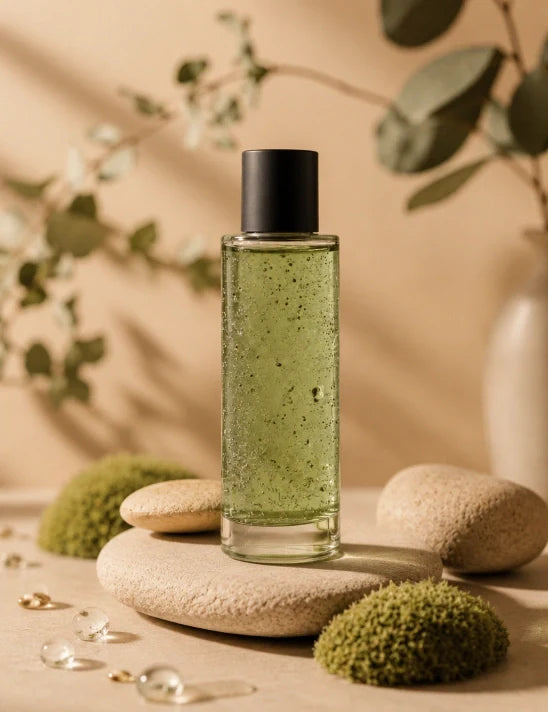
Natural Oils for Body: A Guide to Radiant Skin
Somewhere between your morning shower and getting dressed, you’ve probably had this thought: why does my skin already feel dry again? You smooth on lotion, it feels nice for a little while, and then by afternoon your shins look ashy, your arms feel tight, or your elbows are back to asking for help.
That cycle is what sends many people looking for something simpler. Not more steps. Not a shelf full of products. Just one thing that feels supportive, comforting, and easy to repeat every day.
That’s where natural oils for body stand out. A single-ingredient oil doesn’t just sit in your routine like another product to finish. It becomes part of a ritual. A few drops in your palms. Warmth from your hands. Skin that looks calmer, softer, and more alive. The experience is minimal, but it doesn’t feel bare. It feels intentional.
Why Your Skin Prefers Oil to Lotion
A lot of body lotions do one job well. They make skin feel instantly smoother.
The problem is that many people mistake that quick slip for lasting nourishment. If your skin still feels thirsty a few hours later, you’re not imagining it. You’re noticing the difference between temporary comfort and deeper support.
The familiar lotion loop
Think about the usual pattern.
You apply lotion after a shower. Your skin feels fine while you’re getting ready. By midday, the dry patches return. At night, you reapply. Then you start over the next day.
That rhythm can feel normal, but it’s also exhausting. It asks you to keep layering product onto skin without really changing how cared for your skin feels.
Natural body oils offer a different experience. They’re simple, concentrated, and closer to what dry skin often wants: lipids, softness, and protection without a long ingredient list.
Skin often doesn’t need more complexity. It needs something that helps it hold onto comfort for longer.
Why more people are reaching for oils
This shift isn’t just personal preference. It reflects a much wider move toward simpler, plant-based body care.
In 2024, natural oils held a 68.9% share of the global body oil market, while North America accounted for 41.8% of the market and USD 1.2 billion in revenue, according to body oil market data from Market.us. That tells you something important. People are actively choosing ingredient transparency and plant-based options over more synthetic-feeling alternatives.
Oil feels different because it is different
Body oil doesn’t usually give you that fluffy, whipped, water-light sensation lotion does. Instead, it gives you something quieter and often more lasting.
A few drops can leave skin:
- Softer by touch because rough areas feel smoother
- More comfortable because tightness fades
- More luminous because oil naturally catches light on the skin
- Less overloaded because you’re often using one ingredient instead of many
For many women, that simplicity is true luxury.
You don’t need a complicated routine to create a moment of care. Massaging oil into damp arms and legs after a shower can feel grounding in a way lotion often doesn’t. It slows you down for a minute. It invites you to notice your skin instead of fighting with it.
Nourishment, not just coverage
Lotion has a place. But if your goal is skin that feels supported rather than coated, oil often makes more sense.
That’s especially true if you prefer products that are fragrance-free, filler-free, and easy to understand. When the label says jojoba oil or argan oil, you know what you’re putting on your body. That clarity can feel like a relief.
The Simple Science of How Natural Oils Work
Skin isn’t asking for magic. It’s asking for materials it can work with.
That’s why oils can feel so intuitive. Your skin already contains lipids. When you apply the right plant oil, you’re adding something that behaves in a familiar way, not something completely foreign.

Think of oil as food for your skin
A useful way to understand this is to compare covering with feeding.
Some products mainly sit on top of the skin and create a temporary seal. That can be helpful, but it may not feel satisfying for long. Natural oils do that sealing job while also bringing skin-friendly fats and protective compounds.
In plain language, oils can help by:
- Reducing water loss so skin doesn’t dry out as quickly
- Smoothing rough texture by filling tiny gaps between skin cells
- Supporting the skin barrier with fatty acids
- Adding antioxidant support through naturally occurring plant compounds
Why fatty acids matter
When people hear “fatty acids,” it can sound technical. It doesn’t need to.
Fatty acids are components of oils that help explain why one oil feels rich, another feels light, and another seems especially comforting on dry skin. Their composition shapes how an oil spreads, absorbs, and supports the skin barrier.
One clear example comes from olive oil. According to Medical News Today’s discussion of olive oil’s nutritional profile, extra virgin olive oil contains 9.58 grams of monounsaturated fatty acids per tablespoon, compared with 0.88 g in coconut oil. That richer monounsaturated profile helps explain why certain oils are valued for barrier support and antioxidant protection.
You don’t need to memorize those numbers. The takeaway is simpler than it sounds: different oils nourish skin differently because their fat profiles differ.
Carrier oils and essential oils are not the same
This is one of the most common points of confusion.
Carrier oils are the base oils you can use to moisturize the body. Think jojoba, argan, olive, or castor. They provide slip, softness, and barrier support.
Essential oils are highly concentrated aromatic extracts. They are not the same as body oils, and they usually need dilution before skin use. If you want a gentle, minimalist ritual, single-ingredient carrier oils are often the easiest place to start.
Why simple formulas often feel better
If your skin is sensitive, fewer ingredients can mean fewer variables. There’s less guesswork. You’re not trying to figure out whether the problem is the synthetic fragrance, the filler, or the preservative blend.
Practical rule: If your skin gets reactive easily, start with one single-ingredient oil and use it consistently before adding anything else.
That’s part of why body oiling feels so calming. The science is straightforward. You’re helping skin hold onto moisture and softness with lipids it can readily welcome.
Your Guide to the Best Single-Ingredient Body Oils
You step out of the shower, skin still warm, and pause with one bottle in your hand. This is the moment a body oil becomes more than moisturizer. The texture, the scent, the way it spreads across damp skin all shape whether the ritual feels grounding or forgettable.
Single-ingredient oils each bring a different mood to that routine. Some disappear quickly and leave a light satin finish. Others stay on the skin longer and create a slower, more cocooning experience. Choosing well is less about finding one “best” oil and more about picking the feel your skin and senses will welcome.

Natural Body Oil Quick-Reference Guide
| Oil | Best For Skin Type | Primary Benefit | Feel |
|---|---|---|---|
| Jojoba oil | Oily, combination, sensitive | Balances and softens without heaviness | Lightweight, silky |
| Argan oil | Dry, mature, combination, sensitive | Barrier support and softness | Light to medium, smooth |
| Castor oil | Very dry, rough areas | Conditioning feel | Thick, rich |
| Rosemary oil | Scalp-focused use, not full-body solo use | Supports a scalp ritual when diluted in a carrier oil | Potent, aromatic |
| Olive oil | Dry skin that likes a richer feel | Nourishing, cushiony moisture | Medium to rich |
Jojoba oil is often the easiest place to begin
Jojoba has a steady, balanced feel that makes it easy to live with. If an oil has ever felt too slick, too shiny, or too heavy, jojoba often solves that problem.
Part of the reason is its structure. Jojoba is technically a liquid wax ester, and that gives it a feel many people describe as skin-like rather than greasy. It is also often chosen for sensitive or blemish-prone skin because it tends to sit lightly on the body.
It usually suits:
- Oily skin, because it feels balanced rather than slick
- Combination skin, because it softens without a coated finish
- Sensitive skin, because a one-ingredient formula keeps the routine simple
- First-time oil users, because the texture feels approachable
In a daily ritual, jojoba works well when you want your body care to feel light and clean. It is the white cotton tee of body oils. Reliable, comfortable, and easy to reach for.
If breakouts are part of your skin story, this guide on best oils for acne-prone skin gives more context on how oils like jojoba can fit into that routine.
Argan oil brings softness with a polished finish
Argan oil feels a little more dressed than jojoba. It still absorbs well, but it leaves behind a smoother, more supple finish that many people love on dry arms, legs, and décolletage.
Pressed from the kernels of the Argania spinosa tree, argan oil is known for its fatty acid profile and its naturally conditioning feel. In practice, that means it helps skin feel less tight and look less dull without turning your routine into a heavy, glossy one.
Argan often works well for:
- Dry skin that wants softness without residue
- Sensitive skin that does better with simple, fragrance-free care
- Mature skin that benefits from a smoother, more supple look
- Minimalist routines where one bottle needs to work for body and hair ends
If jojoba feels casual, argan feels refined. It is the oil you may reach for when you want your evening routine to feel a little more intentional, even if the whole process still takes only two minutes.
Castor oil is slow, dense, and comforting
Castor oil has presence. You notice it as soon as it touches the skin.
That thickness is exactly what makes it useful for rough heels, dry elbows, knees, and hands that seem to lose moisture by midday. Rather than giving an all-over lightweight slip, castor oil behaves more like a treatment layer. It lingers, cushions, and gives dry spots extra attention.
This makes it a good choice for people who enjoy a slower ritual. A small amount massaged into stubbornly dry areas can feel almost like pressing a rich balm into the skin, only in liquid form.
It also shows up often in hair and scalp routines, especially for curly, coily, or textured hair that benefits from richer oils. If you also like DIY wellness staples, some people pair body oiling with other simple home rituals and make your own magnesium oil for a separate post-shower step.
Use castor oil sparingly. A few drops can do a lot.
Rosemary oil belongs beside your body ritual, not in place of it
Rosemary oil can be confusing in articles about body oils, so it helps to draw a clean line. Rosemary essential oil is not a standalone body moisturizer like jojoba, argan, castor, or olive oil.
Its role is different. Rosemary is usually used in very small amounts, diluted into a carrier oil for scalp massage. The connection is practical: body oiling and scalp care often happen in the same self-care rhythm, especially after bathing, when you are already slowing down and caring for skin and hair in one sequence.
If the idea of a minimalist ritual appeals to you, rosemary can still have a place in it. Just treat it as a concentrated scalp ingredient, not as something to smooth all over the body straight from the bottle.
Olive oil feels familiar, substantial, and grounding
Olive oil does not need novelty to be useful. Its appeal is the opposite. It feels known, steady, and generously rich.
For very dry body skin, that cushiony texture can be exactly right. Olive oil suits people who want their evening body care to feel substantial on the skin, especially on legs, arms, and feet. It is less about a silky dry finish and more about comfort.
There is also something reassuring about using an oil you already understand. In a minimalist self-care practice, that matters. The ritual works best when it feels easy to repeat, not complicated to maintain.
How to choose without overthinking
Start with the finish you want on your skin.
Choose jojoba if you want balance and a light, easy feel.
Choose argan if you want softness and a smoother, polished finish.
Choose castor if you want a dense treatment oil for rough or very dry areas.
Choose olive if you enjoy a richer, more traditional texture.
For a simple body and hair routine, single-ingredient options such as Jojoba Oil, Argan Oil, Organic Castor Oil, and Rosemary Oil from Ella & Eden offer that straightforward, one-oil-at-a-time approach without added fragrance or filler.
How to Create Your Perfect Body Oiling Ritual
The most effective body oil routine doesn’t have to look luxurious from the outside. It just has to feel repeatable.
That means choosing a time you can stick with, using less oil than you think, and applying it in a way that turns “moisturizing” into a moment your body registers as care.

Start when skin is still damp
The ideal time to apply body oil is right after bathing, before your skin is fully dry.
Damp skin gives the oil a little water to work with, which helps the application feel smoother and more even. It also turns the process into sealing and softening, not just coating.
If you’ve ever rubbed oil onto completely dry skin and felt it sat there awkwardly, timing is probably the issue.
Use less than your instincts tell you
Many people overapply body oil the first time.
Start with a small amount in your palms, then warm it between your hands before pressing and sweeping it onto the skin. You can always add more to shins, knees, elbows, or anywhere that feels extra dry.
A simple rhythm looks like this:
- Pat skin lightly with a towel so it’s damp, not dripping.
- Pour a small amount into your palm.
- Warm the oil between both hands.
- Apply with long, steady strokes over arms and legs.
- Press extra oil into dry patches instead of rubbing aggressively.
Smooth the oil on slowly enough that your nervous system notices. That’s part of the benefit.
Turn application into a grounding habit
Body oiling becomes a ritual when you stop treating it like cleanup after a shower.
Try this:
- For mornings choose a lighter-feeling oil and use brisk, upward strokes that help you feel awake and collected.
- For evenings slow down and spend more time on feet, shoulders, and legs, especially if your body feels tired.
- For stressful days cup your hands over your arms or chest for a moment after applying oil and take a few slower breaths before getting dressed.
Those tiny pauses are what make a minimalist routine feel whole.
Try small variations that fit real life
You don’t have to use body oil in only one way.
Some people like to:
- Add a few drops to bathwater for a softer post-soak feel
- Use oil for self-massage on calves, shoulders, or tired hands
- Blend textures intentionally by using a lighter oil all over and a richer one on rough spots
- Extend the ritual to the scalp by applying a small amount of carrier oil before or after wash day
If muscle relaxation is part of your evening routine, you might also enjoy learning how to make your own magnesium oil so you can pair body oiling with another simple wind-down practice.
Keep the ritual easy to return to
What makes a ritual stick is convenience.
Store the bottle where you’ll use it. Keep a towel nearby. Choose one oil first instead of building a whole collection. If you want a closer look at one especially versatile option, this guide to jojoba oil pure benefits simple rituals gives practical ideas for everyday use.
The best ritual isn’t the most elaborate one. It’s the one that leaves your skin softer and your mind a little quieter.
Decoding Quality and Sustainability in Natural Oils
A single-ingredient oil asks you to pay attention.
The bottle is simple, so the details matter more. Two products can both be labeled argan oil and still feel very different on skin. One may feel rich and cushiony, with a natural scent that signals the seed or nut it came from. Another may feel stripped down, flat, or oddly slick because of how it was processed, stored, or diluted before it reached your bathroom shelf.

What cold-pressed and unrefined mean
These terms get used a lot because they directly affect an oil's quality.
Cold-pressed usually means the oil was extracted without high heat. Unrefined means it went through less processing afterward. A simple way to read that is this: less interference often leaves more of the oil's original character intact, including the fatty acids, natural scent, color, and skin feel that make a single-ingredient oil satisfying to use.
That matters in a body ritual. If you are choosing one oil and using it with intention, you want the version that still feels connected to its source. Processing can shape whether an oil feels alive and nourishing or generic and forgettable.
A quick label reading checklist
A good label should answer basic questions clearly. You should be able to tell what the oil is, how it was processed, and how well the packaging protects it.
Look for:
- One clearly named ingredient. The oil itself should be easy to identify.
- Plain processing terms such as cold-pressed or unrefined.
- Protective packaging. Dark or opaque glass helps shield oils from light, which can affect freshness over time.
- No added fragrance or filler oils if your goal is a pure, minimalist body oil.
A few label habits are less reassuring.
- Vague blends that do not tell you how much of each oil is included
- Added parfum or synthetic fragrance if you want a simpler formula
- Loose sourcing language that sounds appealing but gives no real detail about origin or processing
Sustainability shows up in small decisions
Sustainability is not only about where the plant was grown. It also shows up in the bottle, the formula, and the amount of waste built into the product.
A single-ingredient oil can fit naturally into a lower-waste routine because one bottle may cover several roles, daily moisture, massage, and post-bath skin care. That kind of simplicity changes the feel of the ritual too. Fewer products on the shelf often means less visual noise, fewer decisions, and a steadier habit.
Before you buy, ask yourself a few quiet questions. Do I know what this oil is? Do I understand how it was processed? Does the packaging help protect what is inside? Brands that answer those questions clearly usually make it easier to choose well.
If you want a clearer explanation of extraction methods and how they affect the final product, this guide to what cold-pressed oil means and why it matters is a useful reference.
Your Questions About Natural Body Oils Answered
A body oil routine often sounds lovely in theory, then real-life questions show up the moment you reach for the bottle. Will it feel greasy. Can you use the same oil on your face or hair. How much is too much. Those are practical questions, and once you answer them, the ritual becomes much easier to enjoy.
Will body oil make me break out
It can, especially if you use a heavier oil on areas that already tend to clog, such as the chest or upper back.
Skin on the body is not all the same. Your shins and elbows often welcome richer oils, while breakout-prone areas may prefer something lighter and faster-absorbing. The simplest way to start is to patch test on a small area and use a very small amount on damp skin. That gives you a clearer read on how your skin responds.
Can I use body oil on my face too
Sometimes, yes, but it depends on the oil and on your skin.
Single-ingredient oils are versatile, yet facial skin is usually more reactive than the skin on your arms or legs. If you are acne-prone or easily irritated, choose carefully and stay with a simple option. Jojoba is often a comfortable starting point because it has a light, balanced feel that does not sit too heavily on the skin.
Can I use these oils in my hair
Yes. Many people use the same bottle for body, scalp massage, or smoothing dry ends.
That multipurpose use is part of the appeal of minimalist oils. One simple ingredient can move through different parts of your routine without making the ritual feel crowded. Richer oils may suit dry ends or targeted scalp use, while stronger essential oils, such as rosemary, should be diluted in a carrier oil before they touch the scalp.
How long does a bottle last
That depends on where you use it and how generous your application is.
Body oil often lasts longer than people expect because damp skin helps it spread with very little product. A few drops can cover more area than a pump of lotion. If you use one bottle only after bathing, it may last quite a while. If the same oil also becomes part of your hair and scalp ritual, you will finish it faster.
Do I need a different oil for morning and night
No. One well-chosen oil is enough for many routines.
Some people enjoy a lighter oil in the morning and a richer one in the evening because the experience feels different. That is about preference and ritual, not a rule your skin requires. A single bottle used consistently can create a calming rhythm, especially after a shower or before bed.
Can I apply oil before going in the sun
Yes, but body oil and sunscreen do different jobs.
Oil helps with softness and comfort. Sunscreen helps protect against UV exposure. If you are getting dressed for a day outside, apply your body oil as your moisture step and use sunscreen as your protection step.
What if I don’t like feeling greasy
Application method matters as much as oil choice.
Use less than you think you need, press it onto damp skin, and give it a minute before getting dressed. Lighter oils such as jojoba or argan usually feel easier for people who want slip and softness without a coated finish. In many cases, the greasy feeling comes from overapplying, not from oil itself.
If you’re ready to simplify your routine with pure, multi-purpose oils, explore Ella & Eden for single-ingredient options designed for skin, hair, and everyday self-care rituals.