Stress Spray Relief: A Practical Guide to Calming Use
Your hands are slightly shaky before the video call starts. You've checked the notes twice, your pulse feels louder than usual, and you reach for a small bottle on the desk. One discreet spritz, a slower breath, and a brief pause won't solve the cause of the stress, but they can give your nervous system a clear change of pace.
That's the useful promise of stress spray relief. A well-made mist can combine a familiar scent, a deliberate pause, and a simple sensory cue that helps you step out of an escalating loop. The limits matter too. Aromatic sprays and magnesium sprays aren't interchangeable, and topical magnesium shouldn't inherit claims that belong to oral supplementation.
What a Stress Relief Spray Is and Why It Works
A stress relief spray is usually a fine-mist product designed for a quick, portable application. Depending on the formula, it may deliver aromatic volatile compounds into the air around your face and body, apply essential oils to the skin, provide a mineral solution, or combine botanical and mineral ingredients.
The calming experience usually comes from three inputs working together:
- Scent exposure: Aromatic molecules can create a rapid sensory shift through the olfactory system, which is closely connected with emotional processing.
- The pause itself: Reaching for the bottle, applying it, and taking a breath creates a small interruption between a stressful trigger and your next action.
- Skin sensation: A cool mist, a light botanical feel, or the salty sensation of a magnesium solution can give your attention something physical to notice.
The ritual is often more reliable than the marketing language. You're not spraying away anxiety in a clinical sense. You're creating a repeatable cue that says, “Pause, breathe, and choose the next step.”
Practical rule: Treat the spray as a support for regulation, not as a replacement for medical care, sleep, nutrition, therapy, or prescribed treatment.
A 2020 meta-analysis reviewed 25 articles covering 32 trials and found that inhalation and massage aromatherapy significantly reduced anxiety scores. The pooled weighted mean difference was -5.16 on the State Anxiety Inventory and -2.85 on the Trait Anxiety Inventory, with both results reported at p<0.001. The included studies mentioned no side effects, although that finding doesn't establish that every commercial spray is risk-free. You can review the 2020 aromatherapy meta-analysis on PubMed for the study details.
A scent ritual may be a useful option alongside other nonprescription approaches. The important distinction is that a pleasant immediate shift in how you feel isn't the same as correcting a deficiency or treating an anxiety disorder.
The Two Main Spray Types and What They Actually Do
Two products can sit beside each other on a bathroom shelf and behave very differently. A botanical aromatherapy spray is primarily a sensory product, while a mineral magnesium spray is marketed as a topical mineral product. Some formulas combine both, which makes the ingredient panel more important than the front-label promise.
Botanical aromatherapy sprays
These mists typically use water, alcohol, a hydrosol, or a solubilized base to carry essential oils. Lavender, chamomile, citrus oils, woods, and floral materials are common choices. The intended action is mainly olfactory, with the scent creating a quick association with breathing, rest, or a change in environment.
A 2023 review of inhalation aromatherapy screened 628 studies, selected 76 studies involving a combined 6,539 patients, and found that more than 70% of the studies reported positive effects on anxiety in intervention groups compared with controls. That history supports scent-based interventions as more than isolated anecdotes, but it doesn't prove that every blend, dosage, or spray format will produce the same result.
Mineral magnesium sprays
Magnesium sprays commonly use a magnesium-chloride solution. Brands market them for relaxation, muscle comfort, sleep routines, or stress support, but the central scientific question is whether meaningful amounts cross the skin and change whole-body magnesium status.
The evidence is considerably less settled than the marketing suggests. An independent review described the evidence for transdermal magnesium as “scientifically unsupported,” and another review found that studies hadn't used a validated measure of subjective stress as an outcome. Oral magnesium has a stronger research foundation for correcting low intake or deficiency, but that evidence shouldn't be transferred automatically to a spray.
| Feature | Botanical Aromatherapy Spray | Mineral Magnesium Spray |
|---|---|---|
| Primary delivery | Scent into the breath zone and essential oils onto skin | Magnesium-chloride solution onto skin |
| Main intended experience | Sensory reset, mood cue, and calming ritual | Topical mineral routine, often aimed at relaxation or muscle comfort |
| Evidence position | Aromatherapy has a broader clinical literature | Transdermal absorption and stress effects remain uncertain |
| Best selection clue | Look for the essential-oil or hydrosol list | Check the magnesium form and avoid assuming systemic correction |
| Main trade-off | Fragrance may irritate sensitive users | Mineral claims may exceed the evidence |
For a more detailed product-focused discussion, you can read this overview of magnesium oil spray benefits. Use it as a formulation reference, then judge any product by its ingredients, directions, and claims.
How to Apply a Stress Spray for Real Calm
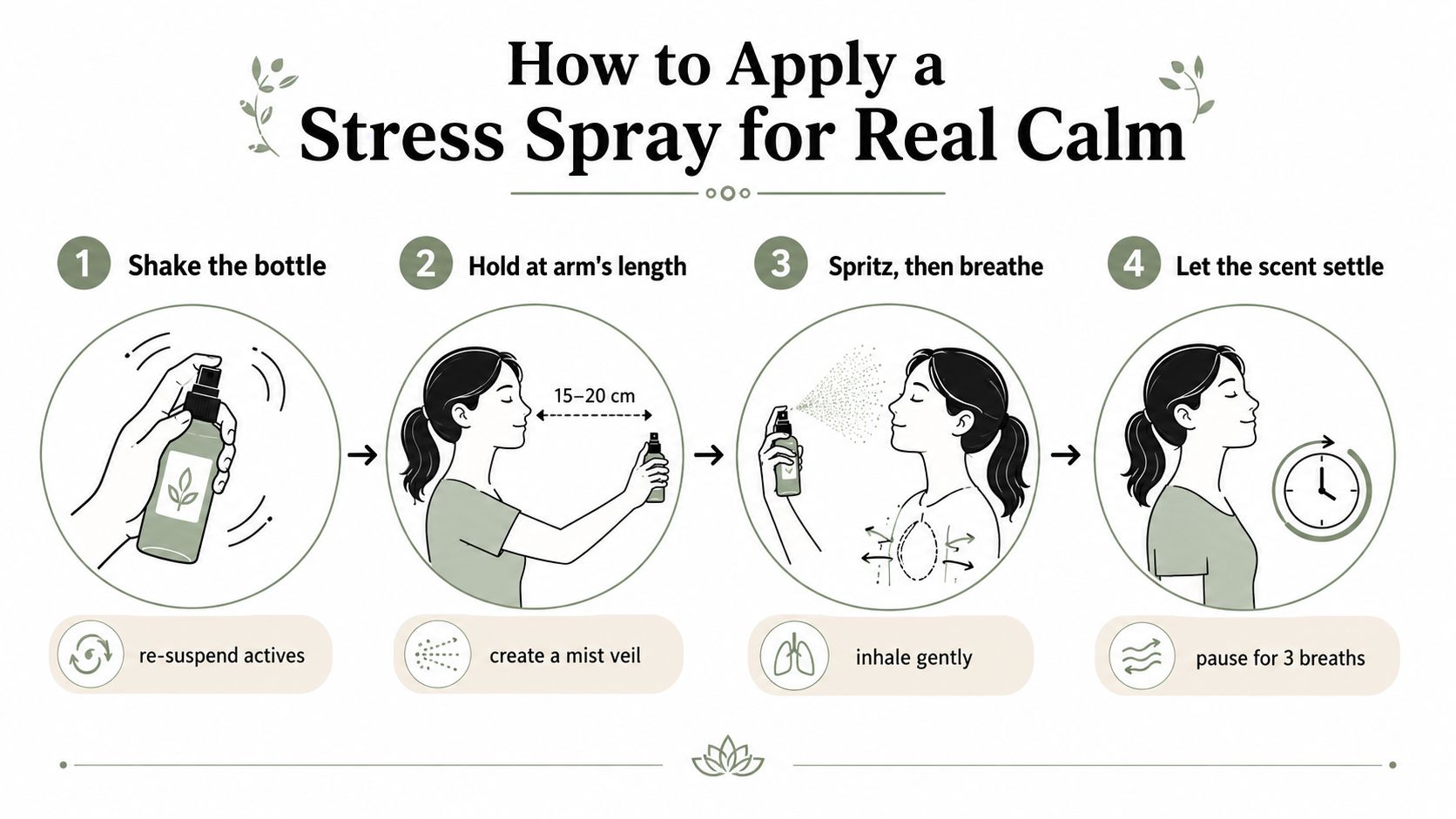
A spritz works better as a short routine than as a reflexive puff into the air. The application gives your body a sequence to follow, and the breathing pattern helps prevent the scent from becoming just another background stimulus.
- Shake the bottle first. Oils, minerals, and botanical materials can separate or settle. A brief shake helps distribute the formula more evenly.
- Create distance. Hold the bottle roughly eight to ten centimeters from a pulse point or the upper chest. Never aim directly at your eyes, nose, or mouth.
- Use a restrained amount. Apply two to three mists per area, then stop. More fragrance isn't automatically more calming, especially in a small office or enclosed room.
- Add slow breathing. Inhale through your nose for about four seconds, then exhale through your mouth for about six seconds. Keep the breath comfortable rather than forcing a deep inhale.
- Let the mist dry. Rubbing can spread concentrated essential oils across a larger skin area and may increase irritation. Allow the product to settle naturally.
- Reapply according to the label. If the formula permits repeated use, wait until the scent has faded rather than continually layering fresh fragrance over old residue.
- Protect the bottle. Store it away from heat and direct sunlight, which can affect aromatic materials and the stability of the formula.
For a pre-meeting reset, apply the spray before opening the call, place both feet on the floor, and complete several unhurried breaths. For bedtime, use a scent that won't feel stimulating and keep the bottle on the nightstand so the ritual doesn't require scrolling or bright light.
The point isn't to chase a dramatic sensation. A quieter, repeatable cue is easier to use consistently and less likely to overwhelm your skin or your senses.
Common Calming Ingredients Compared
Ingredient choice changes both the emotional impression and the practical usability of a spray. Lavender can feel familiar and soft to one person, while another may find it too perfumed. Citrus can feel bright during a commute, but it needs careful formulation and sun exposure guidance.
| Ingredient | Scent and feel | Typical skin tolerance | Likely effect | Main caveat |
|---|---|---|---|---|
| Lavender | Herbal, floral, clean | Often comfortable when properly diluted | Familiar calming cue and gentle wind-down support | Can smell perfumey or irritate very sensitive skin |
| Bergamot | Fresh, citrusy, slightly floral | Depends heavily on dilution and oil type | Bright, mood-oriented sensory lift | Some bergamot preparations can be phototoxic |
| Chamomile | Soft, apple-like, tea-like | Often perceived as gentle | Quiet, comforting scent profile | Plant allergies and formula quality still matter |
| Ylang-ylang | Rich, sweet, floral | More likely to feel heavy or irritating for some users | Deep floral relaxation cue | Polarizing aroma and careful dilution required |
| Cedarwood | Dry, woody, warm | Usually used in small amounts | Grounding, earthy atmosphere | Can dominate a delicate blend |
| Vetiver | Smoky, rooty, earthy | Use cautiously on sensitive skin | Heavy, settling bedtime character | Strong and divisive scent |
| Magnesium chloride | Mineral, salty, sometimes prickly | May sting or itch on compromised skin | Topical mineral ritual and local skin sensation | Whole-body absorption and stress claims remain uncertain |
| Magnesium glycinate | Little to no scent as an oral form | Not usually a spray ingredient | Oral supplementation option in appropriate contexts | Shouldn't be treated as interchangeable with topical magnesium |
Lavender's familiar chemistry includes linalool and linalyl acetate, but the experience depends on the plant's chemotype, growing conditions, extraction method, and dilution. Two lavender sprays can therefore smell and feel noticeably different.
Bergamot deserves extra care because phototoxicity depends on the specific preparation. If a label doesn't clearly explain the oil type and use instructions, choose a different ingredient for exposed skin.
Keep the categories distinct. A spray primarily changes a sensory moment, while an oral supplement may address nutritional intake.
Safe Use, Patch Testing, and Dosing
Start with the skin, not the claim. A formula can be natural and still cause irritation, particularly if it contains citrus oils, ylang-ylang, concentrated mineral salts, alcohol, or multiple fragrance materials.
A simple safety sequence
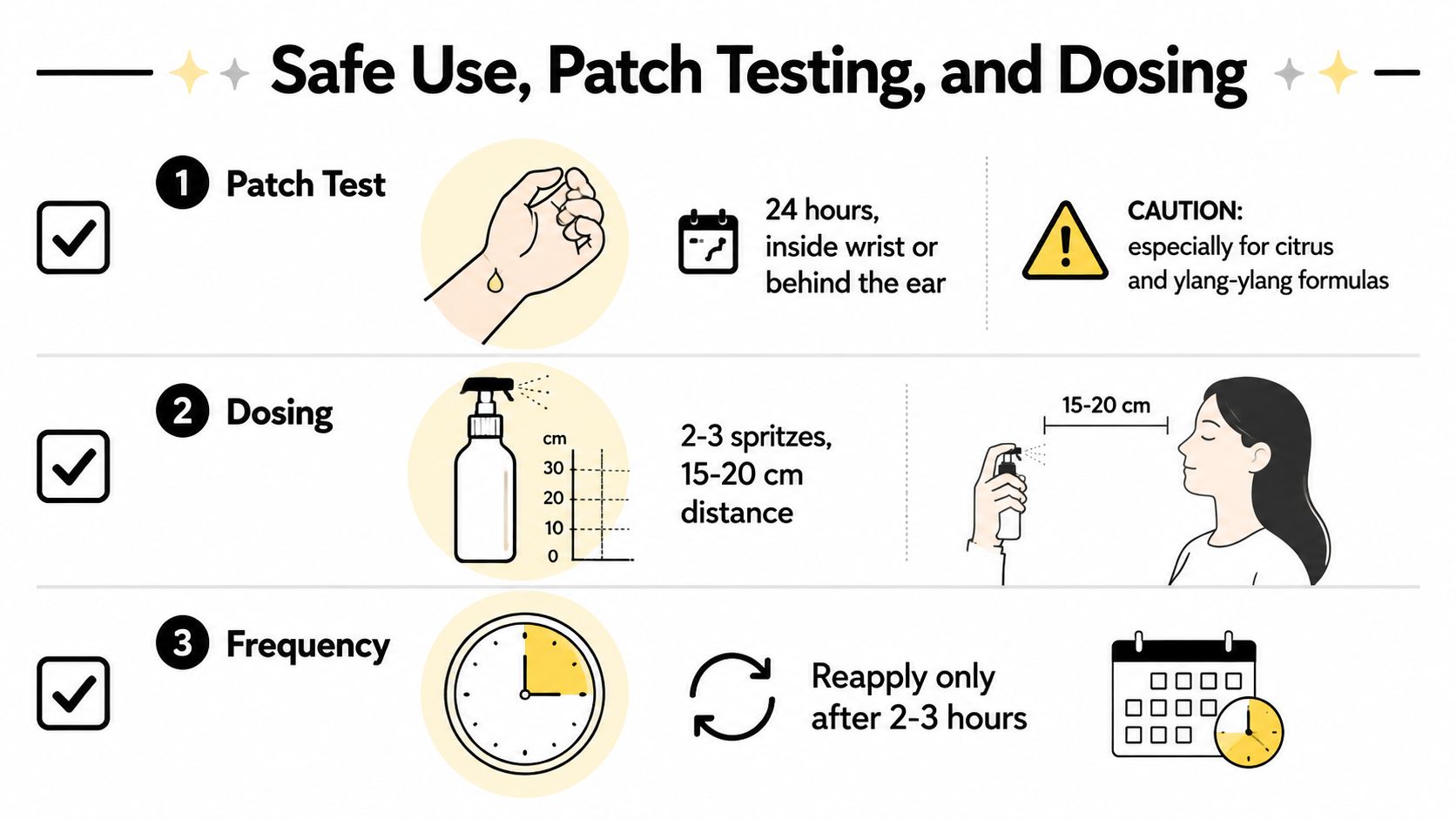
Apply a small amount inside the wrist or behind the ear and wait 24 hours before regular use. This doesn't guarantee that you'll never react, but it gives you a practical screen for obvious redness, itching, burning, or swelling.
Use the bottle at a distance of roughly 15 to 20 centimeters when spraying near the face or chest. Keep mist away from eyes, mucous membranes, broken skin, and areas that are already inflamed.
Skin rule: Tingling is not proof that a magnesium spray is working, and redness isn't a sign to apply more.
For aromatic mists, keep use modest and follow the product label. A practical ceiling is two to four uses per day, with reapplication after the scent fades instead of repeatedly layering fragrance on the skin.
Magnesium sprays can feel itchy because of their concentrated salt solution. If you want to limit that sensation, leave the product on for 10 to 20 minutes, then rinse. Avoid covering damp, recently sprayed skin with tight clothing, especially if you're prone to irritation.
People who should take extra care
- Pregnant users: Ask a qualified clinician before using essential-oil products, especially concentrated blends.
- People taking sedatives or blood-pressure medication: Discuss regular use with a clinician if the spray contains strong botanicals or if you're using it as part of a broader supplement routine.
- Young children: Avoid using essential-oil sprays on children under six unless a healthcare professional has advised you.
- People with scent-triggered asthma: Choose fragrance-free alternatives or ask a clinician before introducing an aromatic mist.
- Pet households: Keep essential-oil sprays away from pets, particularly cats and birds, and don't mist directly around them.
Stop using a product if irritation persists or if you develop breathing difficulty, swelling, or widespread hives. A calming ritual shouldn't create a new health problem.
Matching the Spray to Your Moment
The right spray depends less on the word “calm” and more on what you need the moment to feel like. A bright citrus scent can help mark the start of a demanding morning, while a dense woody blend may fit better when your aim is to reduce stimulation before sleep.
| Situation | Format to consider | Ingredient direction | How to use it |
|---|---|---|---|
| Morning commute | Light botanical mist | Sweet orange or a carefully formulated citrus blend | Use on a pulse point before leaving, then pair it with steady breathing |
| Pre-meeting nerves | Low-diffusion aromatherapy spray | Lavender or a restrained floral blend | Apply discreetly to the wrist or chest, not into a shared office space |
| Midday work break | Floral or rose hydrosol mist | Rose or chamomile | Use as a short sensory reset away from your screen |
| Post-workout tension | Mineral spray for a local ritual | Magnesium chloride | Apply to clean skin if tolerated, then rinse if it feels prickly |
| Bedtime | Quiet botanical or mineral routine | Vetiver, cedarwood, lavender, or an unscented mineral product | Use a small amount and keep the rest of the routine low-stimulation |
| Travel | Compact, leak-resistant mist or roller | A familiar, simple scent | Pack it securely and use pulse-point application rather than facial spraying |
Office etiquette matters. A subtle wrist application gives you personal sensory feedback without filling a meeting room with fragrance. During air travel, a small bottle in the appropriate liquids bag and a rollerball backup can be more practical than carrying a large atomizer.
A rosewater mist can suit a work break when you want freshness without a dense essential-oil profile. Ella & Eden's Organic Rose Water Spray is one example of a hydrosol-style product to consider in that lighter category.
Use the spray as a context marker. Citrus says “start,” floral says “reset,” and woods say “slow down.” Those associations become more useful when you repeat them in the same kinds of situations.
DIY Calm Spray, Magnesium Limits, and Smart Swaps
Spraying magnesium on your skin shouldn't be treated as a proven way to raise whole-body magnesium or correct deficiency. Reviews of transdermal magnesium have found the evidence weak, including a review that described it as scientifically unsupported. Another review found that research had not used a validated measure of subjective stress as an outcome, so a pleasant skin sensation or calming ritual shouldn't be presented as measurable physiological stress relief.
Oral magnesium research is more relevant to nutritional correction, but it still doesn't validate a topical spray. One randomized trial studied 264 adults with low magnesium status and high stress over eight weeks. The magnesium-plus-vitamin B6 group reduced DASS-42 stress scores by 44.9%, from 27.7 to 14.5 points, while magnesium alone reduced scores by 42.4%. In participants with severe or extremely severe stress and low serum magnesium, the combination produced a 24% greater reduction than magnesium alone at Week 8.
A simple aromatic mist
For a small personal batch, combine:
- 30 ml distilled water
- 5 ml witch hazel or a suitable solubilizer
- 8 to 12 total drops of lavender, sweet orange, or bergamot essential oil
- A dark glass atomizer
Shake before each use and keep the blend simple. Bergamot requires particular care because some preparations can increase sun sensitivity. If you're new to essential oils, review these essential-oil dilution ratios before applying a blend to exposed skin.
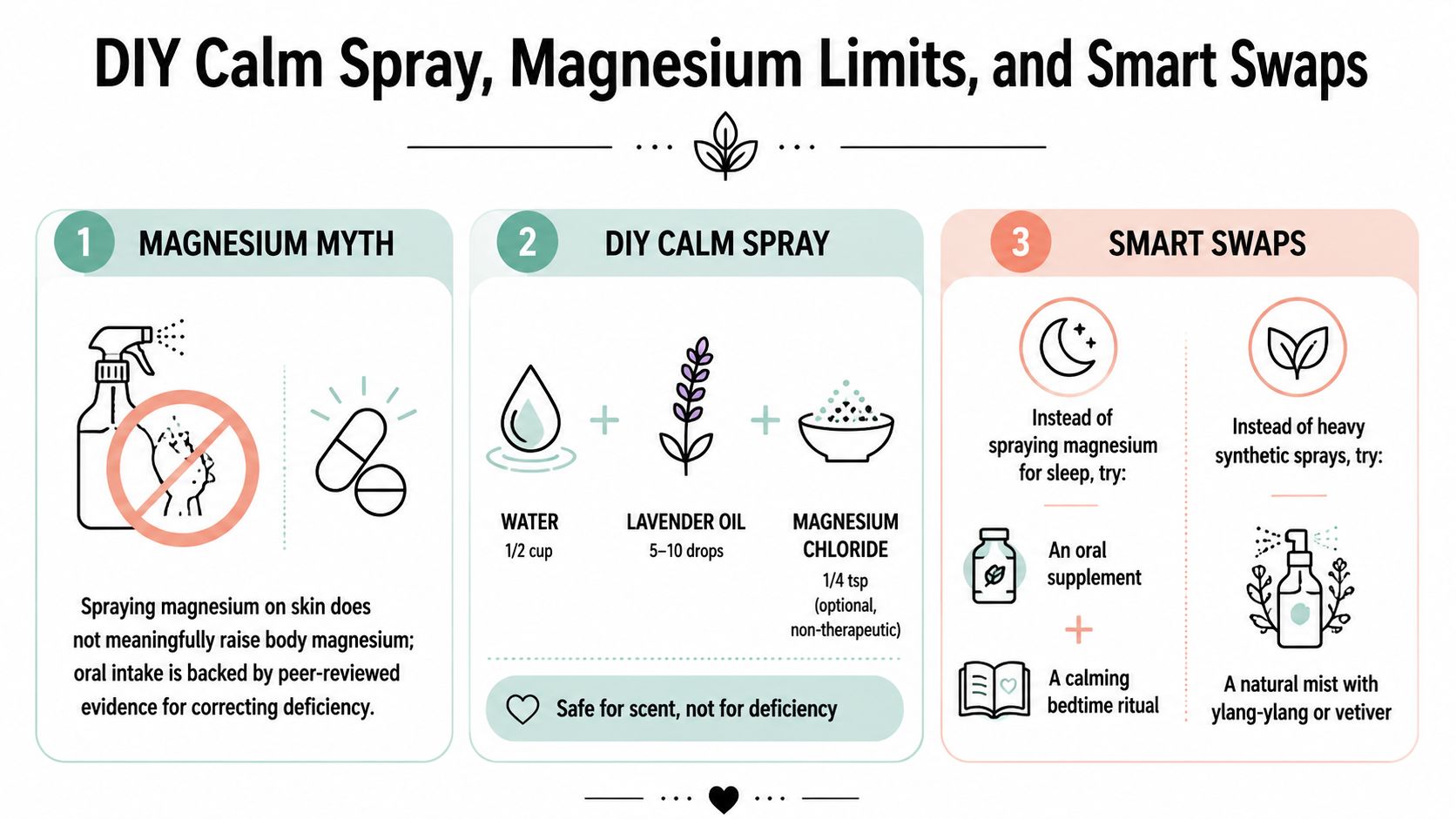
If you don't want essential oils, use a ready-made rose hydrosol, cooled and strained chamomile tea, or a small amount of food-grade vanilla in distilled water. These swaps still need clean handling and refrigeration where appropriate. Homemade water-based products lack the preservation system found in commercial formulas, so make small batches, label them, and discard them after two to four weeks rather than trying to stretch their shelf life.
A DIY mist can support a breathing ritual and add a pleasant scent to your environment. It can't replace oral supplementation when a clinician has identified low magnesium, and it shouldn't be used to delay care for persistent anxiety, insomnia, muscle symptoms, or other concerns.
Ella & Eden offers simple self-care products, including rosewater and magnesium oil spray formats, for people who want a cleaner, more focused ritual around skin and relaxation. Explore the collection at Ella & Eden and choose a formula that matches your skin tolerance, scent preferences, and realistic expectations.