Finding the Best Castor Oil for Hair in 2026
So, what really makes for the best castor oil for hair? It comes down to a simple, clean formula: 100% pure, certified organic, cold-pressed, and hexane-free. These aren't just buzzwords; they're your guarantee that the oil is packed with all its natural goodness—like nourishing ricinoleic acid—without any unwanted pesticide residues or harsh chemical solvents.
It’s the safest, most effective choice for your hair and scalp.
Your Guide to Finding the Best Castor Oil

The path to healthier, more resilient hair can feel crowded with products all promising the world. But often, the most powerful solutions are the simplest ones. This guide is here to help you cut through the noise, showing you that the best castor oil for hair isn’t about a flashy brand, but about its purity, how it’s made, and how it aligns with your goals.
Think of it like this: not all castor oils are created equal. Just as fresh-squeezed orange juice is worlds apart from a sugary concentrate, the way an oil is extracted has a huge impact on its quality. We'll walk through what separates a truly high-quality oil from a mediocre one, so you can make an informed, confident choice for your hair care ritual.
To make things simple, here’s a quick-reference guide on what to look for when you're shopping for a quality castor oil.
Quick Guide to the Best Castor Oil for Your Hair
Use this quick reference to understand the key factors that define a high-quality castor oil for your hair care needs.
| Key Factor | What to Look For | Why It Matters for Your Hair |
|---|---|---|
| Extraction Method | Cold-Pressed & Hexane-Free | This gentle, heat-free process preserves the oil’s vital nutrients, especially ricinoleic acid, which is key for scalp health and moisture. |
| Purity | 100% Pure & Unrefined | Ensures you’re getting only castor oil, with no fillers, additives, or fragrances that could irritate your scalp or dilute the benefits. |
| Sourcing | USDA Certified Organic | This certification guarantees the castor beans were grown without synthetic pesticides or fertilizers, giving you a cleaner, safer final product. |
| Packaging | Dark Glass Bottle | Protects the oil from light and air, which can cause it to break down and lose its potency over time. |
This table covers the essentials, but let's dive a little deeper into why these details are so important for getting the results you want.
Why Quality and Purity Are Non-Negotiable
There's been a beautiful shift in the beauty world toward clean, transparent ingredients. Castor oil has emerged as a star for its unique ability to deeply moisturize the hair and scalp, boosting shine and creating a healthy environment for growth.
Choosing a pure, unrefined oil is the foundation of any effective natural hair care ritual. It’s about nourishing your hair with an ingredient in its most potent and beneficial state.
This commitment isn't just about what you're putting on your hair; it's about minimizing risks. A high-quality oil helps foster a balanced, happy scalp—and that's the real secret to stronger, more vibrant hair. It's not a quick fix but a foundation for long-term hair wellness. This is a core principle, whether you're using oils or exploring other methods to regrow thinning hair.
Moving Beyond the Hype
Once you know what to look for, you can see past flashy marketing and focus on what truly matters. This guide will give you the knowledge to read a label and choose an oil that genuinely supports your hair’s health. We’ll cover:
- Key labels to look for: What terms like "cold-pressed" and "hexane-free" really mean for you.
- Benefits for scalp and hair: How a pure oil creates the perfect environment for healthy growth.
- Application for your hair type: How to get amazing results without weighing your hair down.
By the end, you’ll be able to confidently pick the best castor oil for your routine, knowing exactly why it works.
Decoding the Labels: Cold-Pressed, Organic, and Hexane-Free

When you're searching for the best castor oil, the words on the bottle are more than just marketing. They're your guide to the oil's quality, purity, and how well it will actually work for your hair. Learning to read these labels helps you see past the hype and choose a product that will genuinely nourish your hair and scalp.
Let's break down the three most important labels you’ll come across.
The Power of Cold-Pressed Processing
Think of it like making orange juice. You can either squeeze fresh oranges to get pure, nutrient-rich juice, or you can use intense heat to make a concentrate, which often loses vitamins and flavor along the way. Cold-pressed castor oil is the fresh-squeezed version.
This method uses a mechanical press to extract oil from the castor beans without introducing high heat. Keeping the temperature low is everything—it preserves the oil’s delicate fatty acids, vitamins, and minerals. Most importantly, it protects the high concentration of ricinoleic acid, the superstar compound responsible for castor oil's unique moisturizing and soothing benefits.
When oils are processed with heat, their molecular structure can change, degrading the very nutrients you want for your hair. Choosing cold-pressed ensures you’re getting the most potent, unadulterated product you can find. For a closer look at this process, you can learn more about what makes cold-pressed oil a superior choice in our detailed guide.
What Certified Organic Really Means for Your Scalp
Seeing the USDA Certified Organic seal on a bottle is your assurance of purity from farm to finish. This certification guarantees the castor beans were grown and harvested without synthetic pesticides, herbicides, or genetically modified organisms (GMOs).
Why does this matter so much for your hair? Your scalp is porous skin, and any chemicals used in conventional farming can linger in the final oil. These residues can cause scalp irritation, clog hair follicles, or trigger sensitivity, working against your goal of creating a healthy environment for hair growth.
By choosing organic, you’re not just getting a cleaner oil; you’re making a safer choice for your body. It means the only thing you’re applying to your scalp is pure, nourishing castor oil, free from unwanted chemical baggage.
Opting for a certified organic oil is a foundational step in clean beauty. It’s about minimizing your exposure to potentially harmful substances and maximizing the natural benefits of the ingredient itself.
Why Hexane-Free Is a Non-Negotiable Standard
After the initial pressing, some oil still remains in the castor bean pulp. To extract every last drop, some manufacturers turn to a chemical solvent called hexane. While this method is cheap and efficient, it comes with a serious downside: trace amounts of this harsh industrial chemical can remain in the final product.
Hexane is a petroleum byproduct, and it simply has no place in a product you’re using for your health and beauty.
An oil labeled hexane-free confirms it was extracted purely through mechanical means, without any chemical solvents. While this is usually the standard for cold-pressed oils, it's a crucial checkpoint to look for. Selecting a hexane-free oil ensures your routine stays clean, safe, and non-toxic.
Together, these three labels—cold-pressed, organic, and hexane-free—are the gold standard for finding the absolute best castor oil for your hair.
The Science Behind How Castor Oil Improves Hair Health
To really get why castor oil has earned such a devoted following, we need to look past the stories and into the science. Its power isn’t magic—it’s grounded in a unique chemical makeup that works in a few key ways to support the health of your hair and scalp.
At the heart of it all is a rare but powerful fatty acid called ricinoleic acid. This one compound makes up nearly 90% of the oil, and it's the main driver behind almost all of castor oil's hair-loving benefits. Think of it as the oil’s star player.
The Moisture-Locking Power of Ricinoleic Acid
First and foremost, ricinoleic acid is an incredible humectant, meaning it draws moisture from the air and locks it into your hair and scalp. Imagine your hair strands are like tiny, thirsty sponges. When you apply castor oil, the ricinoleic acid pulls in hydration and seals it deep inside the hair shaft.
This has two beautiful effects:
- It lubricates the hair shaft. By coating each strand, castor oil smooths down the outer cuticle layer, which means less friction between hairs. This simple action helps minimize breakage and split ends, allowing you to hold on to the length you grow.
- It boosts your natural shine. Hair that’s properly hydrated reflects light so much better. This is why a good castor oil treatment leaves your hair with a gorgeous, healthy-looking luster.
This same moisture-locking ability is what makes castor oil a go-to for scalp care. By deeply hydrating the skin, it helps calm the dryness and flakiness that can lead to an itchy, uncomfortable scalp.
Creating a Healthy Scalp Environment
Healthy hair starts with a healthy scalp—and this is where castor oil really gets to work. Beyond just moisturizing, ricinoleic acid is also known for its impressive anti-inflammatory properties.
When your scalp is irritated—from product buildup, dryness, or just daily life—it creates a stressed-out environment that isn't great for hair growth. Inflammation can throw the hair follicle's natural cycle off balance. Applying castor oil delivers a soothing treatment right where it’s needed.
Think of your scalp as the soil in a garden. If the soil is dry, inflamed, and depleted, the plants simply can't thrive. By nourishing the soil, you create the perfect conditions for strong, vibrant growth. Castor oil does exactly that for your scalp.
This calming action helps quiet irritation and fosters a balanced, well-nourished foundation where your hair follicles can do their best work. While it won't magically make your hair grow faster, it ensures the hair you do grow starts from a stronger, healthier place.
Strengthening Hair to Minimize Breakage
Many people reach for the best castor oil for hair hoping to speed up growth. But the real secret to longer hair isn’t about growth speed—it’s about length retention. Your hair is always growing, but if it's weak and brittle, it breaks off long before you ever see that new length.
Castor oil tackles this problem head-on. Its thick, viscous texture allows it to form a protective coating around each individual hair strand. This coating acts like a flexible shield, reinforcing the hair’s internal structure and making it far more resilient to daily stressors like brushing, styling, and sun exposure.
The result is hair that not only appears fuller but feels genuinely stronger. It’s finally able to grow longer over time because it isn’t constantly snapping off at the ends. This focus on strength and resilience is one of the most significant benefits of using pure castor oil in your hair care routine. It’s not about a quick fix, but a long-term ritual for achieving beautifully resilient hair.
So you’ve found the perfect bottle of pure castor oil. That’s the first step. But the real secret to getting all its hair-strengthening, scalp-soothing benefits is in how you use it. Because of its uniquely thick, syrupy texture, a little intention goes a long way.
Think of it like a rich, concentrated treatment for your face. You wouldn’t slather on a whole bottle; you’d apply a few precious drops right where you need them most. Castor oil works the same way. It’s a powerhouse ingredient that calls for a thoughtful approach to avoid weighing your hair down.
Below, we’ll walk through three simple, effective ways to weave castor oil into your routine—whether you want to calm your scalp, mend fried ends, or just add a touch of daily shine.

This little guide can help you zero in on the best method for your hair's main concern, whether that's a dry scalp needing relief or brittle strands calling out for reinforcement.
Method 1: The Deeply Nourishing Scalp Treatment
Healthy hair starts at the source, which is why a targeted scalp treatment is one of the most powerful ways to use castor oil. This method delivers its moisturizing and anti-inflammatory goodness straight to the follicles, creating the perfect environment for stronger, healthier hair to grow.
Who It's For: This is a game-changer for anyone struggling with a dry, flaky, or itchy scalp. It’s also fantastic for anyone wanting to create a balanced foundation to support better hair growth.
How to Do It:
- Start with dry, unwashed hair. Create a few parts in your hair to give you clear access to your scalp.
- Pour a small, quarter-sized amount of castor oil into a bowl. Because it’s so thick, you can make it easier to apply by mixing it 1:1 with a lighter carrier oil, like jojoba or argan.
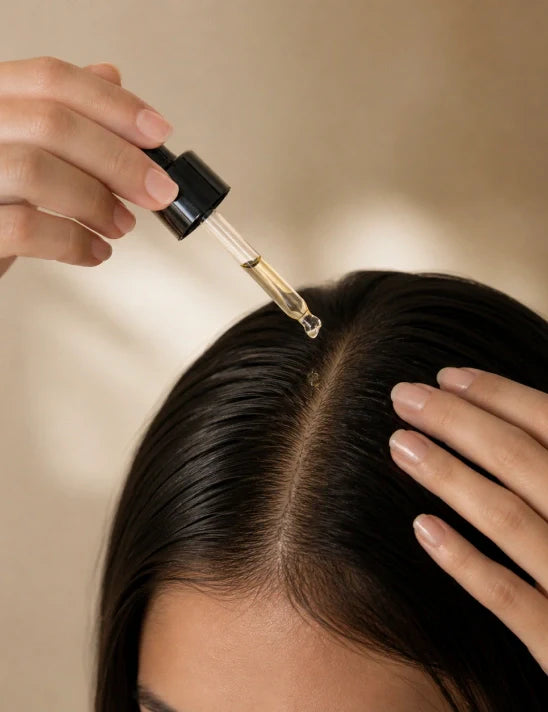
- Using your fingertips or a dropper, apply the oil directly onto the scalp along the parts you created.
- Once the oil is on, take 3-5 minutes to gently massage your scalp in slow, circular motions. This feels incredible, but it also boosts circulation and helps the oil absorb.
- Let the treatment sit for at least 30-60 minutes. If you have more time, feel free to leave it on for a few hours for an even deeper soak.
For an even more comprehensive approach to scalp health, check out this ultimate at-home scalp treatment guide. It’s packed with tips to build on what you’re doing here.
Method 2: The Split End Mending Overnight Mask
If your hair feels brittle, parched, or seems to snap easily, an overnight mask can feel like a total reset. This intensive treatment gives the oil hours to sink deep into the hair shaft, replenishing lost moisture and reinforcing each strand from the inside out while you sleep.
Who It's For: This is your go-to if you have dry, damaged, or coarse hair that’s crying out for a major dose of hydration. If your ends feel like straw, this one’s for you.
How to Do It:
- Start by warming a small amount of castor oil between your palms. This thins it out just enough to make it spread easily.
- Focus on applying the oil from the mid-lengths to the ends of your hair, since this is where damage and dryness are most obvious.
- Gently work the oil through your strands until they feel lightly coated, but not dripping.
- Gather your hair into a loose braid or bun and protect your pillow with a silk scarf, bonnet, or an old towel.
- Leave the mask on overnight, then wash it out thoroughly in the morning. Your hair will thank you.
Pro-Tip: You can elevate this treatment by using castor oil as the base for a nourishing pack. We have a whole guide on how to use a castor oil pack for wellness routines that can inspire you.
Method 3: The Lightweight Daily Sealant
You don’t always need a full-on treatment to reap the rewards of castor oil. Used correctly, a tiny amount works beautifully as a daily finishing product to seal in moisture, smooth flyaways, and add a healthy, natural-looking gloss.
Who It's For: This works for all hair types, but it's especially great for those with fine hair who are worried about looking greasy. It’s also a perfect way for curly and coily hair types to add definition and shine.
How to Do It:
- Place just 1-2 drops of castor oil onto your fingertips. Seriously, that’s it!
- Rub your palms together to warm the oil until it’s a super-thin, barely-there sheen on your hands. This step is crucial.
- Lightly scrunch the oil into the very ends of your dry, styled hair. This helps seal split ends and adds a soft shine.
- To tame any frizz, gently smooth your palms over the surface of your hair. Less is always more here.
Choosing Your Go-To Method
Not sure which application is best for your hair? This simple table breaks it down to help you find your perfect match.
Castor Oil Application Methods by Hair Type
| Hair Type | Best Application Method | Frequency | Pro Tip |
|---|---|---|---|
| Fine or Oily | Daily Sealant | 3-4 times a week, as needed | Use only 1-2 drops on dry ends to avoid weighing hair down. |
| Normal or Wavy | Overnight Mask | Once a week | Mix with argan oil to make it lighter and add extra shine. |
| Dry or Damaged | Overnight Mask | 1-2 times a week | Apply to damp hair to help lock in even more moisture. |
| Thick or Coarse | Scalp Treatment & Overnight Mask | Once a week | The thick texture is perfect for deeply nourishing dense hair. |
| Curly or Coily | Daily Sealant | Daily, or as needed on wash-and-go days | Scrunch into ends to define curls and fight frizz without the crunch. |
Every head of hair is different, so feel free to experiment. You might find a weekly scalp treatment and a daily touch-up on your ends is the perfect combination for you.
The Secret to Washing It Out (Without a Fight)
One of the biggest hurdles people face with castor oil is getting it all out. Because it’s an oil, it repels water, which can make for a frustrating wash day. The trick? Apply shampoo before your hair gets wet.
Work your shampoo directly onto your dry, oil-treated hair, focusing on the roots. The surfactants in the shampoo will grab onto the oil and start breaking it down immediately. After you’ve massaged it in, add a splash of water, lather up like usual, and then rinse. You might need to shampoo twice, but this technique is far more effective than trying to wash it out of already-wet hair.
Why Purity and Sourcing Matter for Your Castor Oil
You’ve learned the science behind castor oil and the best ways to use it. Now, let’s talk about the final, crucial piece of the puzzle: choosing the right one. This is where you connect the dots, because not all bottles are created equal. When it comes to getting real results, the purity of the oil and where it comes from matter just as much as how you apply it.
Choosing the best castor oil for hair isn't about grabbing any bottle off the shelf. It’s a deliberate choice for a product that honors its single, powerful ingredient. This is the moment you become a truly informed user—one who understands that quality is directly tied to results.
From the Farm to Your Hair
The story of a high-quality castor oil begins long before it’s ever bottled. It starts in the soil. A commitment to clean sourcing means working with farmers who prioritize sustainable, organic practices, and this has a direct impact on the product you put on your scalp.
When castor beans are grown organically, it means they’re cultivated without synthetic pesticides or fertilizers. The oil extracted from them is free from chemical residues that could otherwise irritate your skin or disrupt its delicate balance. A healthy scalp is the foundation of healthy hair, and a pure, organic oil ensures you’re nurturing that foundation without adding unwanted toxins.
This is why Ella & Eden is committed to using only USDA Certified Organic castor beans. We believe a clean, simple beauty routine should start with ingredients that are pure from the very beginning.
"A product is only as good as its source. When you choose an oil from a brand that values transparent, ethical sourcing, you are investing in a product that is not only effective but also safe and responsible."
This philosophy is the first pillar of a truly premium oil. It guarantees that the natural potency of the castor bean is preserved, delivering all the benefits you’re looking for without any compromises.
The Importance of Bottling and Transparency
Once that pure, cold-pressed oil is extracted, the final steps are just as critical. A brand that’s serious about quality will protect the oil’s integrity all the way to your hands. That’s why you should always look for castor oil packaged in a dark glass bottle.
Light and air are the enemies of a fresh, potent oil. Exposure to either can cause it to oxidize, meaning its beneficial fatty acids and nutrients start to break down and lose their power. A dark amber or violet glass bottle acts as a natural shield, protecting the oil from UV light and keeping it stable for longer.
A brand’s commitment to transparency also says a lot. At Ella & Eden, every bottle of our Organic Castor Oil is proudly bottled in the USA in small batches. This allows for rigorous quality control at every stage, ensuring that what you see on the label is exactly what you get: 100% pure, unrefined, cold-pressed, and hexane-free castor oil.
This final step closes the loop on quality, bringing together everything we’ve talked about:
- Sourcing: Starting with certified organic beans.
- Processing: Using the gentle cold-pressed, hexane-free method.
- Purity: Ensuring a 100% single-ingredient formula with no fillers.
- Packaging: Protecting the oil in a dark glass bottle.
When you choose a brand like Ella & Eden, you’re not just buying an oil. You’re choosing a philosophy of clean, simple, and effective beauty that honors the power of nature. You’re choosing a product that aligns with a minimalist lifestyle, where one high-quality, multi-purpose oil can do the work of many. This is the logical and satisfying end to your search for the absolute best castor oil for your hair.
Your Castor Oil Questions, Answered
As you get ready to welcome castor oil into your routine, you might have a few last questions. That’s a great sign—it means you’re being thoughtful about your hair care. Let's walk through some of the most common ones so you can start with total confidence.
Can Castor Oil Actually Make My Hair Grow Faster?
This is the number one question we hear, and the answer is all about perspective. There isn't any scientific proof that castor oil directly speeds up the rate of hair growth. Instead, its real magic lies in creating the perfect environment for your hair to flourish on its own terms.
The oil’s high concentration of ricinoleic acid is deeply conditioning for the scalp and coats the hair shaft, protecting it from the daily wear and tear that leads to split ends and snapping.
So, while it won't make your hair grow faster, it helps you retain the length you already have. By strengthening your strands and nourishing your scalp, it allows your hair to grow to its full potential without breaking off prematurely. Think of it less like a magic growth potion and more like a protective shield for your hair's journey to getting longer and stronger.
Is Castor Oil Too Heavy for My Fine or Oily Hair?
It's a completely fair question. Castor oil is famously thick, which can feel a little intimidating if you have fine hair or an oily-prone scalp. The secret isn't to avoid it, but to use it strategically.
Rather than doing a full-head soak, try using it as a targeted pre-shampoo scalp treatment. Just work a small amount directly onto your scalp about an hour before you plan to wash your hair.
Another great trick is to dilute it. You can craft a lighter blend by mixing castor oil with a thinner oil, like jojoba or argan. A 50/50 mix is often the sweet spot. This approach lets you get all the scalp-soothing goodness without weighing down the rest of your hair.
By focusing the oil right at the roots and using it as a wash-off treatment, even the finest hair can get all of castor oil's nourishing benefits without losing volume. It’s all about finding the right technique for you.
How Do I Properly Wash Castor Oil Out of My Hair?
Getting this thick oil out can feel like a chore if you don't know the trick, but it's actually quite simple. The secret? Apply your shampoo while your hair is still dry.
It sounds a bit backward, but it works wonders. Before adding any water, massage your shampoo directly onto your oil-treated scalp and hair. The cleansers in the shampoo will grab onto the oil molecules, breaking them down much more effectively.
Once you’ve worked the shampoo in for about a minute, add a little water to build a lather, then rinse it all out. This "dry shampooing" method is far more powerful than trying to wash oil out of already wet hair. You might need a second wash (a double cleanse) to get rid of every last bit of residue, leaving your hair feeling clean and fresh.
What Is the Difference Between Castor Oil and Jamaican Black Castor Oil?
The main difference between standard castor oil and Jamaican Black Castor Oil (JBCO) boils down to how they're made.
-
Cold-Pressed Castor Oil: This is what you get when you press fresh, raw castor beans without using high heat. This gentle method produces a clean, pale yellow oil that keeps all its nutrients—like vitamins and fatty acids—intact.
-
Jamaican Black Castor Oil (JBCO): This oil is made by first roasting the castor beans, which creates a dark ash. The roasted beans are then crushed and boiled in water, and the oil is skimmed from the top.
The roasting process is what gives JBCO its signature dark color, smoky aroma, and higher pH level (making it more alkaline). While some people love the texture of JBCO, cold-pressed castor oil is widely seen as the purer, more nutrient-dense choice. Because it’s unrefined and hasn't been exposed to high heat, it’s the gold standard for anyone looking for a clean, potent, and single-ingredient formula.
With these answers in hand, you’re ready to choose the best castor oil for hair and start using it like a pro. When you prioritize purity and quality, you’re setting the stage for stronger, healthier, and more resilient hair.
Ready to begin your journey with an oil that’s truly exceptional? Discover the difference with Ella & Eden's 100% Pure, USDA Certified Organic Castor Oil. Experience the simple, powerful benefits of a clean formula and see what your hair is truly capable of. Explore our Organic Castor Oil today.