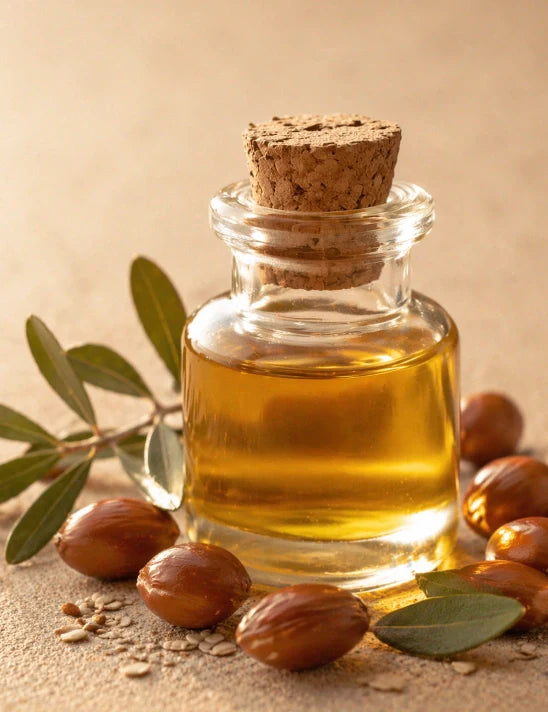
Finding the Best Oils for Sensitive Skin
If you have sensitive skin, you’ve probably felt that familiar frustration: the search for a product that actually soothes instead of stings. The secret often lies in finding oils that work with your skin, not against it. Think of gentle powerhouses like Jojoba Oil, which beautifully mimics your skin's natural oils, or Argan Oil, packed with calming fatty acids.
Why Your Sensitive Skin Needs the Right Oil

It helps to think of sensitive skin less as a "type" and more as a state of being. At its core, sensitivity is a cry for help from your skin's protective barrier—its frontline defense against the world.
Imagine that barrier is like a sturdy brick wall. In healthy skin, the bricks (skin cells) are held together tightly by mortar (lipids). But with sensitive skin, that mortar has started to crumble, creating tiny gaps.
Through these gaps, two things happen. First, precious moisture escapes, leading to that tight, dry, and dehydrated feeling. Second, external irritants like pollution and allergens sneak in, triggering redness, itching, and general discomfort. This is precisely why your skin overreacts to so many things.
How Natural Oils Offer Relief
This is where the right natural oil can be a game-changer. It acts like fresh mortar for that crumbling wall. Filled with fatty acids, vitamins, and anti-inflammatory compounds, these oils help patch up the gaps, reinforcing your skin’s natural shield from the outside in.
And if you're feeling like your skin is uniquely reactive, you're in good company. A staggering 71% of people worldwide now say they have sensitive skin, marking a 55% jump in just two decades. This collective search for gentle solutions has fueled a massive shift in the beauty world, with the sensitive skincare market hitting USD 44.60 billion in 2023 and projected to nearly double to USD 80.97 billion by 2030. You can explore the global facial oil market trends to see just how much consumer demand is driving this change.
Key Takeaway: The goal isn't just to add temporary moisture. It’s to rebuild. The right oil provides the essential building blocks your skin needs to repair its barrier, calm inflammation, and find its way back to a healthy, peaceful state.
To find the very best oils for your sensitive skin, we need to look closer at what they're made of. An oil's suitability boils down to its fatty acid profile and other beneficial properties.
What Makes an Oil Skin-Friendly?
-
High in Linoleic Acid: Think of this omega-6 fatty acid as a key ingredient for a healthy skin barrier. Oils rich in it, like safflower or grapeseed, tend to feel lightweight and are brilliant at calming inflammation without congesting pores.
-
Rich in Anti-inflammatory Compounds: You want oils that do more than just moisturize; you want them to actively soothe. Look for ingredients like vitamin E (tocopherols) and polyphenols. Argan oil is a perfect example, celebrated for its powerful ability to calm irritation.
-
Non-Comedogenic: This is a simple but crucial one. It means the oil is unlikely to clog your pores. Jojoba Oil is the star player here because its molecular structure is incredibly similar to your skin's own sebum, so your skin welcomes it without issue.
On the flip side, it’s just as important to know what to avoid. Added fragrances, even natural ones from certain essential oils, are notorious troublemakers for sensitive skin. This is why simplicity is your greatest ally.
Single-ingredient oils give you complete transparency, so you know exactly what you’re putting on your face. This minimalist approach empowers you to find pure, effective relief without worrying about hidden irritants lurking in a long ingredient list.
Understanding What Makes an Oil "Skin-Friendly"
To find the right oil for sensitive skin, you have to look past the pretty packaging and get into what’s actually inside the bottle. It’s not about magic potions; it's about the science of what your skin barrier is made of. The real heroes here are fatty acids—the fundamental building blocks that keep your skin strong, calm, and happy.
Think of fatty acids as different types of food for your skin. The two most important players are linoleic acid and oleic acid. The ratio between these two is often the deciding factor in whether an oil will be your skin's best friend or its worst enemy.
Getting a handle on this balance is like being handed the keys to the kingdom. It lets you cut through the noise and choose an oil that gives your reactive skin exactly what it needs to finally chill out.
Linoleic Acid: The Blemish-Prone Savior
Linoleic acid is an omega-6 fatty acid, but the important part is that it's essential. That means your body can't make it on its own, so you have to get it from outside sources, like your skincare. Research has found that people with acne-prone skin tend to have lower levels of linoleic acid in their sebum, which is just the technical term for your skin's natural oil. This shortage makes their sebum thick, sticky, and way more likely to clog pores.
When you apply an oil that's packed with linoleic acid, you're essentially helping your skin rebalance itself.
- It helps thin out that sticky sebum, making it less likely to cause traffic jams in your pores.
- It’s a natural anti-inflammatory, which is a huge help for calming the redness and frustration that comes with sensitive, blemish-prone skin.
- It strengthens your skin’s protective barrier, helping it hold onto moisture without that heavy, greasy feeling.
Oils like safflower, grapeseed, and evening primrose are fantastic sources of linoleic acid. They're often the perfect match for sensitive skin that’s also on the oily side, offering a dose of calm hydration without the fear of more breakouts.
Oleic Acid: A Comfort Blanket for Dry Skin
On the other side, we have oleic acid, an omega-9 fatty acid. Unlike its counterpart, your body can produce this one. Oleic acid is much richer and heavier, which makes it an absolute powerhouse for deep moisturization and sealing in hydration for the long haul.
If your skin feels dry, tight, or is showing more fine lines, oleic acid can be a total game-changer. It works its way down into the deeper layers of the skin to replenish moisture and bring back that soft, supple feeling.
The Takeaway: Think of oils high in oleic acid, like argan or avocado, as a cozy blanket for dry, reactive skin. They’re brilliant at smoothing over rough patches and flakiness, leaving your skin feeling plump and nourished. But because they are so rich, if your skin is prone to clogging, you’ll want to approach them with a bit more caution.
The Comedogenic Scale: A Guideline, Not a Rule
You’ve probably seen the comedogenic scale mentioned before. It’s a rating system from 0 to 5 that tries to predict how likely an oil is to clog your pores.
- 0: Won’t clog pores (e.g., Argan Oil)
- 1: Very low chance (e.g., Safflower Oil)
- 2: Moderately low chance (e.g., Jojoba Oil)
- 3: Moderate chance
- 4: Fairly high chance
- 5: High chance of clogging pores (e.g., Coconut Oil)
This scale can be a decent starting point, especially if you’re trying to avoid breakouts. But it’s not gospel. Skin is personal. An oil’s real-world effect depends on your unique skin chemistry, its specific fatty acid makeup, and even the quality of the oil itself. An oil with a "2" might be totally fine for you but cause problems for someone else.
Ultimately, understanding the fatty acids gives you a much more reliable roadmap. When you know whether your skin is thirsty for the lightweight, barrier-building touch of linoleic acid or the deep, comforting nourishment of oleic acid, you can make a choice that truly serves your skin. It’s the difference between an oil that just sits on the surface and one that actively works to bring your skin back into balance.
How to Read an Oil Label Like a Pro
Walking down the skincare aisle can feel like trying to decipher a secret code. You see words like "cold-pressed," "unrefined," and "organic" thrown around, but what do they really mean for your sensitive skin? It turns out, everything. Learning to read these labels is the single best skill you can develop to find a pure, potent oil that will actually calm your skin, not just sit on top of it.
Think of it like shopping for olive oil for a salad dressing. You instinctively reach for the "extra virgin, cold-pressed" bottle, right? You know it has the best flavor and the most health benefits. The same exact logic applies to the oils you put on your face.
The Gold Standard: Cold-Pressed and Unrefined
When a label says "cold-pressed," pay attention. This is a huge green flag. It means the oil was extracted using a mechanical press, literally squeezing the oil from the seed or nut without using high heat. This is so important because heat is the enemy of the delicate fatty acids, vitamins, and antioxidants that give an oil its skin-soothing magic.
Next, look for the word "unrefined" (sometimes called "virgin"). This tells you the oil is in its most natural, powerful state. It’s been left alone after pressing, maybe lightly filtered to get rid of plant bits, but it hasn't been chemically bleached or deodorized. Those processes strip an oil of its natural color, scent, and—most critically—its anti-inflammatory compounds.
The bottom line: A cold-pressed, unrefined oil is like farm-fresh produce. It's bursting with all the nutrients and goodness nature intended. A refined oil is more like a canned vegetable—it might still have some value, but much of its life force is gone.
For anyone with sensitive skin, making sure your oils are cold-pressed and unrefined is the most important step. This ensures you're getting the maximum concentration of calming properties to support your skin barrier, not just a basic moisturizer.
Why Refined Oils Just Don't Cut It
So what's the deal with refined oils? They’re cheaper and more common because they are produced to maximize yield, often using high heat and chemical solvents. While they aren't necessarily "bad," this harsh processing strips away almost everything that makes an oil therapeutic.
Here’s a peek at what the refining process often involves:
- High Heat: This obliterates the fragile antioxidants and vitamins your skin needs to heal.
- Chemical Solvents: Solvents like hexane are often used to pull every last drop of oil from the plant material.
- Bleaching & Deodorizing: These steps remove the natural color and aroma, but they also take the beneficial phytonutrients right along with them.
A refined oil can still hydrate your skin, but that’s about it. It lacks the complex, active compounds needed to calm redness, reduce irritation, and truly deliver on the promise of a high-quality facial oil.
Other Key Terms to Spot
Beyond how the oil is extracted, a couple of other labels can give you peace of mind.
-
USDA Organic: This seal is your assurance that the plants were grown without synthetic pesticides or fertilizers. For sensitive skin, this is a big win, as it dramatically reduces your exposure to chemical residues that can easily trigger a flare-up.
-
Hexane-Free: This is an especially good label to find if an oil isn't specifically marked as cold-pressed. It confirms that no harsh chemical solvents were used in the extraction process. Since leftover hexane can be a known skin irritant, this provides another layer of confidence.
Once you know what these key terms mean, you can shop with total confidence. You'll be able to quickly scan a label and know instantly whether you're holding a pure, nutrient-rich oil that’s ready to support your skin.
The Best Calming Oils to Soothe Sensitive Skin
If you’ve ever felt lost in the world of skincare oils, you're not alone. But a few standouts consistently prove their worth for sensitive skin. These are the gentle giants—single-ingredient oils that soothe, balance, and strengthen your skin without causing chaos. Rather than relying on complicated formulas, these oils deliver potent, focused benefits straight from nature.
Let's get to know two of the most celebrated options: Jojoba Oil and Argan Oil. Each one brings something unique to the table, with different nutrient and fatty acid profiles that make them ideal for different types of sensitive skin. Understanding what makes them tick will help you find the perfect partner for your skincare ritual.
Jojoba Oil: The Skin Mimicker
If your sensitive skin is also oily, combination, or prone to breakouts, Jojoba Oil is the peacemaker you’ve been looking for. Its claim to fame lies in its remarkable chemical structure. It isn't technically an oil; it's a liquid wax ester, which just so happens to be incredibly similar to your skin's own sebum.
This unique similarity is like speaking your skin's language.
- It moisturizes without clogging pores. Because your skin recognizes it, Jojoba Oil sinks in beautifully without leaving that greasy film behind.
- It helps balance oil production. For oily skin, it can send a signal to your follicles that they’ve produced enough sebum, helping to curb overproduction over time.
- It’s naturally gentle and non-allergenic. Its simple, familiar makeup makes it one of the most well-tolerated oils out there—a perfect, safe starting point for reactive skin.
Think of it as a smart regulator. It gives dry patches the moisture they're craving while helping to mattify an oily T-zone, bringing your whole complexion back to a state of calm equilibrium. Its ability to provide lightweight hydration makes it a versatile favorite. Our guide on Jojoba Oil's pure benefits offers even more ways to incorporate this versatile oil into your routine.
Key Insight: Jojoba Oil's power is in its mimicry. By working in harmony with your skin's natural processes, it helps restore balance from the inside out, addressing both dryness and excess oil with incredible gentleness.
Argan Oil: The Barrier Builder
For those whose sensitive skin leans dry, dehydrated, or mature, Argan Oil is a true restorative hero. This liquid gold from Morocco is packed with nourishing compounds that have one critical job: rebuilding a compromised skin barrier. Its rich, comforting texture feels like a protective blanket for skin that’s stressed, tight, or flaky.
Argan Oil is exceptionally high in Vitamin E (tocopherols), oleic acid, and linoleic acid. This combination creates a powerful synergy that deeply nourishes and protects. It’s no surprise that this botanical ingredient is a major player in the skincare oil market. The sector is projected to grow from USD 5.5 billion in 2025 to USD 9.6 billion by 2035, with natural oils holding 57.4% of the market share. This demand is heavily influenced by the prevalence of sensitive skin, which affects roughly 60–70% of women and 50–60% of men. In clinical trials, Argan oil was shown to reduce inflammation markers by 28% in sensitive skin over eight weeks, thanks to a high concentration of fatty acids that improved barrier function by 22%. You can explore more data about the growing skincare oil market trends and see why natural ingredients are leading the charge.
To get these benefits, though, choosing a high-quality oil is everything. This infographic breaks down the hierarchy of oil processing.

The visualization makes it clear: cold-pressed and unrefined oils keep their nutrients intact, while refined oils often lose many of their therapeutic properties during processing.
Choosing Your Ideal Oil
So, how do you decide between these two champions? It all comes down to listening to what your skin is telling you.
-
Choose Jojoba Oil if: Your skin is oily, combination, or acne-prone. You need lightweight hydration that won't feel heavy or clog pores. Your main goal is to balance sebum and calm surface redness.
-
Choose Argan Oil if: Your skin is dry, mature, or dehydrated. You need deep, lasting nourishment to repair a damaged barrier. Your primary concerns are tightness, flakiness, and soothing deep-seated irritation.
Ultimately, both Jojoba and Argan oil are fantastic choices for a minimalist, clean beauty routine. By opting for single-ingredient, cold-pressed, and unrefined oils, you’re giving your sensitive skin pure, potent, and predictable care. This simple approach eliminates the guesswork and potential for irritation from fillers or fragrances, letting the natural intelligence of the oil work its calming magic.
How to Safely Add Oils to Your Skincare Routine
So, you’ve found an oil that sounds perfect for your sensitive skin. Now what? Bringing something new into your routine doesn’t have to be a guessing game. By moving slowly and paying close attention to your skin's feedback, you can make the experience feel restorative instead of risky.
Before a new oil gets anywhere near your face, you absolutely have to do a patch test. Think of it as a small dress rehearsal. It’s a simple, non-negotiable step that lets you see how your skin will respond in a tiny, controlled area. Skipping it is like ignoring the “fragile” sticker on a package—things might turn out okay, but you're risking a mess that was entirely preventable.
The Foolproof Patch Test Method
A patch test is your first and best defense against a potential reaction. It's a quick check that provides priceless peace of mind.
- Choose a Discreet Spot: Pick a clean patch of skin that’s out of the way, like your inner arm or just behind your ear. These spots are sensitive enough to give you a good read but are easy to hide.
- Wait and Observe: Apply a single drop of the oil, cover it with a small bandage if you like, and leave it alone for a full 24 hours. Try not to get the area wet.
- Check for Reactions: After a day, take a close look. Is there any redness, itching, or are little bumps forming? If you see any signs of irritation, that oil isn’t the one for you. If the skin looks perfectly calm and happy, you're clear to proceed.
Perfecting Your Application Technique
Once an oil has passed the patch test, how you apply it makes all the difference. With pure oils, a little goes a long way. More is definitely not better here; you’re aiming for a dewy glow, not a greasy slick.
For the best results, always apply your oil to damp skin. Think of your skin like a sponge—a dry sponge resists water, but a damp one soaks it right up. You can mist your face with a gentle toner or just leave it slightly damp after cleansing.
Warm 2-3 drops of oil between your palms, then gently press it onto your face and neck. Avoid rubbing. This pressing motion is much kinder to sensitive skin and helps the oil absorb more evenly and deeply.
Pro Tip: Pressing, rather than rubbing, is a game-changer for sensitive skin. It reduces friction that can cause redness and helps calm the skin as you deliver those nourishing ingredients.
Where Oil Fits in Your Routine
Knowing when to apply your oil is the key to getting all its benefits. I like to think of it with the "seal the envelope" analogy. Your serums and moisturizers are the important letter inside. The oil is the envelope, locking everything in so nothing gets lost.
As a rule of thumb, your skincare routine should always move from the thinnest texture to the thickest.
- Step 1: Cleanser
- Step 2: Toner or Essence
- Step 3: Water-Based Serums
- Step 4: Moisturizer
- Step 5: Facial Oil
By using your oil as the final step (before sunscreen, of course), you’re creating a soft, breathable barrier on your skin. This layer prevents all the wonderful, hydrating products you just applied from evaporating into the air, making your entire routine work that much harder for you. If you're looking for an amazing "sealing" oil, you can learn more about the beauty of Argan Oil and its incredible knack for supporting a healthy skin barrier.
Oils and Ingredients to Use With Caution
When you have sensitive skin, navigating the world of skincare feels less about what you add and more about what you wisely avoid. Think of it as being a detective for your own face—knowing which ingredients are potential troublemakers is the secret to keeping your complexion calm, clear, and happy.
This is your "red flag" list for common irritants that often sneak into skincare, even products that are labeled "natural." Once you know what to look for, you can scan an ingredient list with total confidence, understanding that not everything from nature is universally gentle.
The Essential Oil Question
Essential oils pack a powerful punch. They’re highly concentrated plant extracts, and while they smell amazing and have well-known properties, that very concentration is what can spell trouble for sensitive skin.
A single drop of essential oil contains hundreds of different chemical compounds. For skin that’s already on high alert, that’s a lot of potential triggers.
Here are a few common ones to be wary of:
- Lavender and Peppermint: We love them for their calming scents, but they contain compounds like linalool and menthol, which are known to cause contact dermatitis in some people.
- Citrus Oils: Lemon, orange, and bergamot oils can be phototoxic. This means they react with sunlight, potentially causing burns, rashes, or dark spots on your skin.
- Tea Tree Oil: It’s famous for fighting blemishes, but it's incredibly potent. If it isn't diluted properly, it can be extremely harsh and drying, leading to more redness and irritation.
Even a superstar like rosemary oil requires careful handling. To avoid any sensitivity issues, it's critical to understand how to use rosemary oil correctly.
Carrier Oils to Approach Carefully
Even the gentler carrier oils aren't all created equal. While many are fantastic for sensitive complexions, some have properties that can lead to clogged pores or irritation, depending on your skin’s individual quirks.
Key Insight: There’s no "one-size-fits-all" oil for sensitive skin. What works beautifully for one person might be a breakout nightmare for another. Learning your skin’s preferences is everything.
Coconut oil is a classic example. It’s a wonderful body moisturizer, but it’s notoriously pore-clogging on the face. With a high comedogenic rating of 4 out of 5, it’s very likely to cause congestion for many people. Likewise, olive oil can be a bit too heavy and rich for the face, potentially disrupting its delicate lipid balance.
Beyond Oils: Other Red Flags on the Label
Your detective work doesn’t stop with oils. Plenty of other common skincare ingredients are known to strip the skin’s protective barrier, which is the last thing sensitive skin needs. Spotting these on a label is a game-changing skill.
Keep an eye out for these usual suspects:
- Synthetic Fragrance/Parfum: This is probably the #1 cause of allergic reactions in skincare. "Fragrance" is a vague umbrella term that can hide dozens of unlisted chemicals. It’s best to just steer clear.
- Drying Alcohols: Not all alcohols are bad, but watch out for SD alcohol, denatured alcohol, and isopropyl alcohol. These types can be incredibly stripping, leaving your skin feeling tight, dry, and vulnerable.
- Sulfates: Ingredients like Sodium Lauryl Sulfate (SLS) are what make cleansers foam up. Unfortunately, they’re also harsh detergents that can wash away your skin's natural, protective oils along with the dirt.
To make it even easier, here's a quick reference table of common ingredients that can be problematic for sensitive and reactive skin types.
Potential Irritants for Sensitive Skin
| Ingredient/Oil | Reason for Caution | Alternative Suggestion |
|---|---|---|
| Synthetic Fragrance | A leading cause of allergic contact dermatitis. | Unscented products or those with no added fragrance. |
| Drying Alcohols (SD, Denatured) | Can strip the skin's moisture barrier, causing dryness and irritation. | Fatty alcohols like Cetyl or Cetearyl Alcohol. |
| Essential Oils (Citrus, Mint) | High potential for irritation and photosensitivity. | Gentle, non-fragrant carrier oils like Jojoba or Squalane. |
| Sulfates (SLS, SLES) | Harsh detergents that can strip natural oils from the skin. | Gentle, sulfate-free cleansers with milder surfactants. |
| Coconut Oil (for face) | Highly comedogenic (rated 4/5); likely to clog pores. | Lighter oils like Argan, Rosehip, or Hemp Seed Oil. |
By learning to spot these potential troublemakers, you put yourself in the driver's seat. You can confidently choose products that will support and soothe your skin, paving the way for a complexion that’s not just calm, but truly healthy and resilient.
Got Questions About Using Oils on Sensitive Skin? We've Got Answers.
It's totally normal to feel a little hesitant before adding something new to your routine, especially when your skin is easily upset. You've done the research, but a few nagging questions might still be holding you back.
Let's clear up those final doubts so you can feel genuinely excited to start your journey with pure, simple oils.
"My Sensitive Skin is Also Oily. Can I Really Use a Facial Oil?"
Yes, you absolutely can. This is probably one of the biggest skincare myths out there, and it’s time to set the record straight. Oily skin isn't a sign of too much moisture; it's often a cry for help from a dehydrated, unbalanced skin barrier.
When your skin is stripped of its natural oils, it panics and kicks sebum production into overdrive to protect itself. By giving it a lightweight, non-comedogenic oil rich in linoleic acid (like our Jojoba Oil), you're not adding to the problem. Instead, you're sending a signal that it has the nourishment it needs, allowing it to rebalance and calm down the excess oil production.
The right oil doesn’t make oily skin oilier. It helps restore balance at the source by repairing your skin’s natural barrier.
"But I Hate Feeling Greasy. Won't an Oil Just Sit on My Skin?"
Not if you use it the right way! With pure, high-quality oils, a little goes a very long way. Forget slathering it on; all you need are 2-3 drops for your entire face and neck.
Here's the trick for a beautiful, non-greasy finish: always apply oil to damp skin. Think of a sponge—it soaks up water much better when it's already a little damp. Applying oil to damp skin helps it absorb almost instantly, locking in that water for a healthy, dewy glow, not an oily slick. If it still feels greasy, you're just using a drop too much.
"How Long Until I Actually See a Difference?"
While every skin is different, you'll probably feel some immediate comfort. But the real, lasting changes take a bit of consistency. Here’s a typical timeline for what to expect:
- Right Away: Your skin should feel instantly softer and more comfortable. That tight, dry feeling will ease up, and you’ll notice a subtle, healthy-looking glow.
- After a Few Weeks: This is when you'll start to see a real reduction in redness and general touchiness. Your skin will begin to feel more resilient and less likely to react to every little thing.
- In the Long Run (1-3 Months): This is where the magic really settles in. With steady use, your skin's lipid barrier gets the deep-down repair it's been craving. You'll see a noticeable improvement in texture, more even oil production, and a complexion that feels genuinely strong and calm from within.
Ready to feel the difference a truly pure oil can make? The Ella & Eden collection features single-ingredient, certified organic oils. They are always cold-pressed and unrefined to ensure all of their calming, nourishing goodness is delivered straight to your skin. Explore our collection at Ella & Eden and give your sensitive skin the simple, powerful care it’s been waiting for.