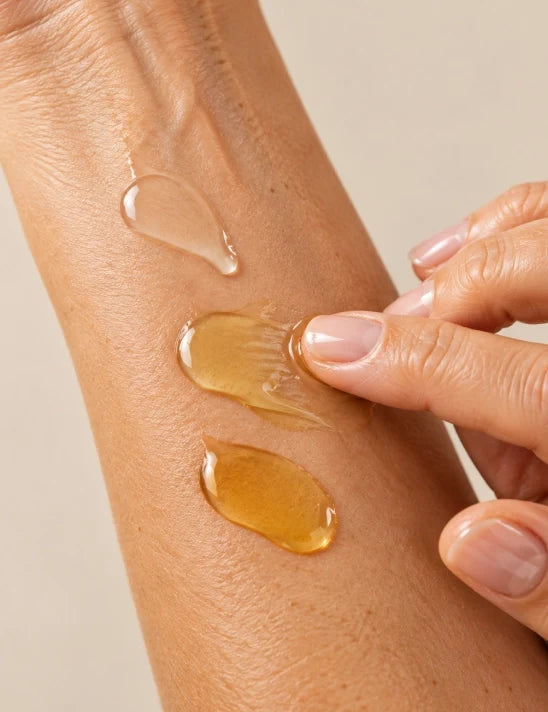
Castor Oil Shelf Life: How Long It Lasts and How to Store It
Properly stored castor oil lasts about 1–2 years unopened and roughly 6–12 months after opening. The main variable, however, isn't the date printed on the bottle. It's how much light, oxygen, heat, and contamination the oil encounters on your shelf.
You may be facing that question tonight while clearing out a bathroom cabinet. A half-used bottle sits behind old moisturizers, the cap is coated with a sticky film, and you're wondering whether it's still suitable for your skin, scalp, brows, or lashes. Castor oil doesn't spoil on a perfectly predictable calendar. Its condition depends on the oil's processing, the bottle's design, the amount of air in the container, and the way you handle it.
That distinction matters because a bottle stored in a cool, dark cabinet may remain usable toward the longer end of its expected range, while one left beside a hot shower can deteriorate sooner. The sections below connect the chemistry of castor oil to practical decisions, from checking a bottle's smell to choosing a smaller container.
Why Your Old Castor Oil Bottle Deserves a Second Look
The bottle's history can matter more than the calendar. An unopened bottle that stayed sealed, cool, and away from sunlight generally keeps for about 1–2 years. After opening, a practical use window is commonly 6–12 months, because each opening adds oxygen and gives dust, fingers, brushes, or moisture another chance to reach the oil.
A printed expiration date is useful, but it cannot record the bottle's actual conditions. A dark drawer protects the oil differently from a sunny windowsill. A clean, tightly closed cap limits exposure differently from a sticky neck touched after a shower. These small details help explain why shelf life is partly a packaging-and-storage question, not only a date question.
Start with the bottle's history
Before using an older bottle, check four points:
- When was it opened? If you cannot remember, treat the opening date as uncertain.
- Where was it stored? A cool, dark, dry cabinet gives better protection than a bright counter or shower caddy.
- Was the cap clean? Residue around the neck may show repeated contact with fingers, applicators, or moisture.
- Has the oil changed? An unfamiliar smell, darker color, cloudiness, sediment, or unusual thickness calls for caution.
Oxidation usually develops gradually, so oil does not change from usable to unusable at one precise moment. Still, visible or noticeable changes are practical warning signs. The bottle, headspace, and temperature have shaped its condition each day.
Don't use a questionable bottle near your eyes, especially for lash application. Lashes and brows need cleaner handling than a body-oil routine because the product can move toward sensitive eye tissue. Oil that seems acceptable on an elbow is not automatically suitable for lashes.
Practical rule: If you cannot confirm when the bottle was opened and it fails a smell or appearance check, replace it rather than trying to rescue it.
Castor oil's long history can make it seem almost timeless. Evidence of its use reaches back at least 6,000 years, including reported use in Egyptian tombs dating to around 4000 BCE. That history explains its staying power as an ingredient, not an unlimited shelf life. Even a durable oil still depends on suitable packaging and storage.
What Castor Oil Is and Why It Lasts
You open an older bottle of castor oil and notice that it still looks clear, but its thick texture makes its age difficult to judge. The better starting point is the oil's molecular structure, followed by the bottle and storage conditions surrounding it.
Castor oil comes from the seeds of Ricinus communis and consists largely of triglycerides, molecules formed from glycerol joined to fatty acids. Its defining fatty acid is ricinoleic acid, a monounsaturated hydroxy fatty acid.
That structure helps explain why castor oil can remain usable on a bathroom shelf. Ricinoleic acid has one double bond, rather than the multiple double bonds common in highly polyunsaturated oils. It also has a hydroxyl group, an oxygen-containing feature that contributes to castor oil's unusually thick, clingy feel.
Together, these characteristics give castor oil comparatively strong resistance to auto-oxidation. Oxidation gradually creates rancid odors and other quality changes. In practical terms, oxidation driven by light, oxygen, heat, and contamination matters more than the printed date alone. You can review related ingredient considerations in this guide to food-grade castor oil.
The chemistry compared with other oils
Rosehip and flax oils contain more polyunsaturated fatty acids, giving oxygen more locations where an oxidation reaction can begin. Olive oil is generally more stable than those highly polyunsaturated examples. Jojoba oil has a different wax-ester structure and is known for strong storage stability. Coconut oil behaves differently again because of its fatty-acid profile and tendency to solidify in cooler conditions.
Castor oil therefore offers a useful starting advantage for beauty routines. Its structure resists oxidation better than many delicate botanical oils, while its thick consistency can leave residue on bottle threads, droppers, and brushes. That residue makes clean handling part of shelf-life protection.
The calendar gives only a rough boundary. Dark glass limits light, a snug cap limits oxygen exchange, and a smaller bottle leaves less unused air above the oil. Headspace grows as the bottle empties, so packaging influences whether the oil stays fresh for months or much longer.
For skin and hair, this stability supports regular use without treating the oil as permanent. Keep the cap closed and store the bottle away from radiators and bright windows.
Castor oil lasts because of its fatty-acid structure, but packaging decides how much of that advantage survives. A stable molecule still encounters oxygen inside the bottle, and the bottle design controls how quickly that exposure grows.
The Four Factors That Determine Shelf Life
Two bottles of the same castor oil can age at different rates. Their practical shelf life depends on four interacting factors: processing, packaging, storage conditions, and contamination. A bottle may last six months or two years because of these details, not the calendar alone.
Processing changes the starting point
Cold-pressed, unrefined oil is made with mechanical pressure and retains more naturally occurring minor plant compounds than heavily refined oil. Some of these compounds may contribute antioxidant activity, although their levels vary with the raw material and processing method. Refining can produce a more uniform color and odor while changing the oil's original composition.
That difference gives each oil a different starting profile. It does not make every refined oil fragile or guarantee that every cold-pressed oil will last longer. Packaging and handling still determine how well that initial stability holds up.
Packaging controls oxygen and light
A clear bottle placed on a bright counter exposes the oil to more light than dark amber glass or opaque HDPE. Light can accelerate photo-oxidation, while a loose cap permits repeated oxygen exchange. Bottle size matters too. A container suited to your routine leaves less unused air above the oil as you use it.
Headspace becomes more important after opening. As the oil level falls, the air space takes up a larger share of the container. A snug cap, dark or opaque material, and a bottle that matches your usage reduce that exposure. The same principle applies to cold-pressed organic castor oil: its natural composition offers a starting advantage, but the package must protect it.
Storage conditions set the daily burden
A cool, dark, dry cabinet generally protects castor oil better than a windowsill, shower shelf, or warm car interior. Steam can collect around the closure, while handling may let moisture or residue enter. Use the summary table below as a quick guide when choosing a storage spot.
Technical guidance commonly places unopened cold-pressed or virgin castor oil within a 12–24 month shelf-life range under cool, dark, dry conditions. Some supplier specifications use 12 months, while others extend to 18–24 months.
Contamination shortens the practical window
Fingers, used mascara brushes, damp applicators, and water can introduce unwanted material. Even when the oil remains chemically stable, contamination can make it unsuitable for sensitive areas. Wipe the bottle neck, keep tools dry, and never return used oil to the original container.
| Factor | Shortens Shelf Life | Extends Shelf Life |
|---|---|---|
| Processing | Excessive heat or processing that removes natural minor compounds | Appropriate cold-pressing and careful filtration |
| Packaging | Clear containers, loose caps, and large unused headspace | Dark glass or opaque packaging, tight closures, and smaller bottles |
| Environment | Sunlight, steam, heat, and repeated temperature changes | A cool, dark, dry cabinet |
| Contamination | Fingers, wet tools, dirty droppers, or water | Clean, dry applicators and minimal bottle contact |
How to Tell If Castor Oil Has Gone Bad
Use your senses before you use the product. You don't need laboratory equipment to notice the warning signs of oxidation or contamination, but you should assess more than one feature when the bottle is old.
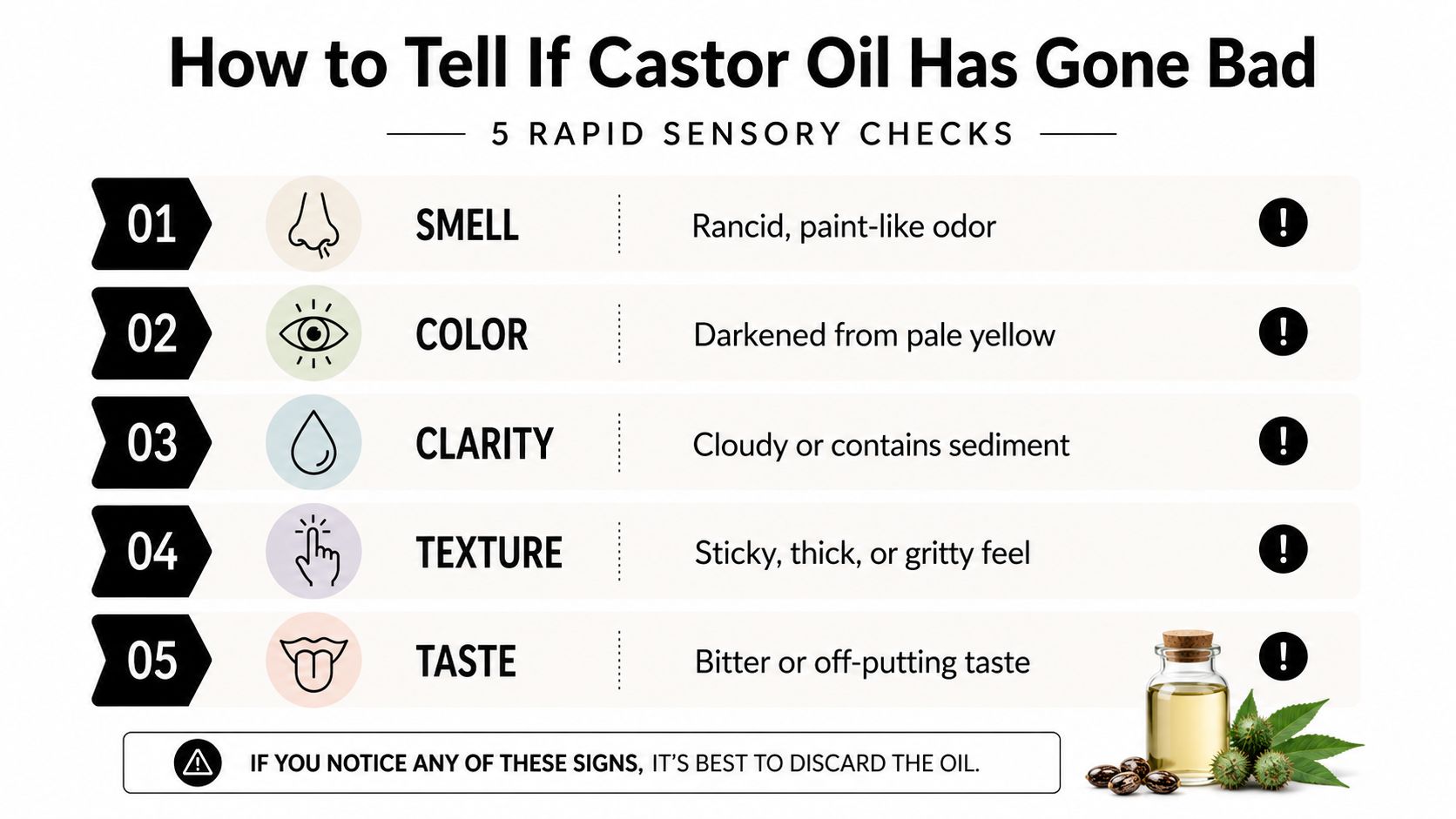
Run the five-point check
- Smell: Fresh castor oil may smell faintly nutty or nearly neutral. A sharp, sour, paint-like, crayon, or waxy odor suggests oxidation and is the strongest reason to discard it.
- Color: A pale golden appearance is typical of many fresh oils. A pronounced shift toward dark amber or brown can signal age, oxidation, or contamination.
- Clarity: Look through the bottle or pour a small amount into a clean glass. Cloudiness or sediment can indicate contamination or a change in the oil's condition.
- Texture: Castor oil is naturally viscous, so thickness alone isn't proof of spoilage. An unusually sticky, gritty, or markedly thicker feel is more concerning when it appears alongside odor or visual changes.
- Taste: Taste isn't necessary for a beauty product, especially one intended for lashes. If a food-grade product has an unexpectedly bitter or unpleasant taste, treat that as an additional warning rather than a reason to keep using it.
A single change can have an innocent explanation. Cooler temperatures may affect clarity or flow, and natural unrefined oils can vary in color. But an old bottle that smells rancid and looks darker has two independent warning signs. Don't apply it to your face, eyes, broken skin, or scalp.
When in doubt, trust the nose first, then confirm with appearance and texture. Oxidized compounds often announce themselves through odor before the eye notices a dramatic color change. If the oil fails more than one check, discard it.
Storage Differences Across Skin, Hair, and Lash Use
Your routine determines how often the bottle is opened and how much contact it has with air, skin, hair, or tools. Body application may involve clean palms and a quick cap closure. Scalp treatments usually require larger amounts and longer handling. Lash and brow use calls for the closest control because a brush or fingertip can carry residue toward the eyes.
Steam and temperature changes in the bathroom undermine freshness, even when the shelf is convenient. A vanity drawer limits light and temperature swings, while a date label helps you remember when the bottle was opened. For hair treatments, a dry cabinet outside the bathroom can keep the oil accessible without placing it beside shower humidity.
| Use Case | Best Location | Recommended Bottle Size | Key Handling Tip |
|---|---|---|---|
| Body skin | Cool, dark bedroom or bathroom cabinet away from steam | A size you can finish within your regular routine | Pour into clean hands and close the cap immediately |
| Scalp and hair | Dry cabinet, not a shower caddy | A moderate bottle suited to repeated treatments | Keep applicator tips dry and wipe the neck after use |
| Eyelashes and brows | Vanity drawer or other dark, dry location | A smaller bottle to reduce repeated exposure | Use a clean, dry applicator and never double-dip |
| Castor oil packs | Dry storage for the unused oil | A bottle matched to immediate preparation needs | Decant only what you'll use, rather than returning leftovers |
Match the container to your handling pattern
A large bottle used only occasionally leaves more air above the oil as the level falls. That headspace gives oxygen more room to contact the oil. A smaller bottle used regularly can limit this unused space, as long as you are not opening several containers repeatedly.
For targeted application, a roller format can make portion control easier. Review this guide to a castor oil roller, then keep the roller clean and tightly closed.
Lash routines need the strictest handling. Do not share the bottle or applicator. Keep the dropper from touching skin, hair, or the edge of the eye, and replace any tool that becomes visibly dirty. The aim is to avoid adding unnecessary contamination to oil used near sensitive tissue, rather than to make the product sterile.
Why Cold-Pressed Organic Castor Oil Ages Differently
“Organic” and “cold-pressed” describe sourcing and processing, not a guarantee that the oil can't expire. Still, cold-pressed organic castor oil can have a meaningful storage advantage when the brand pairs minimal processing with protective packaging.
Mechanical pressing avoids solvent extraction and typically preserves more of the seed's naturally occurring minor compounds. Natural antioxidants, including vitamin E and phenolic compounds, can help slow oxidation, although the final protective effect varies with the crop, processing, filtration, and storage conditions. Refining may remove some of those compounds while producing a cleaner, more standardized appearance.
Packaging can outweigh the label
A cold-pressed oil in a clear plastic bottle left near heat may age poorly. A carefully packaged oil in dark glass can receive far less light, and a tightly sealed container can limit oxygen ingress. Nitrogen-flushed headspace, when used by a manufacturer, reduces the amount of oxygen present before opening. Smaller formats also help consumers finish the oil before the container accumulates prolonged exposure.
The technical guidance cited earlier places some cold-pressed castor oils within an 18–24 month range under recommended storage conditions, while other specifications use a shorter 12-month period. That variation is why you should follow the product's own date and storage instructions rather than treating “cold-pressed” as a universal guarantee.
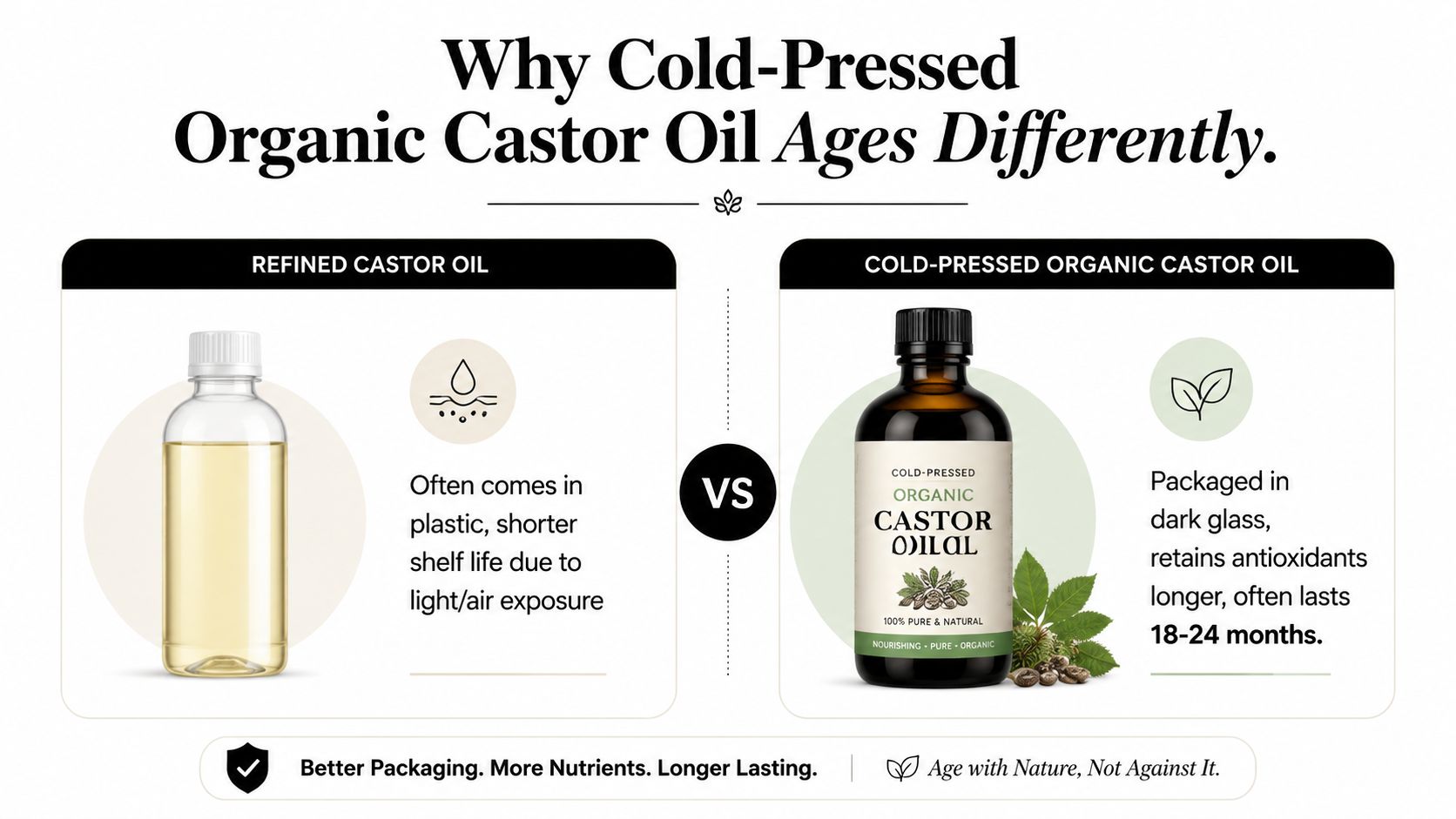
Ella & Eden's guide to cold-pressed oil provides useful background on what the processing term means. Its Organic Castor Oil is offered in a glass bottle, a format suited to limiting contact with packaging materials during long-term storage.
Formulator's perspective: Minimal processing gives an oil a valuable starting profile. Dark packaging, low oxygen exposure, clean handling, and stable temperature determine whether that potential translates into a longer usable life.
Your Everyday Storage Routine for Maximum Freshness
A bottle left beside the shower can age differently from one kept in a dark cupboard, even when both carry the same expiry date. Castor oil loses quality through repeated contact with oxygen, light, heat, and unclean tools. Your routine can reduce those exposures without special equipment.
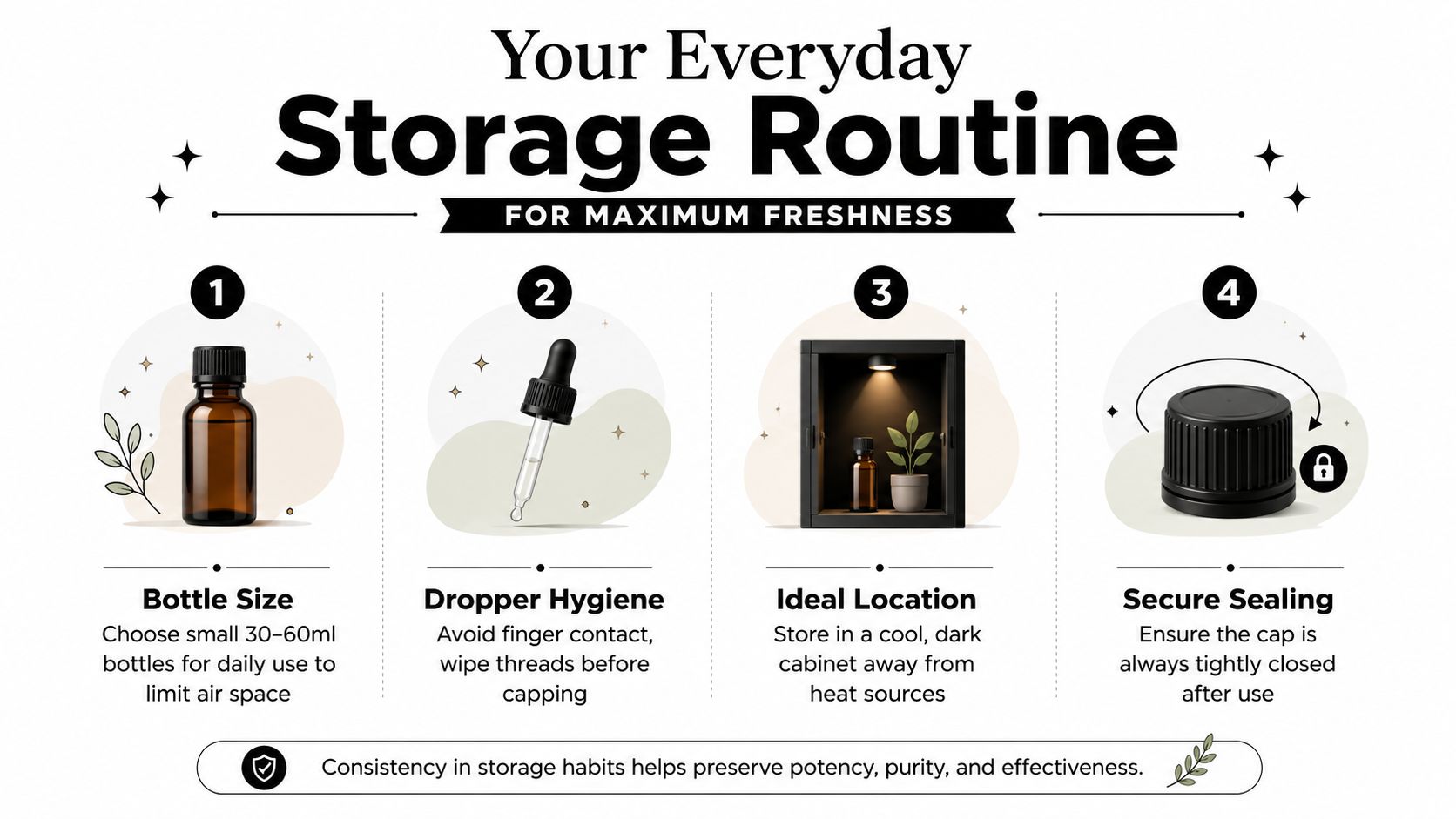
- Choose a bottle you can finish. Select a format that fits your regular routine. See the size guidance in the storage differences section above, and avoid transferring oil unless the original container no longer protects it well. Each transfer adds another opportunity for air or contamination to enter.
- Keep fingers away from the opening. Use a clean dropper, pump, or pour spout instead of dipping fingers into the bottle. Skin oils, dust, and moisture can enter with your fingers, while a used lash brush may return residue to the neck. Wipe oily bottle threads with a clean, dry tissue before replacing the cap.
- Store it away from bathroom heat and steam. A cool, dark cabinet usually works better than a windowsill or shower caddy. Keep castor oil below about 25°C, away from radiators, hot pipes, direct sunlight, and car interiors. A stable temperature helps prevent repeated warming and cooling that can affect quality and clarity.
- Close the bottle after every use. Oil on the threads can stop a cap from sealing properly, allowing more air exchange than the closed bottle suggests. Tighten the closure firmly, without forcing it so hard that you damage the threads or make later cleaning difficult.
- Mark the dates you may forget. Write the purchase date and opening date on the bottle with a permanent marker. The opening date gives you a practical reference for the 6–12 month post-opening window, while the purchase date helps you judge the age of an unopened bottle. Treat both as reminders, then check the oil's smell and appearance before use.
- Pack only what the trip requires. Decant the amount you expect to use into a clean container that closes tightly. Leave the master bottle at home, where it is less exposed to suitcase pressure, car heat, or a sunny hotel counter.
- Make castor oil packs in small portions. Flannel, warmth, handling, and air exposure make a prepared portion less suitable for storage. Pour out only what you will use immediately, and keep leftovers out of the original bottle.
The goal is simple: limit reaction with oxygen, light exposure, and contact with unclean tools. Those small choices give your castor oil a better chance of remaining pleasant and usable for longer.
Quick Answers to the Castor Oil Questions You Still Have
Does castor oil really expire?
Yes. Castor oil's oxidative stability makes it relatively durable, but light, oxygen, heat, and contamination can still change its smell, color, clarity, and texture. Use the product date as one reference, then assess how the bottle was stored and whether it still passes the sensory checks.
Can you use expired castor oil on skin?
Avoid oil that smells rancid, looks cloudy, has sediment, or feels unusually sticky or gritty. Oxidized oil may irritate sensitive skin, so don't use questionable castor oil on the face, around the eyes, or on broken skin. If the bottle is old but appears normal, a cautious patch test is more appropriate than immediate full-face use, although replacing an uncertain product remains the lower-risk choice.
Do castor oil packs shorten shelf life?
A prepared pack can expose the oil to fabric, air, warmth, and handling. Prepare only the amount you plan to use immediately, and don't return unused oil to the original container. This protects the remaining oil from fibers, moisture, and residue.
How should you dispose of rancid castor oil?
Don't pour large amounts down the drain, where oil can contribute to blockages. Seal the rancid oil in an absorbent material or a closed bag and place it in household trash, following local waste rules. Clean the empty container before recycling it if your local program accepts that material.
Castor oil shelf life is easier to manage once you stop treating it as a fixed countdown. Choose protective packaging, keep the bottle cool and dark, close it promptly, and trust clear sensory warning signs when the oil no longer seems right.
Ella & Eden offers simple, cold-pressed, unrefined oils for skin, hair, and everyday self-care, including Organic Castor Oil in glass packaging. Visit Ella & Eden to explore clean, multi-purpose oils and build a storage-conscious routine around ingredients you can identify.