Best Carrier Oils for Skin and How to Choose One
You've bought jojoba for your T-zone, argan for dry cheeks, rosehip for uneven tone, and perhaps a bottle of grapeseed oil because someone called it “non-comedogenic.” Now your bathroom shelf is crowded with half-used bottles, yet you're still wondering which oil belongs on your face.
The best carrier oils for skin aren't chosen by texture, trend, or a single comedogenicity chart. A better approach looks at what the oil does, how its fatty acids interact with your barrier, how much residue it leaves, and how your own skin responds. With that framework, you can build a small, intentional lineup instead of collecting oils that perform the same job.
Why Carrier Oils Deserve a Spot in Your Routine
A carrier oil is a plant-derived oil used as a base for skincare and aromatherapy. It can dilute essential oils, carry oil-soluble botanical compounds, and provide emollient support on its own. Unlike essential oils, carrier oils are generally made from fatty portions of seeds, kernels, fruits, or nuts, so they're designed for broader topical use when properly formulated and patch-tested.
Their most practical role is simple: they help soften the skin and slow moisture loss. After cleansing, an oil can spread across the surface to create a flexible layer that helps keep water from escaping. That makes it useful as the finishing step over a water-based product, rather than a substitute for a hydrating toner, treatment serum, moisturizer, or sunscreen.
Practical rule: Use an oil to support the routine you already have, not to replace every other category of skincare.
Carrier oils also give you a way to control the number of ingredients touching your face. A single-ingredient jojoba or argan oil is easier to understand than a complex blend containing fragrance, multiple essential oils, and unfamiliar preservatives. If your skin reacts, you'll have a clearer idea of what caused the problem.
A focused routine might include:
- One facial anchor oil: Choose a versatile option such as jojoba, squalane, or grapeseed based on your skin's behavior.
- One supportive oil: Add a richer or more specialized oil for dry patches, body care, or occasional use.
- A separate body option: Fractionated coconut, sweet almond, or castor oil may make more sense on hands, cuticles, elbows, or legs than on the face.
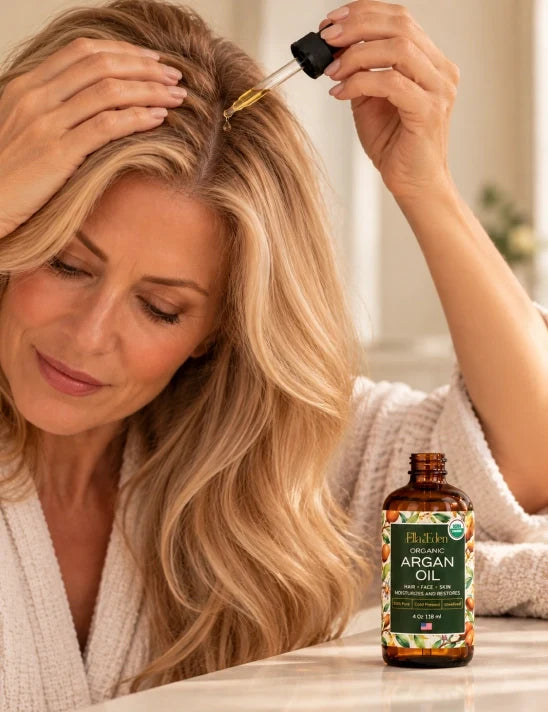
Argan oil is a useful example of how carrier oils moved beyond traditional use. Clinical research has reported improvements in skin hydration, transepidermal water loss, and elasticity after argan oil intake and topical application, including a 60-day study of postmenopausal women and a controlled formulation trial lasting one month.
The point isn't to own every oil. It's to choose one that supports your main goal, then add another only when it fills a real gap.
How Carrier Oils Actually Work on Your Skin
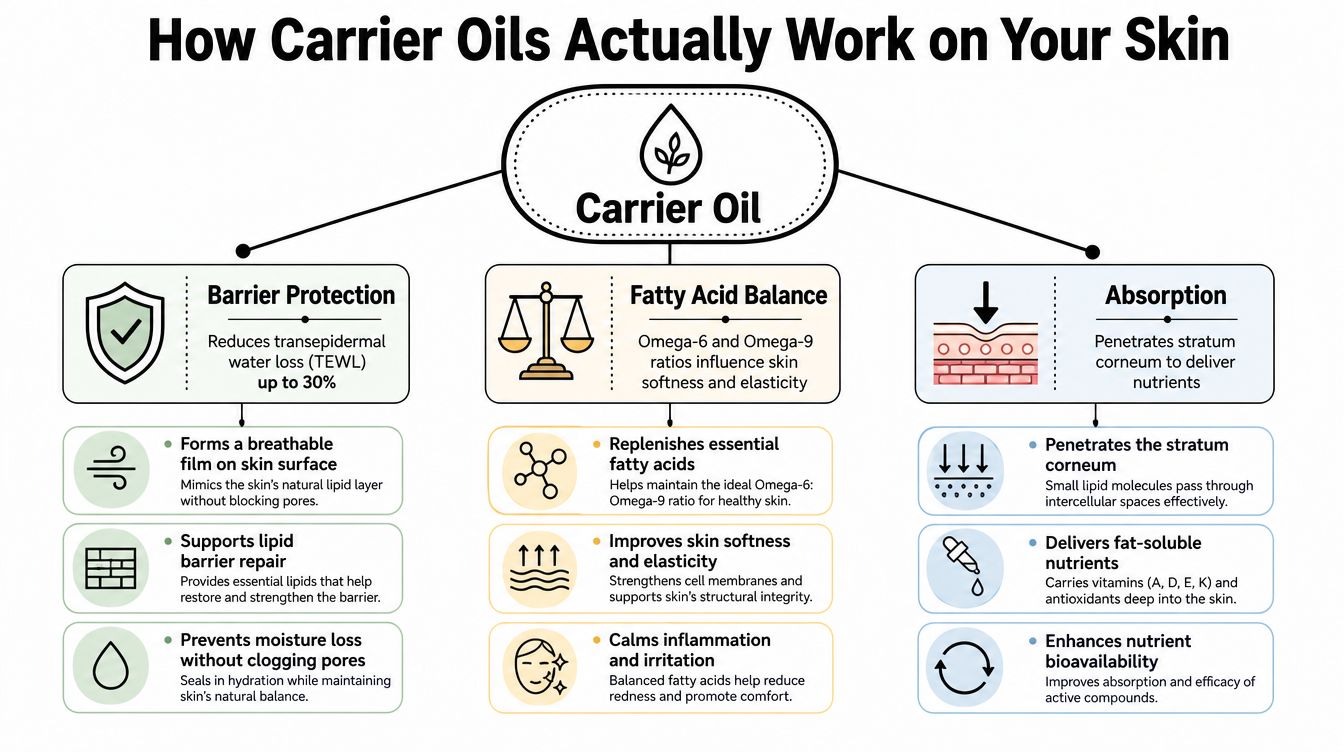
Carrier oils moisturize in a way that differs from water-based humectants. They don't add water to the skin. Instead, they help reduce transepidermal water loss, often abbreviated as TEWL, by forming a surface film that slows evaporation.
That process has three practical parts:
- Surface protection: The oil spreads over the outer layer of skin and creates an occlusive or semi-occlusive film. The film's weight depends on the oil's composition, so jojoba may feel lighter than castor oil even though both help soften the surface.
- Barrier interaction: Fatty acids can support the lipid environment between skin cells. Oils with more linoleic acid are often discussed for barrier repair, while oils richer in oleic acid usually offer more cushion and slip.
- Secondary components: Some oils contain naturally occurring compounds such as sterols, tocopherols, and polyphenols. These can contribute antioxidant or soothing properties, though the exact profile varies by plant, extraction method, and refinement.
Fatty acids in plain language
Oleic acid is associated with a smoother, more cushioned feel and often gives an oil a richer glide. Argan, sweet almond, and some other nourishing oils can feel comfortable on normal or dry skin because of this emollient character. However, excess oleic acid may irritate compromised skin or interfere with barrier function in some circumstances.
Linoleic acid generally contributes to a lighter, quicker-drying feel. Research on fatty acids and the skin barrier has helped explain why high-linoleic oils, including grapeseed and safflower, may be more technically suitable for acne-prone or compromised skin than oleic-rich options.
Palmitic and stearic acids tend to add richness and a more substantial protective feel. That can be helpful on dry body skin, but a rich finish may be less comfortable on an oily face.
Texture alone can mislead you. Two oils may both feel silky in your palm, yet one may leave a breathable film while another feels dense after several hours. The reason is their fatty-acid balance, wax content, saturation, and minor compounds, not whether the label says “lightweight.”
The Top Carrier Oils Worth Knowing
Choosing among the best carrier oils for skin gets easier when you assign each oil a job. Jojoba works as a flexible facial base, grapeseed suits people who want a lighter finish, and argan adds softness without necessarily feeling heavy. The table below gives you a starting point, not a permanent verdict.
| Carrier Oil | Standout Benefit | Best Skin Type | Typical Use |
|---|---|---|---|
| Jojoba | Sebum-like wax ester with a balanced, semi-occlusive finish | Most skin types, including sensitive or breakout-prone skin | Facial oil, cleanser, essential-oil carrier |
| Argan | Softening oil with clinical evidence for hydration and elasticity support | Normal to dry skin | Night serum, neck and décolletage care |
| Rosehip | Lightweight oil commonly selected for tone and mature-skin routines | Normal, dry, or uneven-looking skin | Evening facial serum |
| Squalane | Very light, smooth, silicone-like slip | Sensitive, dry, or combination skin | Moisturizer booster, facial oil |
| Grapeseed | Linoleic-leaning profile and dry finish | Oily or acne-prone skin | Lightweight serum, massage oil |
| Sweet almond | Midweight emollience and comfortable body-care slip | Normal or dry skin | Body oil, hand and cuticle care |
| Fractionated coconut | Stable, odorless, non-greasy texture | Body skin and people who prefer a neutral base | Massage oil, body serum |
| Castor | Thick, highly occlusive feel | Dry spots, cuticles, lashes, and brows | Spot application, cuticle treatment |
| Evening primrose | GLA-rich oil chosen for targeted barrier support | Dry or sensitized-feeling skin | Small amount in a nighttime blend |
The versatile choices
Jojoba is technically a wax ester, not a conventional triglyceride oil. Its structure helps explain why it behaves more like a skin-compatible surface emollient and why it's widely used in leave-on cosmetics. A safety assessment found jojoba-containing products used across concentrations from 25.0% to 90.1%, while tested products containing 0.5% jojoba oil and 20.0% jojoba oil were classified as nonirritants and nonsensitizers in human testing.
For a practical introduction to jojoba's facial use, see jojoba oil for skin. It's a sensible anchor when you want one oil that can work as a facial moisturizer, cleansing oil, or base for a properly diluted aromatic blend.
Argan is a stronger choice when softness and visible suppleness matter more than a completely dry finish. Clinical findings have reported improved hydration and elasticity, so it has a more substantial evidence base than many trendy facial oils. Rosehip is often selected for radiance and mature-skin routines, but its results depend on the whole formula and consistent use, not a few applications.
The lighter and richer options
Squalane gives skin a smooth, low-residue feel and can be useful when you dislike traditional oils. Grapeseed is another lightweight option, especially when you're interested in a linoleic-leaning profile. Sweet almond feels more cushioning and makes an excellent body oil, though people with nut allergies should approach it carefully.
Fractionated coconut is practical for body care because it stays liquid and has a neutral feel. Castor oil is much thicker, so it's better used sparingly on cuticles, brows, lashes, or dry areas than spread across an oily face. Evening primrose belongs in the targeted category. Its GLA content makes it interesting for barrier-focused blends, but its richer profile means you don't need much.
Carrier oils also fit into a broader clean beauty routine that may include nutrition and lifestyle choices. It shouldn't be treated as a replacement for dermatological advice or a direct explanation of facial-oil performance.
Comedogenic Ratings and What They Really Mean
A comedogenic rating is often presented as if it were a precise forecast. In practice, the familiar zero-to-five scale is only a rough screening tool. It came from limited testing, including rabbit-ear models, and those results don't perfectly predict how a particular human face will respond.
A rating can't account for everything that happens in your routine. Your result may change based on the oil's concentration in a blend, the amount you apply, the rest of your products, climate, cleansing habits, and your skin's existing sensitivity. An oil labeled non-comedogenic can still trigger congestion for one person, while a supposedly pore-clogging oil may be tolerated by another.
| Carrier Oil | Comedogenic Rating | Dominant Fatty Acid | Breakout-Prone Suitability |
|---|---|---|---|
| Jojoba | Often rated low | Wax esters, with a sebum-like behavior | Strong starting option, but still patch-test |
| Grapeseed | Often rated low | Linoleic acid | Technically appealing for oily or acne-prone skin |
| Squalane | Often rated low | Saturated hydrocarbon, not a fatty-acid triglyceride | Lightweight option for many sensitive or combination routines |
| Sweet almond | Often rated moderate | Oleic and linoleic acids | Better suited to normal or dry skin than congestion-prone routines |
| Coconut oil | Often rated high | Lauric acid and other saturated fatty acids | Use cautiously on the face if you're prone to clogged pores |
| Castor | Often rated variable | Ricinoleic acid | Usually better as a targeted spot or body oil |
The table uses common rating categories as orientation, not as universal clinical predictions. A 2024 discussion of comedogenicity highlights the gap between marketing labels and real-world skin behavior, while rabbit-ear research found that several oils could behave similarly in acne-prone conditions instead of matching neat chart rankings.
A smarter rule for breakout-prone skin
Start with a linoleic-leaning oil such as grapeseed when barrier support and a lighter finish are priorities. Keep richer oils diluted within a blend, apply a small amount, and introduce only one new oil at a time. If your skin is reactive, don't add essential oils just because you're making a DIY product.
Better question: Don't ask whether an oil is universally non-comedogenic. Ask whether its profile, amount, and finish fit your skin in your current environment.
Patch testing won't guarantee that your pores will remain clear, but it can reduce the risk of committing to a full-face application too quickly. For a more targeted comparison, see the best oils for acne-prone skin.
Easy DIY Blends You Can Mix at Home
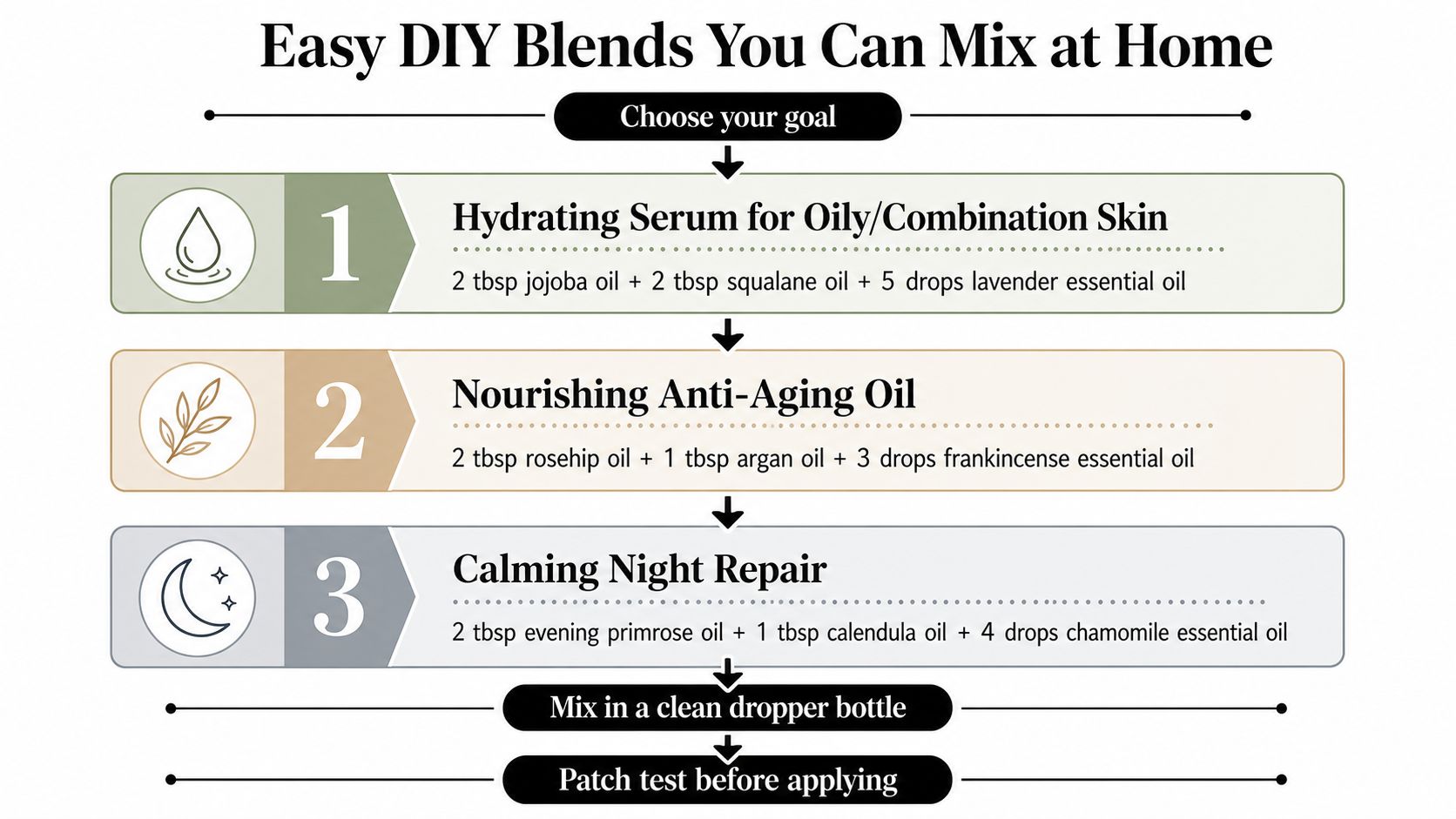
DIY blending works best when each ingredient has a clear role. You don't need a crowded formula. Start with two carrier oils, keep the texture intentional, and avoid adding essential oils to a facial blend unless you understand safe dilution and your skin tolerates them.
Lightweight hydration for oily or combination skin
Formula: 60% jojoba oil and 40% squalane.
Jojoba gives the blend a flexible, semi-occlusive finish, while squalane keeps the spread smooth and light. Apply two or three drops to clean, slightly damp skin after a water-based serum or moisturizer. Press rather than rub, and use less around the nose, chin, and forehead if those areas become shiny quickly.
Nourishing blend for normal to dry skin
Formula: 60% argan oil and 40% rosehip oil.
Argan supplies a soft, comfortable base, while rosehip adds a lighter botanical oil to the mix. Use two drops at night over moisturizer, especially on the cheeks, neck, or areas that feel tight. This blend is best treated as a finishing oil, not as a replacement for sunscreen or a clinically formulated retinoid.
Focused barrier-support blend
Formula: 70% sweet almond oil and 30% evening primrose oil.
Sweet almond provides body and slip, while evening primrose makes the blend more targeted for dry, uncomfortable-feeling skin. Apply one or two drops to damp skin at night, or use it on hands and dry body areas instead of the face if the texture feels too rich.
Use clean, dry equipment and a small dark bottle. Label the formula with the ingredients and date you mixed it, and store it in a cool, dark place. Refrigeration can help preserve freshness, but it may change texture, so let the blend return to a comfortable consistency before application. Discard it if the smell, color, or texture changes noticeably.
Sourcing, Storing, and Patch Testing Safely
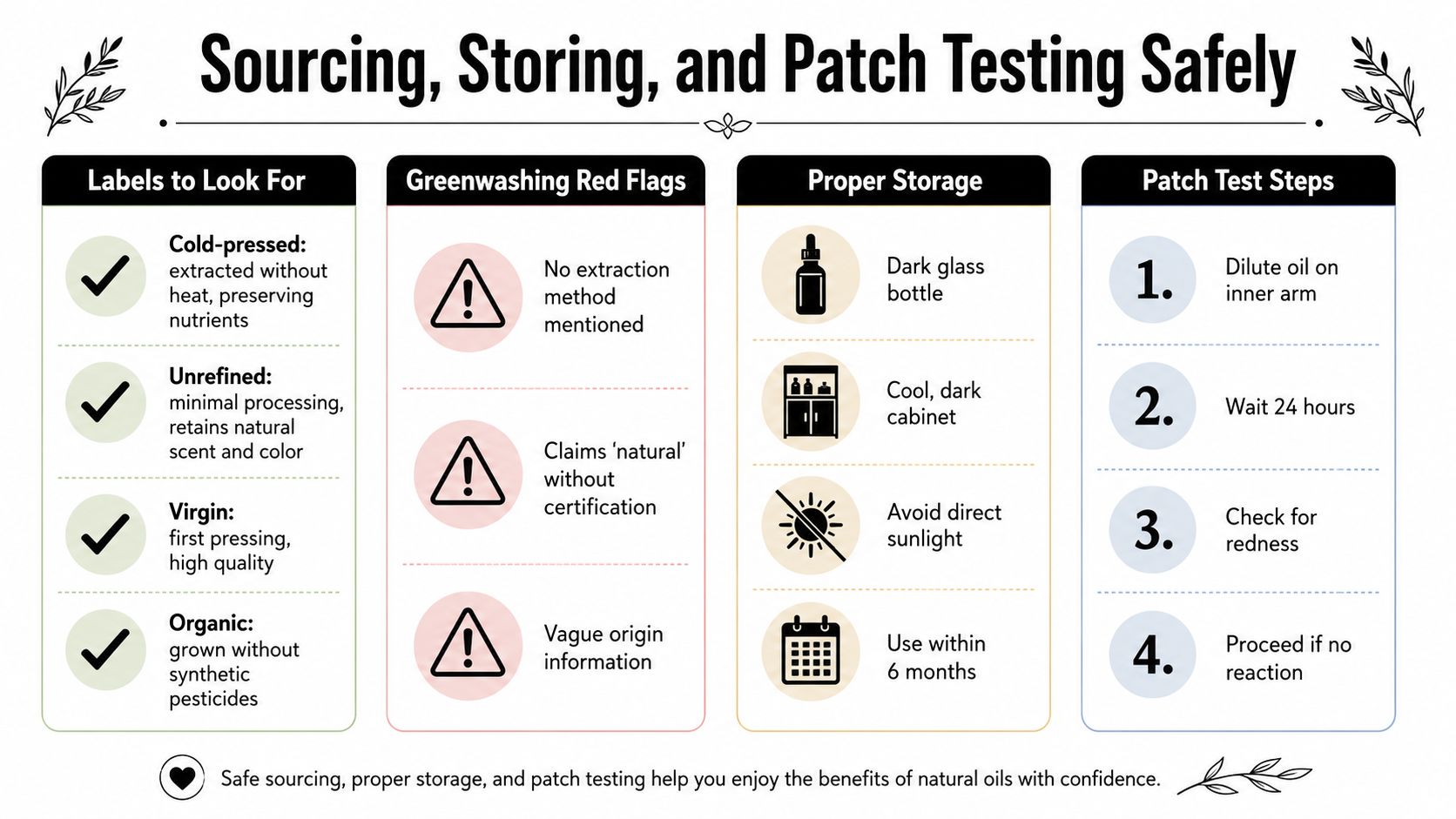
A beautiful botanical name doesn't tell you enough about an oil's quality. Read the label for the plant name, extraction method, whether the oil is refined or unrefined, origin information, and a batch or lot reference. These details make it easier to compare products and identify what you're applying.
Read the label beyond the front panel
- Cold-pressed: The oil was extracted through mechanical pressure without relying on heat as the primary method.
- Unrefined: The oil has undergone limited processing and usually retains more of its natural color and aroma.
- Virgin: The label generally indicates an initial pressing, but standards can vary by ingredient and supplier.
- Organic: Look for meaningful certification rather than an unsupported “natural” claim.
A vague label isn't automatically unsafe, but it gives you less information. Be cautious when a product omits the extraction method, provides no meaningful origin details, or uses “natural” as its only quality signal.
Protect the oil after you buy it
Light, heat, oxygen, and repeated contact can reduce freshness. Keep the cap tightly closed and store the bottle in a cool, dark cabinet rather than on a sunny windowsill or beside a steamy shower. Dark glass can provide additional protection from light, while a pump or dropper can reduce unnecessary handling.
Some oils are more oxidation-prone than others, so check the supplier's storage guidance instead of relying on one universal shelf-life rule. Fractionated coconut oil is generally chosen for stability, while delicate botanical oils may need closer attention to smell and texture.
Patch-test one oil at a time
Apply a small amount of the undiluted carrier oil, or a properly diluted blend, to an inconspicuous area such as the inner forearm. Leave it alone and observe the skin over the next day, checking for itching, swelling, redness, burning, or a spreading rash.
Mild warmth or temporary tingling isn't something to ignore, especially when essential oils are present. Wash the area and stop using the product if discomfort persists or a visible reaction develops. This guide to patch-testing skincare offers a practical reference before you introduce a new formula.
Building Your Personal Carrier Oil Shortlist
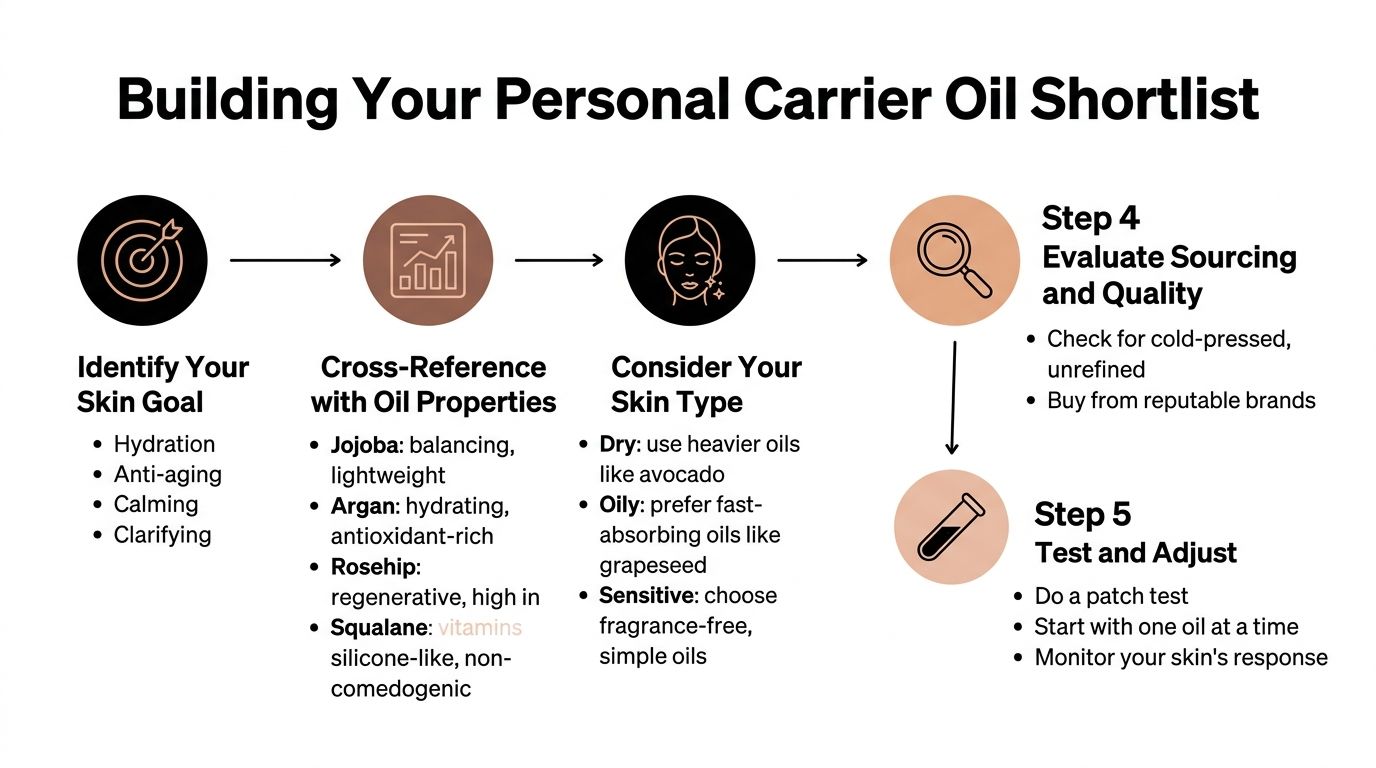
The best carrier oil is the one that matches your skin's behavior, your main goal, and your routine's level of simplicity. Begin with one concern instead of trying to solve hydration, congestion, sensitivity, and visible aging with a single bottle.
Use this decision checklist:
- Name the primary goal. Choose hydration, calming, clarifying, or support for an uneven-looking or mature complexion.
- Review the oil's profile. Look at whether it feels light or rich, whether it leans toward linoleic or oleic fatty acids, and whether it creates the finish you'll enjoy wearing.
- Choose one anchor oil. Jojoba or squalane can suit a minimalist facial routine, while grapeseed may appeal to oily or breakout-prone skin.
- Add one supporting oil only if needed. Argan can add softness, evening primrose can make a blend more targeted, and castor can handle small dry areas without becoming your all-over face oil.
- Check sourcing before buying. Prefer transparent labels that identify the plant, extraction method, processing level, and packaging.
- Test before expanding. Introduce one oil at a time and observe how your skin responds before creating a blend.
A compact lineup often works better than a shelf full of overlapping products. You might keep jojoba as your everyday facial oil, grapeseed for a lighter experimental blend, and castor for cuticles or dry spots. Someone with drier skin might choose argan as the anchor and evening primrose as the occasional support oil.
Start small, observe carefully, and let your skin's response outrank a number on a chart.
Give your chosen oil enough time to become part of a consistent routine before you decide whether it belongs there. If it feels heavy, reduce the amount. If it leaves your skin tight, apply it over a moisturizer or damp skin. If congestion appears, stop, simplify, and reassess the oil's profile rather than adding another product to counteract it.
Ella & Eden offers single-ingredient options such as jojoba and argan oils for simple, multi-purpose skin and self-care routines. Visit Ella & Eden to explore clean carrier oils and choose a focused starting point for your personal shortlist.