Organic Sweet Almond Oil: Benefits for Skin & Hair
Your bathroom shelf starts out simple. Then one dry-skin season, one frizzy-hair week, and one impulse serum purchase later, it’s crowded with bottles that each promise one narrow fix.
Simplicity is often preferred over a 12-step routine. Consumers desire one product they can understand, trust, and finish. That’s a big reason organic sweet almond oil keeps showing up in clean beauty conversations. It’s familiar, gentle, and easy to use across skin, hair, and body care.
It also isn’t just nostalgia. The category has real momentum. The global sweet almond oil market captured a 67.5% revenue share of the total almond oil market in 2023, was valued at USD 1.29 billion, and is projected to reach USD 2.98 billion by 2030 at a 12.7% CAGR, according to Grand View Research’s almond oil market analysis. That kind of growth tells you people aren’t only curious about simple oils. They’re building routines around them.
Your Guide to Nature’s Most Versatile Beauty Oil
A good multi-use oil earns its place by doing ordinary things very well.
Think about a typical evening. Your face feels tight after cleansing. Your elbows are rough. The ends of your hair look dry. You could reach for three separate products, or you could use one oil that’s known for being comfortable on skin and useful from head to toe.
That’s where sweet almond oil stands out. It has a long beauty history, but it fits modern routines surprisingly well. If you prefer fewer ingredients, less fragrance, and products that can move between bathroom, bedside, and gym bag, it makes sense.
Why people keep coming back to it
Some ingredients become trendy because they sound exotic. Sweet almond oil has stayed relevant for a different reason. It’s practical.
- It’s easy to understand. You’re working with a single botanical oil, not a long formula full of mystery additives.
- It adapts well. A few drops can soften skin, add slip to a massage, or smooth dry hair ends.
- It feels approachable. Many people find it easier to start with a simple carrier oil than a highly active serum.
Organic sweet almond oil works best when you stop expecting it to do everything at once and start using it for the jobs it does beautifully: cushioning, softening, sealing, and comforting.
Why this oil feels modern again
Minimalist beauty isn’t really about doing less for the sake of it. It’s about using fewer products with clearer purpose.
Sweet almond oil fits that mindset because it can sit in the middle of a routine instead of at the edge of one. You can use it alone. You can pair it with a moisturizer. You can layer it onto damp hair. You can keep it simple without feeling like you’re settling.
That’s why this oil has moved from “traditional remedy” to “daily staple” for so many people. It’s not trying to be flashy. It’s trying to be useful.
Understanding the Composition of Organic Sweet Almond Oil
When people say an oil is “nourishing,” that can sound vague. What matters is why it feels nourishing on actual skin and hair.

Organic sweet almond oil is pressed from sweet almonds, not bitter almonds. That distinction matters. Sweet almond oil is the form commonly used for topical care, while bitter almond oil is a different material with different safety considerations.
Think of it as a cushion plus a seal
Your skin barrier works a bit like a brick wall. Skin cells are the bricks. Lipids are the mortar that helps keep moisture in and irritation out.
Sweet almond oil contains a mix of fats that behave like supportive mortar. When you apply it, it helps soften roughness and reduce that “my skin feels stripped” sensation after washing. On hair, those same conditioning fats help strands bend more easily instead of feeling brittle.
The oil is also known for compounds people already recognize from skincare language, including vitamin E and minerals such as magnesium. You don’t need to memorize chemistry terms to use it well. The practical takeaway is simple: this oil gives dry surfaces more slip, more flexibility, and more comfort.
Why texture matters as much as nutrients
A beautiful oil still won’t become a staple if it feels too heavy. Sweet almond oil lands in a middle zone that many people like. It feels richer than ultra-thin oils, but it usually doesn’t sit on the skin like a thick waxy layer.
That balance is part of why it works for minimalist routines. According to Typology’s sweet almond vegetable oil reference, organic sweet almond oil has a comedogenicity index of 2 and some varieties show a Rancimat oxidative stability index up to 23.49 hours at 100°C, which points to good stability and helps preserve nourishing compounds like vitamin E.
In plain language, that means two useful things:
- It suits many skin types. A comedogenicity index of 2 suggests it’s generally considered a lower-risk choice for clogging pores than heavier oils.
- It stores well when handled properly. Good oxidative stability means the oil is less quick to turn stale than more fragile oils.
Practical rule: If an oil feels good for one week but starts smelling sharp, waxy, or “old nuts” later, freshness is often the issue, not the ingredient itself.
Cold-pressed matters
How an oil is extracted affects what ends up in the bottle. Cold-pressed oils are valued because the process is gentler on delicate components.
If you want a quick primer on what that term means in everyday language, this guide on what is cold-pressed oil breaks it down clearly.
The simple composition takeaway
When you strip away the marketing language, organic sweet almond oil succeeds because it combines three useful traits:
| Trait | What it means in practice |
|---|---|
| Conditioning fats | Help skin feel less tight and hair feel less rough |
| Vitamin E presence | Supports the oil’s protective, comforting profile |
| Stable, medium-rich texture | Makes it easier to use across face, body, and hair |
That’s the science in plain English. It’s not magic. It’s a well-balanced plant oil that supports softness, glide, and barrier comfort.
The Top Skin and Hair Benefits of Sweet Almond Oil
The easiest way to understand sweet almond oil is to link its contents to what you observe in the mirror.

People have been doing that for a very long time. A PubMed-indexed review on almond history and health notes that sweet almond oil was used in ancient Egypt circa 3000 BCE and later became part of Ancient Chinese, Ayurvedic, and Greco-Persian medicine, including use for dry skin conditions such as psoriasis and eczema. That long track record doesn’t replace modern judgment, but it does explain why the oil has remained a trusted basic rather than a passing fad.
What it can do for skin
It helps dry skin feel comfortable faster
When skin is dry, it often doesn’t just look flaky. It feels tight, papery, or itchy.
Sweet almond oil helps by coating the surface with a softening layer that slows moisture loss. It doesn’t add water to the skin by itself, so it works best after cleansing, bathing, or misting, when there’s already some water present to hold onto.
A simple way to think about it: water hydrates, oil helps keep that hydration from escaping too quickly.
It can calm the look of roughness and redness
Sensitive skin often dislikes drama. Harsh fragrances, aggressive actives, over-cleansing, and weather changes can all leave it reactive.
Sweet almond oil tends to fit sensitive routines because it’s straightforward. One ingredient. No added fragrance if you choose a pure version. A smooth texture that reduces friction during massage or application.
That’s why many people use it when their routine feels overcomplicated or their skin feels overstimulated.
It gives skin a softer, more even-looking finish
This isn’t the same as saying it changes your skin tone. What it often changes is the surface quality of the skin.
When the outer layer is less dry and rough, light reflects more evenly. Skin can look calmer and smoother, even if you haven’t added any “glow” product at all.
It works well for gentle makeup removal
Oil dissolves oil-based residue well. That makes sweet almond oil useful for loosening makeup, sunscreen, and the day’s general grime.
Massage a small amount over dry skin, then remove it with a warm damp cloth or follow with a gentle cleanser. For many people, this feels less stripping than trying to scrub everything off with a foaming wash alone.
What it can do for hair
Hair benefits from oils a little differently than skin does. Hair doesn’t need “moisture” in the same simple way marketing often suggests. It usually needs lubrication, flexibility, and help reducing roughness.
It can make dry ends look smoother
If your hair feels coarse at the ends, sweet almond oil can help by laying down a light conditioning veil over the cuticle.
That doesn’t repair split ends permanently. Nothing topical glues damaged ends back together for good. But it can make hair look neater, feel softer, and snag less between washes.
It adds shine without a hard finish
Shiny hair reflects light from a smoother surface. When an oil reduces frizz and roughness, shine often follows.
Sweet almond oil is especially useful if you want a softer sheen rather than the glossy, coated look some heavier products create.
It can support a more comfortable scalp routine
A dry scalp often responds well to gentler handling. A small amount of almond oil used as a pre-wash massage oil can soften scale and reduce that stiff, tight feeling some people get between wash days.
It’s also a practical “carrier” oil if you like to dilute stronger oils before scalp use. Used alone, it offers slip and comfort. Used as a base, it helps strong companions spread more evenly.
If your scalp is irritated, the first goal isn’t stimulation. It’s reducing friction and helping the area feel calm.
Why these benefits feel so broad
Sweet almond oil isn’t one of those ingredients that does one dramatic thing. It does several foundational things well.
- For skin, it cushions, softens, and helps hold in comfort.
- For hair, it lubricates, smooths, and improves feel.
- For scalp and body, it adds slip, reduces drag, and makes massage easier.
That broad usefulness is exactly why one bottle can replace several more specialized products for some people.
Who usually enjoys it most
Not every oil suits every person. Still, sweet almond oil often makes sense for these groups:
- Sensitive skin users who want a short ingredient list
- Dry skin types who need softness without a thick butter texture
- Natural hair routines that benefit from a light finishing or sealing oil
- Minimalists who’d rather buy one good carrier oil than a lineup of single-purpose extras
If your routine is already packed with exfoliants, peels, and strong treatments, organic sweet almond oil can act like the quiet product that keeps everything else feeling manageable.
How to Use Organic Sweet Almond Oil in Your Daily Routine
The best beauty oil is the one you know how to use. Sweet almond oil becomes much more valuable when you match the method to the job.
Its versatility is one reason formulators rely on it so heavily. It can be used in high concentrations, including up to 80% in massage oils and baby care creams and 20% to 50% in hydrating emulsions for skin and scalp care. That tells you something important: this oil isn’t only a supporting ingredient. It can function as a major base.
Face use that feels simple
As a last-step sealing oil
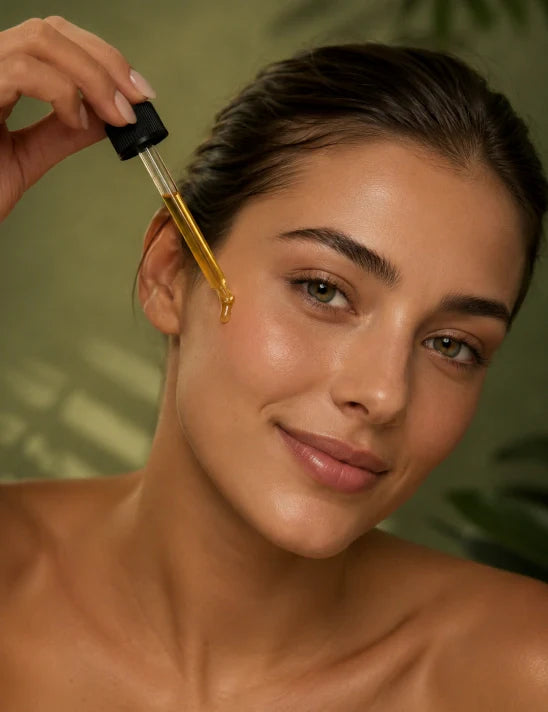
If your skin feels dry after your usual moisturizer, warm 2 to 3 drops between your palms and press it onto slightly damp skin.
Don’t rub hard. Press, especially over cheeks and around the mouth. Those areas often lose comfort first.
This works well at night, but some people also use a tiny amount in the morning if their skin leans dry.
As an oil cleanser
This method confuses people because it sounds backward. If skin feels oily or congested, why put more oil on it?
Because oil is good at loosening makeup, sunscreen, and sebum-based residue.
Try this:
- Start with dry hands and a dry face.
- Massage a small amount of sweet almond oil over skin for about a minute.
- Focus on makeup-heavy areas without scrubbing.
- Remove with a warm damp cloth.
- Follow with a gentle cleanser if you like a double-cleanse feel.
If your skin gets red from rubbing cotton pads over and over, this can feel much kinder.
As an under-eye comfort step
Use the smallest amount possible. Think one drop split between both ring fingers.
Pat it lightly over the orbital bone area at night. Don’t slather it too close to the lash line. The goal is softness, not a slippery eye area.
Body uses that make sense immediately
Some products need effort. Almond oil doesn’t.
After-shower body oil
Apply it to damp skin, not fully dry skin. That one change makes a big difference.
When there’s still a little water on your arms and legs, the oil spreads more easily and feels less greasy. Knees, elbows, and shins are good places to start.
Massage oil
Sweet almond oil has enough slip to make massage comfortable without feeling overly slick. That’s one reason it appears so often in massage blends.
Pour a small amount into your hands first. Warm it. Then apply.
A body oil should make skin feel satiny, not sticky. If you feel tacky after ten minutes, you probably used more than you needed.
Cuticle and hand care
Keep a small bottle by the sink or bedside. Massage a drop into cuticles and the backs of hands before bed.
This is especially helpful if frequent washing leaves your hands tight.
Hair routines that don’t leave you greasy
For dry ends
Start with 1 to 3 drops, depending on hair thickness. Rub between palms and smooth over the last third of the hair.
Less is better at first. You can always add more, but too much can flatten the ends.
As a pre-wash scalp and length treatment
Massage a small amount into the scalp with fingertips, then smooth some through dry lengths. Leave it on before washing.
This is useful if your scalp feels dry or your wash routine leaves your lengths rough. If you’re building a routine for curls, coils, or textured hair, this guide on how to moisturize natural hair gives practical context for layering moisture and oils in a way that makes sense.
For frizz control
Use a drop or two on flyaways after styling. Smooth with your hands rather than combing it through aggressively.
This gives a softer, more natural finish than many silicone-heavy gloss products.
Three easy DIY recipes
Softening body polish
Mix the following in a small bowl:
- 2 tablespoons organic sweet almond oil
- 4 tablespoons brown sugar
- 1 teaspoon honey
Massage onto damp skin in gentle circles, then rinse. Use on rough areas, not on irritated or freshly shaved skin.
Simple scalp comfort blend
Combine:
- 2 tablespoons organic sweet almond oil
- 1 tablespoon jojoba oil
Massage into the scalp before wash day. This blend keeps the feel light while still giving slip.
Overnight hand treatment
Blend:
- 1 tablespoon organic sweet almond oil
- 1 teaspoon shea butter
Massage into hands before bed. If your hands are very dry, wear cotton gloves overnight.
A good starting plan
If you’re new to oils, don’t try every method in one week. Pick one.
| Need | Best first use |
|---|---|
| Dry cheeks | Press a few drops over moisturizer at night |
| Rough body skin | Apply after showering on damp skin |
| Dry ends | Smooth a tiny amount over hair ends |
| Tight scalp | Use as a pre-wash scalp massage oil |
Once you see how your skin or hair responds, it’s easier to expand from there.
How to Choose a High-Quality Organic Sweet Almond Oil
Two bottles can both say “sweet almond oil” and still perform differently.

Quality shows up in how the oil smells, how it feels, how well it stores, and how transparent the brand is about sourcing. If you’re buying organic sweet almond oil for face and hair use, the label details matter.
What to look for on the label
Certified organic
This matters if you want an oil produced without the usual pesticide-heavy farming inputs associated with conventional growing. For many shoppers, “organic” isn’t a trendy extra. It’s the whole reason to choose a simple oil in the first place.
Cold-pressed
Cold-pressed oils are generally preferred in minimalist beauty because the extraction method is gentler. That often helps preserve the oil’s natural character.
Unrefined
An unrefined oil usually keeps more of its original scent, color, and feel. That can be a plus if you want a product that feels closer to the raw botanical material.
Hexane-free
If you’re choosing a pure oil partly to avoid unnecessary processing, this point matters. Many clean beauty shoppers specifically want oils that haven’t been extracted with chemical solvents.
Signs the brand takes quality seriously
A trustworthy product page or label usually makes it easy to answer these questions:
- Where is it sourced from
- How is it extracted
- Is it a single-ingredient formula
- Is it bottled in a way that protects freshness
- Does the brand clearly state vegan and cruelty-free standards
If those answers are buried or missing, that’s useful information too.
Quick quality checklist
Use this before you buy:
| Check | Why it matters |
|---|---|
| Single ingredient | Helps you avoid fillers and hidden fragrance |
| Organic claim with clarity | Supports a cleaner sourcing standard |
| Cold-pressed wording | Suggests a gentler extraction approach |
| Unrefined profile | Usually means fewer processing steps |
| Protective packaging | Helps preserve freshness once opened |
If the bottle is cheap, oversized, clear, heavily perfumed, and vague about extraction, it’s probably not the pure minimalist oil you think you’re buying.
What the oil should feel and smell like
High-quality organic sweet almond oil usually has a mild, slightly nutty scent and a soft golden tone. It shouldn’t smell rancid, overly perfumed, or strangely “neutral” in a way that suggests heavy processing.
Texture matters too. It should glide well, spread easily, and leave skin supple rather than waxy.
Generally, the best bottle isn’t the one with the loudest claims. It’s the one with the clearest ones.
Sweet Almond Oil vs Other Oils and Safety Guidance
Choosing an oil gets easier when you stop asking, “Which oil is best?” and start asking, “Best for what?”

Sweet almond oil often sits in the middle. It’s richer than jojoba for many people, lighter than coconut oil on skin, and less luxury-coded than argan, which can make it a more practical everyday choice. If you’re comparing oils specifically for hair softness and shine, this guide to argan oil is a useful companion read because it highlights where argan tends to shine in hair-focused routines.
Sweet Almond Oil vs. Other Popular Beauty Oils
| Attribute | Organic Sweet Almond Oil | Jojoba Oil | Argan Oil | Coconut Oil (Fractionated) |
|---|---|---|---|---|
| Absorption | Medium, cushioned feel | Fast, light feel | Light to medium, silky feel | Light, smooth slip |
| Skin type suitability | Good for most skin types, especially dry or sensitive-leaning routines | Often preferred for oily or combination routines | Popular for dry, mature-feeling skin and hair care | Better for body and hair on many people than for facial use |
| Key nutrients | Known for vitamin E and conditioning fatty acids | Sebum-like wax esters | Vitamin E and nourishing fatty acids | Primarily emollient fatty acids |
| Comedogenic rating | 2, based on the earlier Typology reference | Often considered low | Often considered moderate-leaning for some users | Can feel too rich for some facial routines |
If you want a broader overview of where different oils fit in hair care, this article on the best carrier oils for hair helps sort them by need and texture.
How to decide quickly
Use sweet almond oil if you want one bottle that can move between body, face, and hair with minimal fuss.
Use jojoba if your main priority is a lighter feel that mimics the skin’s own surface oils.
Use argan if your routine is especially focused on smoothing hair or supporting a mature-looking complexion.
Use fractionated coconut oil if you mainly want slip for body care and massage.
Safety guidance you shouldn’t skip
Even gentle oils need common sense.
- Patch test first. Apply a small amount to the inner arm or jawline area and wait before full use.
- Be cautious with nut allergies. If you have an almond or tree nut allergy, speak with a qualified medical professional before topical use.
- Don’t overapply. More oil doesn’t equal better results. It usually just means more residue.
- Avoid irritated or broken skin unless advised by a clinician. Simple doesn’t always mean appropriate for every skin state.
Skin that’s reactive often responds better to fewer variables. Test the oil alone before mixing it with other actives or essential oils.
Storage and freshness
Store organic sweet almond oil in a cool, dark place with the lid tightly closed. Heat, light, and repeated air exposure all work against freshness.
The earlier research cited on formulation use notes that unrefined sweet almond oil is often discussed with a shelf life of around 2 years under proper storage conditions, while other technical references describe longer stability under ideal conditions. In daily life, the safest approach is practical, not theoretical: watch the scent, color, and feel.
If it smells off, don’t talk yourself into using it up. Fresh oil should feel comforting. Old oil usually doesn’t.
Frequently Asked Questions About Organic Sweet Almond Oil
Is organic sweet almond oil good for sensitive skin
Often, yes. Many people with sensitive skin like it because a pure version is simple and fragrance-free. That said, “gentle” doesn’t mean universal. Patch test first, especially if your skin is reactive or you’re already using strong actives.
Will it clog pores
It may suit many people because, as noted earlier, it has a comedogenicity index of 2. Still, skin responses are personal. If you’re acne-prone, start with a small amount and use it on damp skin rather than applying a heavy layer.
Does it leave a greasy finish
It can if you use too much. Typically, only a few drops are needed for the face or hair ends. Used sparingly, it tends to feel cushioned rather than greasy.
Can I use sweet almond oil on my scalp
Yes, many people use it as a pre-wash scalp oil or a light massage oil. Keep the amount modest and wash thoroughly afterward if your scalp gets buildup easily.
What’s the difference between sweet almond oil and bitter almond oil
They aren’t the same. Sweet almond oil is the form commonly used in skin, hair, and body care. Bitter almond oil is a different material with different safety considerations and isn’t the interchangeable beauty oil people usually mean when they say “almond oil.”
Is it safe during pregnancy
This is one of those questions that deserves a cautious answer. Many people use simple carrier oils during pregnancy, but personal allergies, skin changes, and medical history matter. If you’re pregnant, ask your healthcare professional before adding any new topical product regularly.
Can you cook with it
Some sweet almond oils are intended for culinary use, while others are packaged and sold for cosmetic use only. Check the label carefully. Don’t assume a beauty oil is automatically meant for food.
How should I store it
Keep it tightly closed in a cool, dark place away from direct sunlight and heat. If the smell changes noticeably or the oil feels off, replace it.
If you’re ready to simplify your routine with one clean, multi-purpose staple, explore Ella & Eden. Their approach to single-ingredient, cold-pressed oils fits the kind of practical, minimalist self-care that makes organic sweet almond oil so useful in the first place.