Parabens in Beauty Products: What the Research Says
Why do so many people scrub a product from their routine because of one ingredient name, while ignoring how often they use that product, whether it stays on the skin, and what else is layered on top of it? That gap matters with parabens in beauty products, because the question isn't just what's in one bottle, it's how a whole routine adds up across the day.
What Parabens Are and Why They Are in Your Products
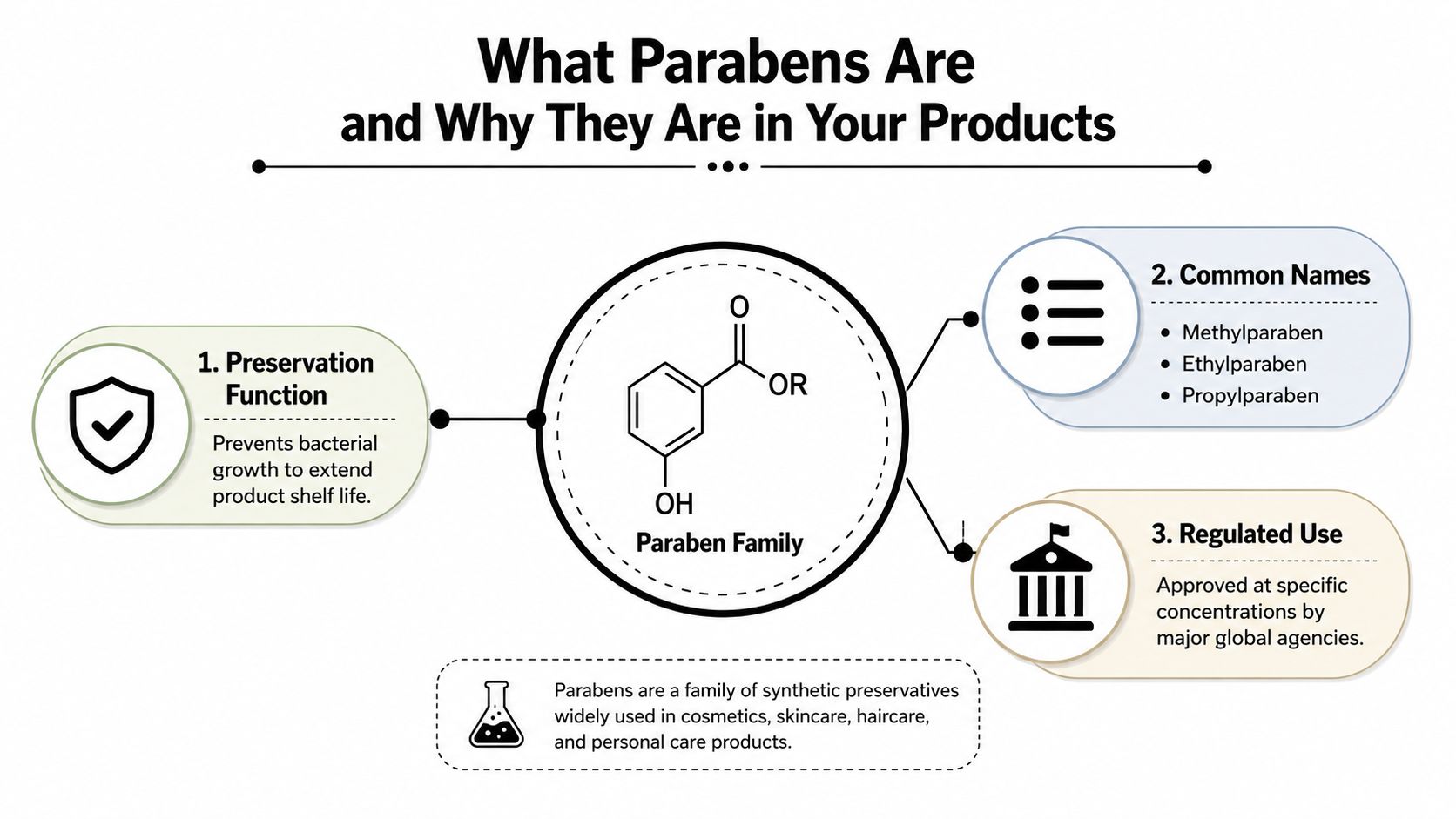
Parabens are a family of preservatives used in cosmetics to keep water-based formulas from spoiling. In plain language, they help prevent bacterial and mold growth in products like lotions, shampoos, conditioners, cleansers, and scrubs, which is why they became so common in mass-market beauty. A 2009 safety assessment reported that parabens were used in over 22,000 cosmetics and allowed at up to 0.8% total parabens in a mixture or 0.4% for a single paraben; a later review also noted them in over 13,200 formulations across many cosmetic categories worldwide PubMed safety review.
What to look for on an ingredient list
The easiest label clue is the ending. Names like methylparaben, ethylparaben, propylparaben, and butylparaben all belong to the same ingredient family, so once you learn the suffix, you can spot them quickly. That matters because the preservative isn't there for scent, texture, or hydration, it's there to protect a formula that contains water.
Practical rule: if a product is creamy, milky, or wet enough to support microbes, it usually needs some kind of preservation system.
That's why the conversation around parabens in beauty products isn't really about a single bottle. It's about how the formula behaves over time, how often you use it, and whether it stays on your skin long enough to matter. Once you see that, label reading gets a lot less mysterious.
Why Formulators Reach for Parabens in the First Place
Why do formulators keep returning to parabens after so much debate? The answer is usually practical. They need a preservative that can protect a formula without crowding it with extra ingredients, and parabens do that job well at low use levels. In other words, they help a product stay stable, especially when the formula contains water and could otherwise become a place where microbes grow.
That stability matters because different product types behave differently once they leave the lab. A leave-on lotion sits on skin, a cleanser is rinsed away, and a shampoo may be diluted with water each time it is used. A single formula has to survive its own packaging, its own use pattern, and its own shelf life. Parabens became common because they fit that job across a wide range of cosmetics.
The trade-off behind the controversy
The controversy grows when people look at the different forms of parabens. Longer-chain parabens draw more attention because their antimicrobial behavior and hormone-like activity have been studied more closely than shorter-chain versions. That does not mean every paraben acts the same way. It means formulators have to choose a preservative with the finished product in mind, not just the ingredient name on the label.
A developer also has to think about the full formula, not a single ingredient in isolation. pH, water content, packaging, and how the product is used all affect whether a preservative system will hold up. A cleanser, a body lotion, and a conditioner do not present the same preservation problem, even if they all end up in a bathroom cabinet.
Sensitive-skin routines add another layer to that decision. People often apply several leave-on products in the same day, so exposure is not always about one bottle. It can be the combined effect of a moisturizer, a serum, a sunscreen, and a makeup base layered together. That is part of why some shoppers prefer paraben-free formulas, especially when they are also trying to simplify a routine around single-ingredient oils or other minimal formulas that leave less room for preservation concerns.
A preservative system has to work in the whole formula, not just on paper.
That practical need is why parabens stayed in use for so long. Formulators knew what they did, how they behaved in water-containing cosmetics, and how to fit them into production without overcomplicating the recipe. For shoppers, the useful question is not whether a preservative sounds familiar, it is whether the product is a rinse-off or leave-on formula, how many products are layered together, and whether a simpler swap like a single-ingredient oil makes more sense for the routine.
What the Safety Research Says
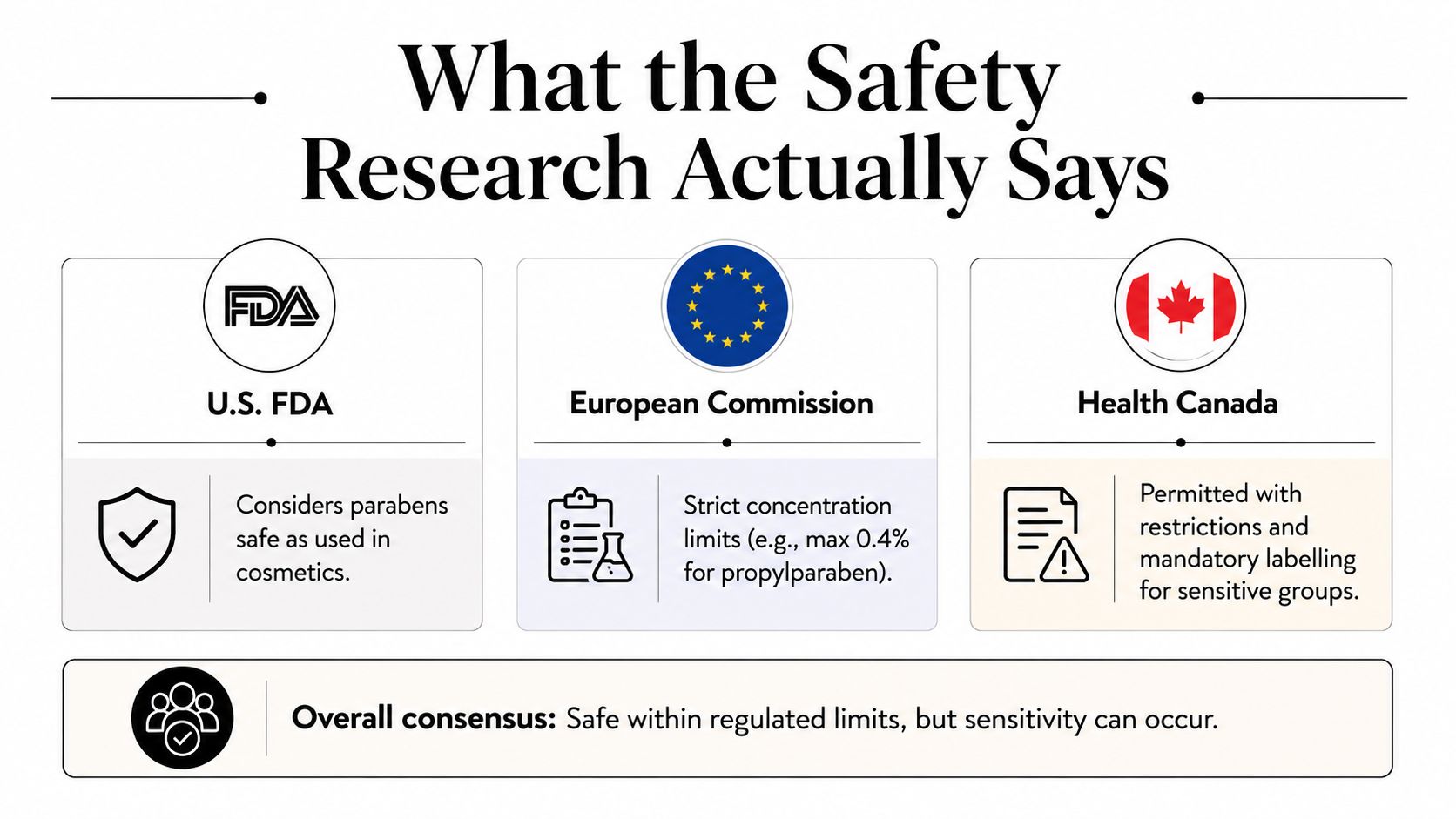
The clearest way to read the safety discussion is to separate hazard from real-world risk. A hazard describes what a substance can do under certain conditions. Risk asks a different question, what happens in the product you use, at the amount you absorb, through the routine you follow. That is the frame used in the published PubMed safety review -PubMed safety review, and it is also the frame regulators use when they assess parabens in cosmetics.
How the main regulators frame it
The U.S. FDA says it does not have information showing parabens used in cosmetics affect human health. (FDA parabens guidance) The picture gets more specific in Europe, where the European Scientific Committee on Consumer Safety concluded that butylparaben and propylparaben are safe in finished cosmetic products only if their combined concentration does not exceed 0.19%. The Cosmetic Ingredient Review reached a broader conclusion, saying 20 of 21 parabens are safe in cosmetics when total parabens in a formulation do not exceed 0.8%, and it noted that human testing with 0.1% to 0.8% of methyl-, ethyl-, propyl-, or butylparaben showed no significant irritation or sensitization Cosmetic Ingredient Review assessment.
That matters because safety review is not built around a single scary word on a label. It is built around the finished formula, the amount used, and how long the product stays on skin. A rinse-off cleanser and a leave-on moisturizer do not create the same exposure pattern, and a routine with several leave-on products can add up in a way a single bottle never shows on its own.
For shoppers with sensitive skin, that cumulative view is the most practical one. A simple routine can mean fewer chances for irritation, especially if you are already comparing a paraben-containing product with a paraben-free option or a single-ingredient oil that removes preservative concerns altogether. The question is not whether every formula should be judged the same way, it is whether the full routine makes sense for the skin that has to live with it.
The Common Types of Parabens You Will See on a Label
The simplest label rule is that paraben names usually end in -paraben. That suffix covers the familiar ones shoppers see most often, including methylparaben, ethylparaben, propylparaben, butylparaben, and isobutylparaben. Once you know that pattern, an ingredient list gets much easier to decode.
Short-chain and long-chain, in plain language
The shorter-chain versions, especially methylparaben and ethylparaben, show up more often in mainstream formulas and are generally treated as the less controversial end of the family. Propylparaben and butylparaben are watched more closely because safety reviewers have drawn tighter concentration lines around them. That's the practical reason you'll see more caution around some labels than others.
A useful way to think about it is this. The family name is the same, but the members don't behave identically in the body or in finished products. That's why safety discussions often focus on the specific paraben, not just the word “paraben” itself.
If you can spot the suffix, you can spot the preservation strategy.
The same is true when you're comparing brands. One formula may rely on a short-chain paraben blend, while another may use a different preservative system altogether. That difference matters more than a front-of-pack claim that says “clean” or “natural,” because the ingredient list tells you what's in the bottle.
Where Parabens Most Commonly Show Up in Beauty
The biggest exposure clue is contact time. Leave-on products stay on the skin and hair, so they matter more for cumulative routine exposure than rinse-off products, which leave much faster. A personal-care-product survey found parabens in about 40% of rinse-off products and about 60% of leave-on products, with highest concentrations reaching roughly 1,000 µg/g of product (CIR safety review).
Paraben frequency by product type
| Product Category | Exposure Type | Approx. Paraben Prevalence |
|---|---|---|
| Facial moisturizers | Leave-on | More common than rinse-off formulas |
| Serums and treatments | Leave-on | More common than rinse-off formulas |
| Foundations and makeup bases | Leave-on | More common than rinse-off formulas |
| Shampoos and conditioners | Rinse-off | Around the rinse-off range reported in surveys |
| Cleansers and body washes | Rinse-off | Around the rinse-off range reported in surveys |
| Scrubs and other wash-off products | Rinse-off | Around the rinse-off range reported in surveys |
That table matters because it changes how you read a routine. A body wash with parabens leaves the skin quickly. A moisturizer, hair cream, or makeup base stays on through the day, so it adds to the total amount your skin meets over time.
Who may see a heavier cumulative load
A peer-reviewed environmental health review reports that nationally representative U.S. data show women of color have higher levels of certain endocrine-disrupting chemicals, including parabens, in their bodies than White women, and that these differences are not explained by socioeconomic status Environmental Health review.
That does not mean every product contributes equally. A routine built from layered leave-on products can raise cumulative exposure much faster than one cleanser alone, especially for people who use hair products, moisturizer, makeup, and fragrance-containing formulas every day. Sensitive skin can make that pattern feel more noticeable, because irritated skin often needs gentler formulas and fewer stacked ingredients.
For readers looking into hair-specific routines, this guide to what ingredients to avoid in hair products is a useful companion because hair care is often where layered exposure starts.
How to Read Labels and Choose Paraben-Free Products
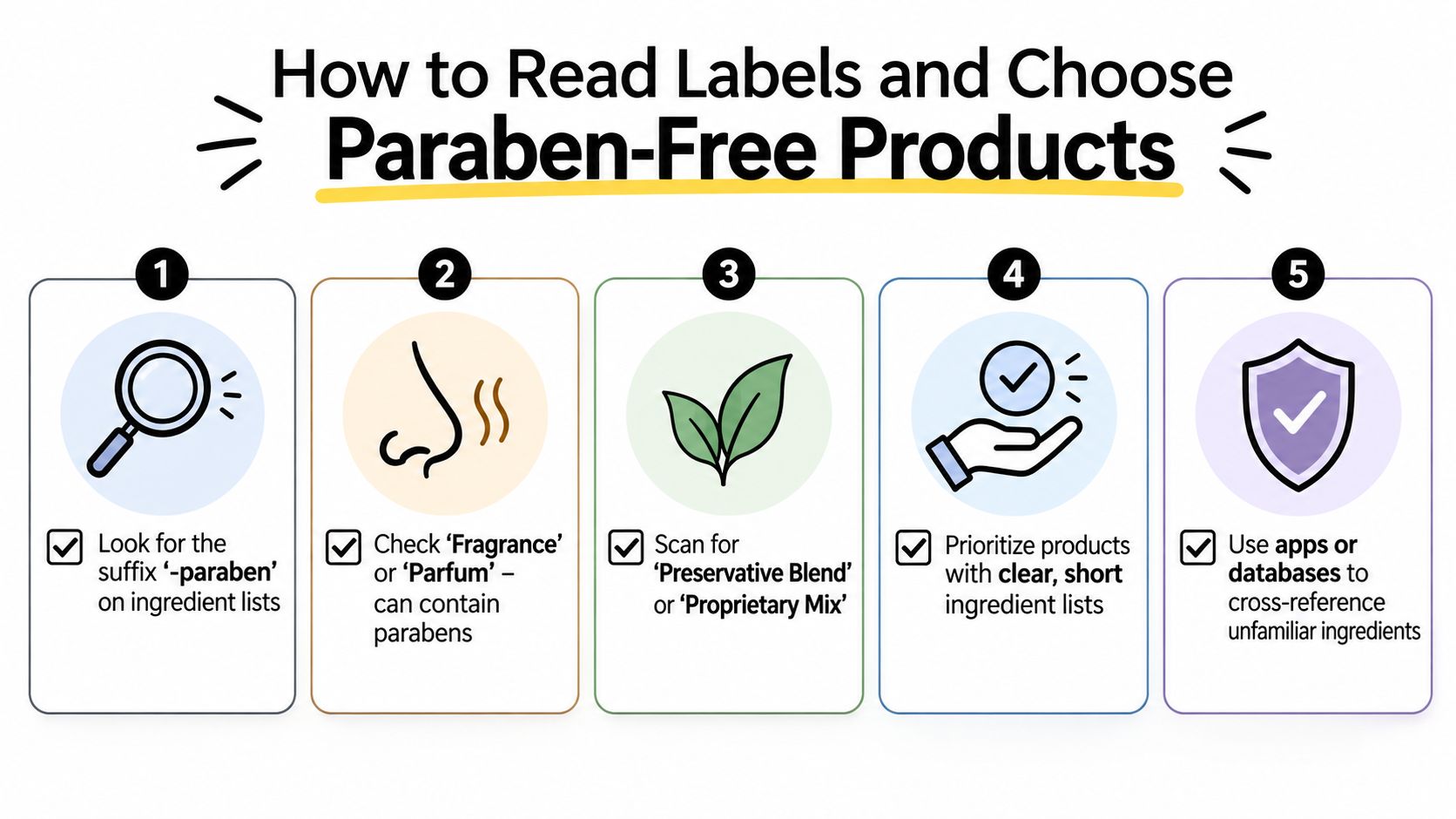
The fastest label check is simple. Scan the ingredient list for anything ending in -paraben, then look for words like fragrance, parfum, or preservative blend if the formula seems vague. Some shoppers prefer a direct paraben-free route, and that starts with reading the small print instead of trusting the front label.
A quick label routine
- Look for the suffix. If you see methylparaben, propylparaben, or butylparaben, you've found the family.
- Check vague blend terms. A product can be legally marketed in ways that don't make the preservation system obvious at a glance.
- Prefer shorter ingredient lists. Fewer ingredients usually mean fewer places for a preservative system to hide.
- Verify the claim. A real paraben-free formula won't list any paraben family member anywhere on the package or product page.
- Use a reference tool. Ingredient databases and brand education pages can help you cross-check names you don't recognize.
A simpler path is to choose a product that doesn't need a complex preservative system in the first place. Single-ingredient oils, or formulas built around a single active material, reduce the number of preservation decisions a shopper has to think through. That can be helpful for people who are trying to keep routines short and ingredient lists readable.
One example in the acne-care category is a tea tree oil spot treatment, which shows how a targeted product can be positioned around a simpler preservative story without turning the label into a chemistry puzzle.
For a broader ingredient philosophy, this overview of toxin-free beauty products can help you compare marketing language with an actual ingredient list.
Safer Preservative Alternatives and the Single-Ingredient Route
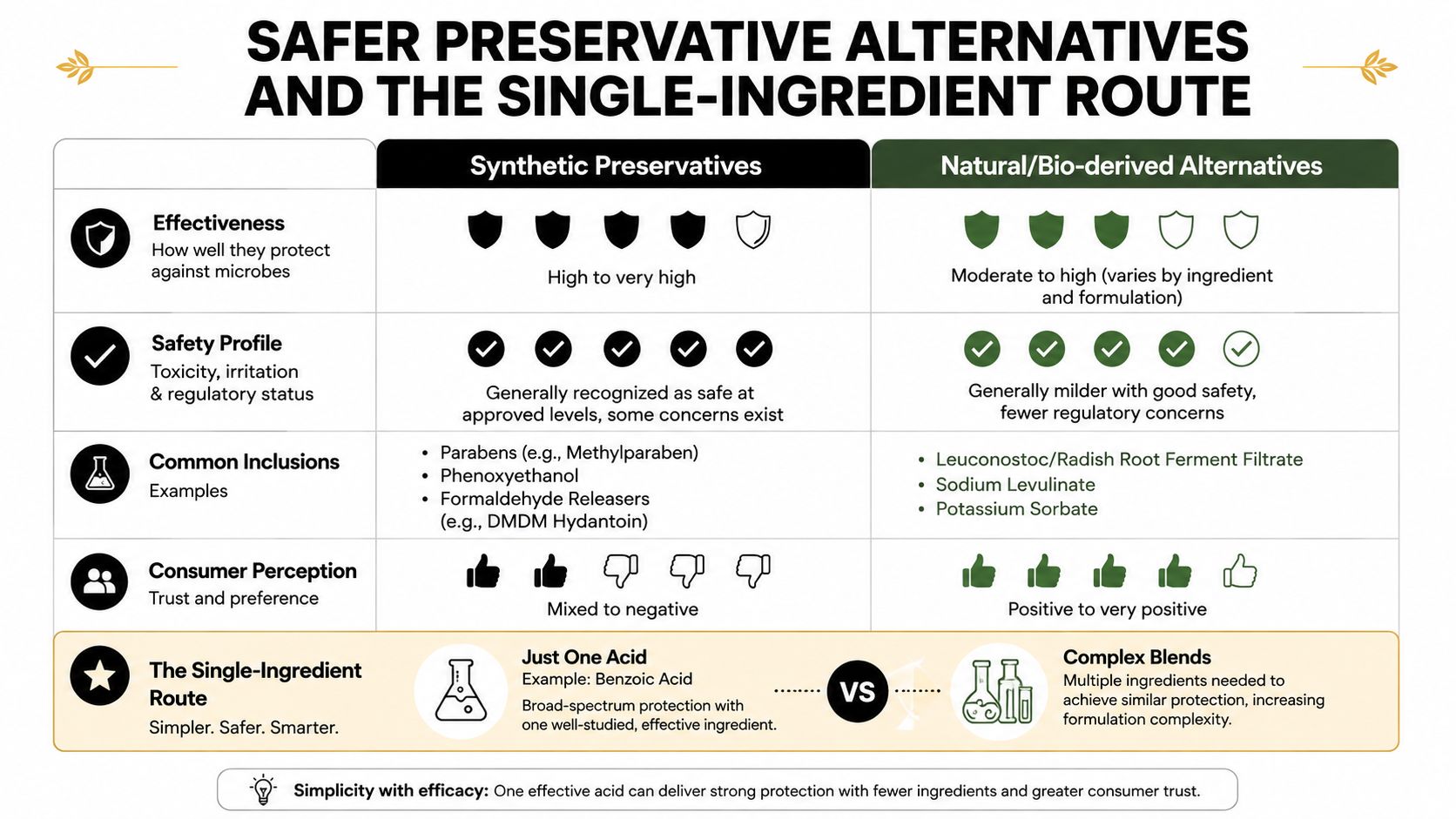
A paraben-free formula still needs preservation in many cases, and that is usually a sign the brand is thinking about safety, not cutting corners. Water-based products can invite microbial growth, so formulators often turn to phenoxyethanol, ethylhexylglycerin, sorbic acid, benzoic acid, and potassium sorbate. Which one they choose depends on the formula's water content, pH, packaging, and how the product is meant to feel on skin.
How the trade-offs usually look
Phenoxyethanol and ethylhexylglycerin are common in modern preservation systems because they can support broad protection without using parabens. Sorbic acid, benzoic acid, and potassium sorbate are also used, especially when a brand wants a shorter list of preservative ingredients. None of these ingredients works in every formula. Each one has to match the product's pH, water content, and packaging, or the system can fail.
Single-ingredient oils sit in a different category. Organic castor oil, jojoba oil, argan oil, and rosemary oil are often chosen in routines that want to avoid a more complicated preservative system altogether, because oil-only products do not behave like water-based emulsions. A product built around one oil is simpler to label, simpler to track, and often simpler to pair with a minimal routine. Rosewater toner and magnesium oil spray can also fit a pared-back approach, though they still need careful formulation if water is present.
Ella & Eden's single-ingredient oils, including Organic Castor Oil, Jojoba Oil, and Argan Oil, fit this route because the formula stays simple and traceable.
For people comparing swaps in real life, the useful question is not whether an ingredient sounds natural. It is whether the product fits the way you use beauty products every day. A leave-on serum, a moisturizer, and a hair product can add up fast, so choosing one simpler oil for a step you repeat often can reduce how many formulas need a preservation decision at all.
That honesty matters. Oils are not a replacement for every cleanser, moisturizer, or sunscreen, and they are not the right answer for every skin type. They are a practical paraben-free path when you want fewer ingredients on the label and fewer preservation concerns in a routine that already feels crowded.
A Minimal Routine for Sensitive Skin and Final Takeaways
Sensitive or reactive skin usually does better with fewer moving parts, not a longer ingredient checklist. A calm routine can be very small, a gentle cleanser, one multi-purpose oil, and a targeted treatment, with SPF added when needed. That structure keeps the number of leave-on products down, which is useful because routine-level exposure is what matters most here.
A practical checklist for choosing products
- Start with the leave-on items. Moisturizers, serums, and hair products matter more than quick rinse-off formulas.
- Keep the label readable. If you can't tell what preserves the product, look twice.
- Use one oil well. A single cold-pressed oil can do the job of several layered products for some skin types.
- Separate comfort from marketing. “Natural” doesn't automatically mean safer, and “synthetic” doesn't automatically mean problematic.
For readers who want a broader sensitive-skin framework, this guide to clean skincare for sensitive skin keeps the focus on simplicity, not fear. That approach fits well with wrinkle-care advice too, especially when you want to avoid overloading the skin with layered products and fragrance-heavy formulas.
Quick FAQ
Do paraben-free products still need preservatives?
Usually, yes, if they contain water. A formula can be paraben-free and still need microbial protection.
Can natural oils go bad?
Yes. Oils can oxidize over time, especially if they're exposed to heat, light, or air.
Does cumulative exposure matter for short-chain parabens too?
Yes, the routine matters across the whole category. The practical issue is total exposure from everything you use, not just one label.
Parabens in beauty products are best understood as a preservation tool that became controversial because people started looking at cumulative routines instead of single bottles. If you want a cleaner, simpler way to shop, visit Ella & Eden for single-ingredient oils and straightforward beauty essentials that keep ingredient lists easy to read.