Plant Based Facial Oil: A Clean Beauty Guide
You're standing in front of a shelf of facial oils, and every bottle claims to be clean, natural, nourishing, lightweight, or glow-boosting. The labels blur together fast, and it's hard to know which one is right for your skin, especially if you want a single-ingredient, plant-forward option without fillers or fragrance. That confusion is exactly why plant based facial oil deserves a closer look, not as a trend, but as a simple category with real differences in composition, sourcing, and skin feel.
The market has moved far beyond niche wellness counters. One estimate places the global face oil market at USD 2.24 billion in 2024 and projects it to reach USD 3.52 billion by 2032 at a 5.8% CAGR. Another projection puts the category at USD 2.8 billion in 2025 and USD 4.8 billion by 2034 at a 6.8% CAGR. Natural face oils already hold 52.3% of total face oil sales in 2025, up from 38.1% in 2019 in that same market view (Databridge Market Research). That shift says a lot about where clean beauty is heading, toward ingredients people can recognize and routines they can understand.
What Plant Based Facial Oils Really Are
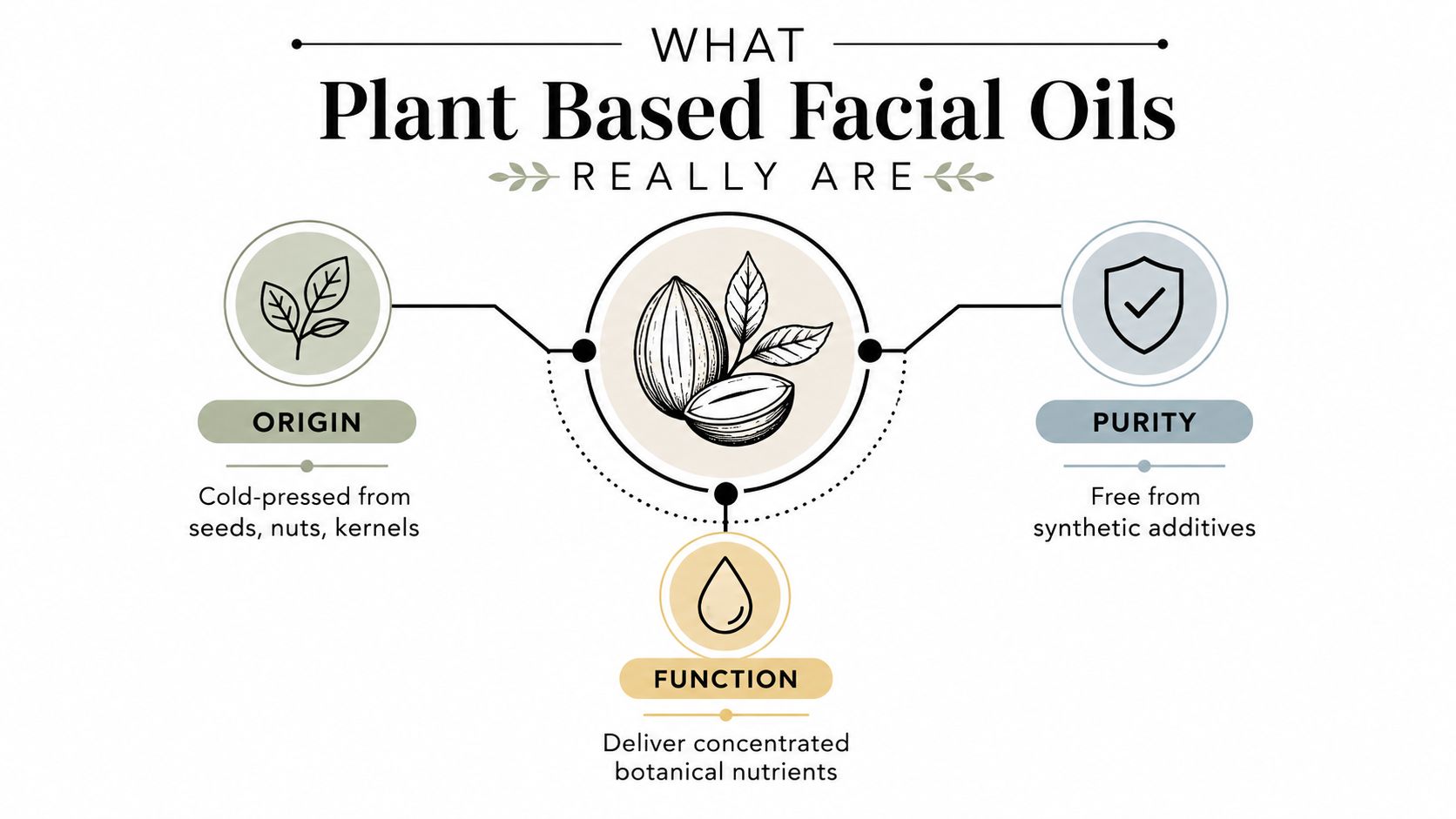
You're holding three bottles, all promising radiance, and none of them clearly explains what's inside. That's where the category starts to split apart, because a plant based facial oil is usually a cold-pressed oil from seeds, nuts, or kernels, used directly on skin as a nourishing base oil rather than a volatile scent ingredient.
What counts as plant based facial oil
These oils are typically single-ingredient or minimally processed. That matters because the oil keeps the chemistry of its source plant, including fatty acids, waxes, and naturally occurring antioxidants, instead of being stripped down and rebuilt into something more industrial.
A facial oil is also different from an essential oil. Essential oils are highly concentrated aromatic extracts, while facial oils are the richer, emollient oils you put on skin for slip, softness, and barrier support. The distinction matters because a product can be “natural” and still be too intense, too fragrant, or too irritating for direct face use.
Practical rule: if the bottle is meant to sit on your face, it should behave like skincare, not like perfume.
Why single-ingredient purity matters
Single-ingredient purity gives you clarity. You can tell what the oil does, how your skin responds to it, and whether a reaction came from the oil itself or from added fragrance, fillers, or preservatives. That's one reason plant oils have moved from niche natural-beauty shelves into a mainstream category with measurable global scale, as the market data shows.
This is also why clean beauty minimalism keeps circling back to a few core oils rather than endless blends. One pure oil can be evaluated, sourced, and matched to skin with far more precision than a formula that hides everything behind marketing language. If you want a deeper look at one classic option, jojoba oil for skin is a useful example of how a minimalist facial oil can be positioned in a routine.
The Science Behind What Makes Them Work
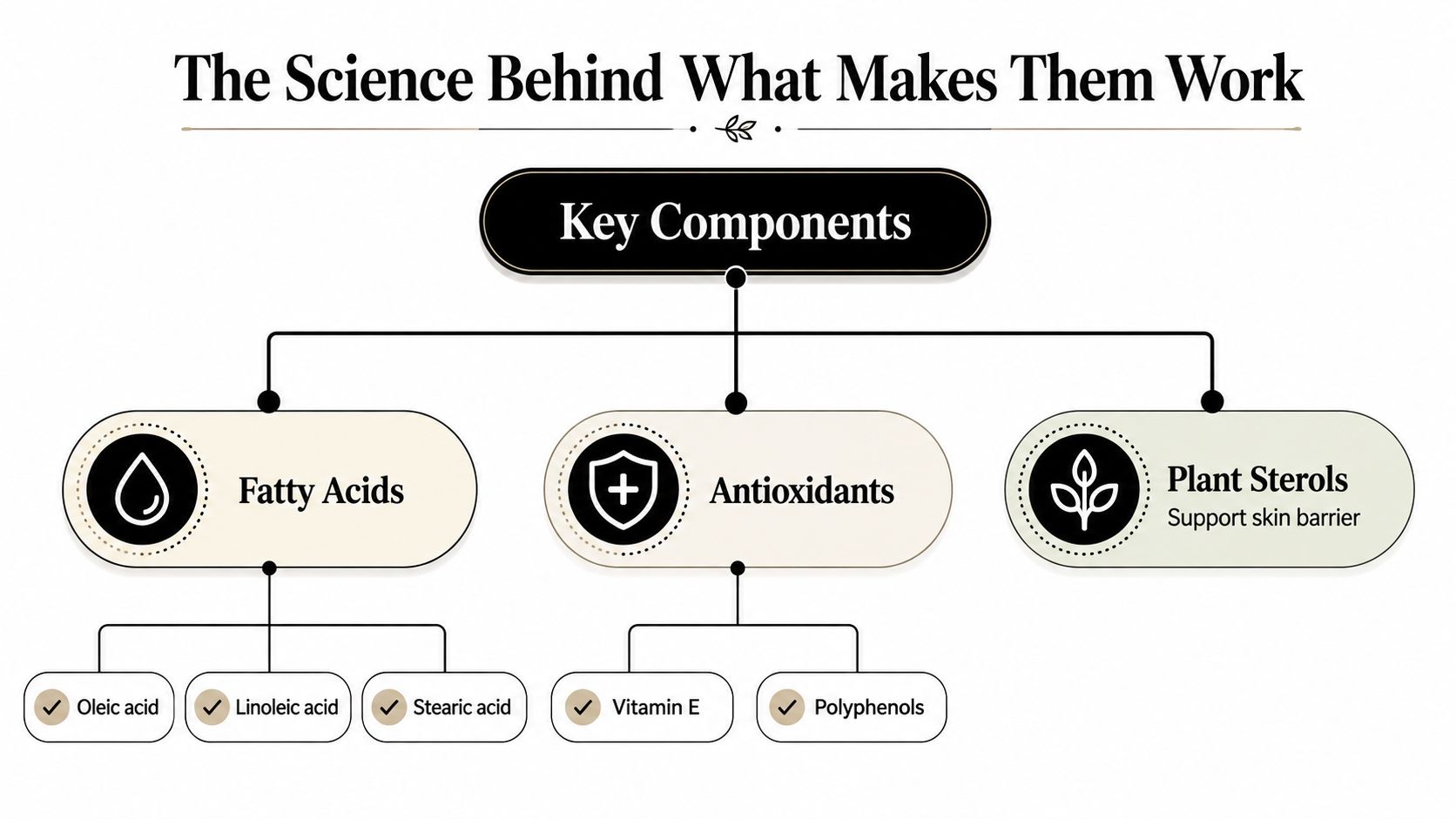
A good facial oil is not magic in a bottle. It works because it brings together fatty acids, antioxidants, and plant sterols, and those compounds behave in ways skin can use.
The parts that matter most
Fatty acids are the main structural story. They help oils feel light or rich, they influence absorption, and they shape how the oil interacts with the skin barrier. In the research brief, oils richer in linoleic acid are associated with better barrier-repair potential, while oils with higher oleic acid can feel heavier and may be more irritating for compromised skin (PubMed).
Antioxidants add another layer. A published study on a nature-based facial botanical oil reported protection against UVA/UVB-induced oxidative stress, which matters because UV-driven oxidative damage is a major pathway behind visible skin aging and barrier disruption (PMC study). That doesn't make every plant oil a sunscreen, but it does show why botanical oils are more than simple slip agents.
Plant sterols help complete the picture. They support the skin barrier by working alongside the skin's own lipids, which is why unrefined plant oils can feel more compatible than isolated synthetic-feeling substitutes.
Why extraction method changes performance
Cold pressing is a big deal because it preserves the oil without heat or solvents. The PubMed review notes that cold pressing is preferred because it helps preserve beneficial lipids and reduces irritating byproducts (PubMed). In plain terms, the fewer harsh steps involved, the more likely the final oil still behaves like the plant oil you wanted in the first place.
A plant oil can only do what its chemistry allows. If heat or refining removes the useful lipids, the bottle may still look clean, but the skin sees less of the benefit.
That's why reading beyond the front label matters. The question isn't whether an oil sounds natural. It's whether its fatty-acid profile, antioxidant content, and extraction method fit the skin you're trying to support.
Popular Plant Oils Worth Knowing
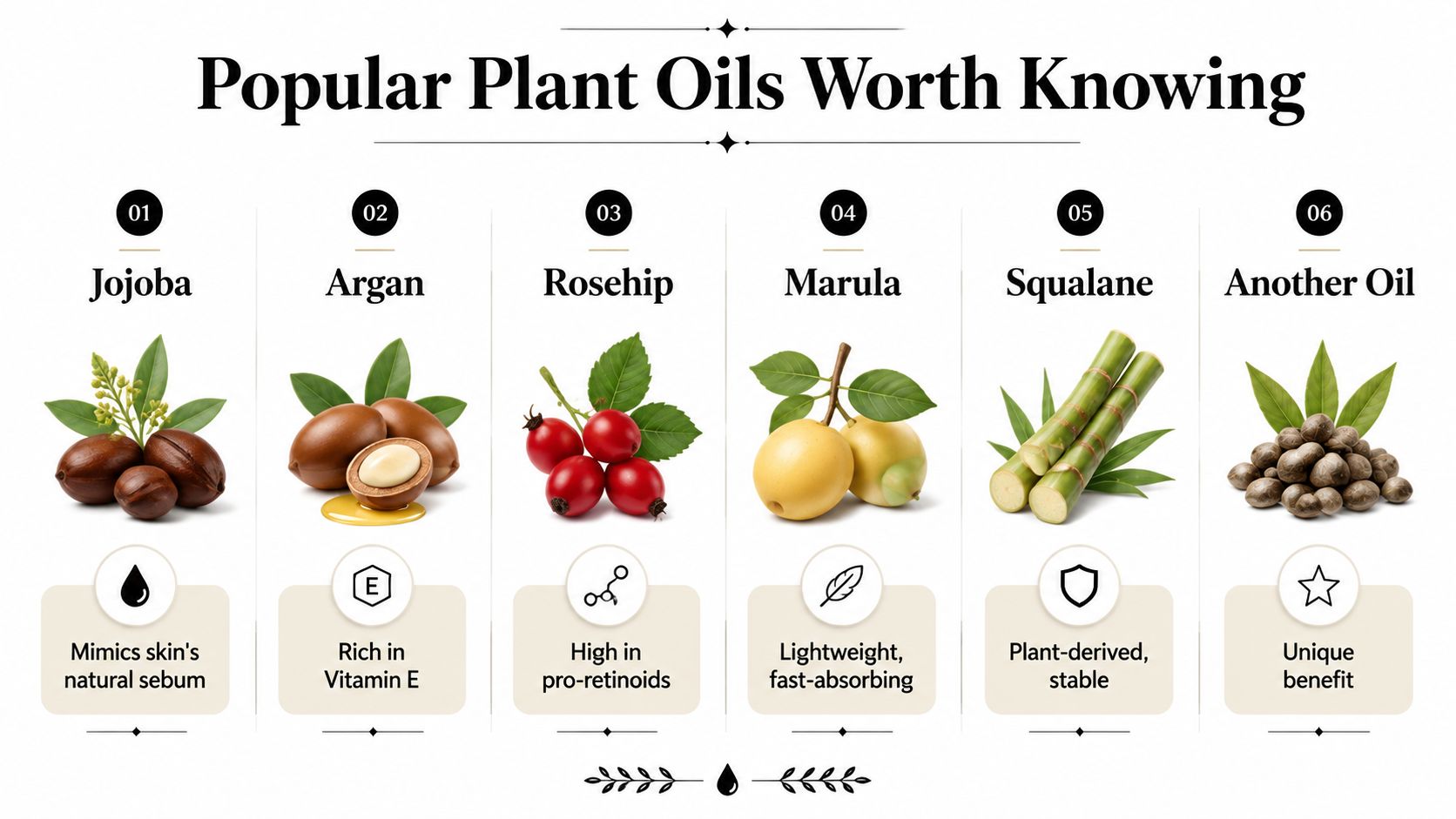
A bottle of facial oil can look simple from the outside, yet the skin-feel and purpose can be very different from one ingredient to the next. Once you stop treating plant oils as swap-ins, it becomes easier to build a routine around a single ingredient that suits your skin, your texture preferences, and your clean beauty standards.
| Oil | What stands out | Best fit in plain language |
|---|---|---|
| Jojoba | Liquid wax ester, very stable, long shelf life when stored properly | A lightweight option with a sebum-like feel |
| Argan | A nourishing, familiar all-rounder with a balanced feel | Good for skin that wants comfort without a heavy finish |
| Rosehip | Often chosen for a renewal-focused routine | Useful when you want a more active-feeling botanical oil |
| Marula | Smooth, cushiony texture | Works well for people who like a softer, richer glide |
| Plant-derived squalane | Very stable and easy to wear | A strong option when you want a light, simple emollient |
| Sunflower | Practical, barrier-friendly emollient | Helpful when you want something straightforward and gentle |
Why jojoba keeps showing up
Jojoba is the reference point many readers come back to because it behaves differently from a typical triglyceride oil, which gives it a distinct skin feel and strong stability. If you want a fuller explanation of that profile, the jojoba overview in section 1 already lays the groundwork, so here the main takeaway is simpler. It tends to feel light, steady, and easy to fit into a minimal routine.
Why some oils feel richer than others
Argan, rosehip, and marula are often grouped together, but they do not behave the same way on skin. Some oils feel more cushiony because of their fatty-acid balance, while others feel more lightweight and quick to absorb. That difference matters when you are choosing a single-ingredient oil instead of reaching for a generic “natural” label.
Rosehip is often selected for a more renewal-focused routine, marula for a softer glide, and argan for a balanced finish that sits comfortably between the two. Plant-derived squalane stands apart because it is especially light and easy to wear, which helps if you want an emollient that disappears without much residue.
Sunflower deserves a place here too because it is straightforward and barrier-friendly. It is the kind of oil that makes sense when you want a no-fuss option rather than a trend-driven one.
If you want a practical example of a simple, face-friendly option, Ella & Eden's Organic Jojoba Oil is marketed for facial use and daily moisturizing, which makes it an easy reference point for a single-ingredient routine.
Choosing the Right Oil for Your Skin Type
A good starting point is your skin's behavior, not the label on the bottle. Plant oils are not interchangeable, and the linoleic acid to oleic acid ratio gives a useful clue. Oils higher in linoleic acid often fit skin that feels congested or needs barrier support, while oils with more oleic acid usually feel richer and better suited to drier skin that wants more of a seal.
Best plant oils by skin type
| Skin Type | Recommended Oils | Key Benefit |
|---|---|---|
| Oily or acne-prone | Jojoba, sunflower, rosehip | Lighter feel, better fit for barrier-aware routines |
| Dry | Argan, marula, olive | More cushion and a fuller emollient finish |
| Sensitive | Jojoba, squalane | Simple, low-fuss options that are easier to tolerate |
| Combination | Jojoba, argan | Flexible enough for both dry and oily zones |
| Compromised barrier | Linoleic-rich oils such as rosehip or sunflower | Better aligned with barrier-repair needs |
What the evidence suggests for acne-prone skin
For acne-prone skin, the main concern is whether an oil feels light enough to sit comfortably without adding heaviness. A recent review discusses how coconut oil is highly comedogenic, while jojoba, argan, olive, and sunflower are presented as more relevant emollient and barrier-support options (PMC review). That does not mean every face reacts the same way, but it does show why “natural” is not the same as “safe for pores.”
A simpler way to choose is to look for oils that behave more like a thin conditioner than a heavy coat. The goal is support, not suffocation. For a more focused look at lighter options, this guide to oils for acne-prone skin is a useful companion read.
How to think about mature or drier skin
Drier skin often prefers oils that leave a more enveloping finish. Argan, marula, and olive-style emollients usually make more sense here, especially at night, because they help the skin feel cushioned rather than stripped. Jojoba and squalane still have a place for people who want moisture support without a heavy layer, but the feel is lighter and less coating.
Sensitive skin usually does better with fewer variables. Single-ingredient oils make that easier, because you can tell what your skin is responding to instead of sorting through a long ingredient list. Jojoba and squalane are often chosen for that reason, since they keep the routine simple and easier to read.
If you want a practical example of a simple, face-friendly option, Ella & Eden's Organic Jojoba Oil is marketed for facial use and daily moisturizing, which makes it a useful reference point for a single-ingredient routine.
How to Use Facial Oils in Your Routine
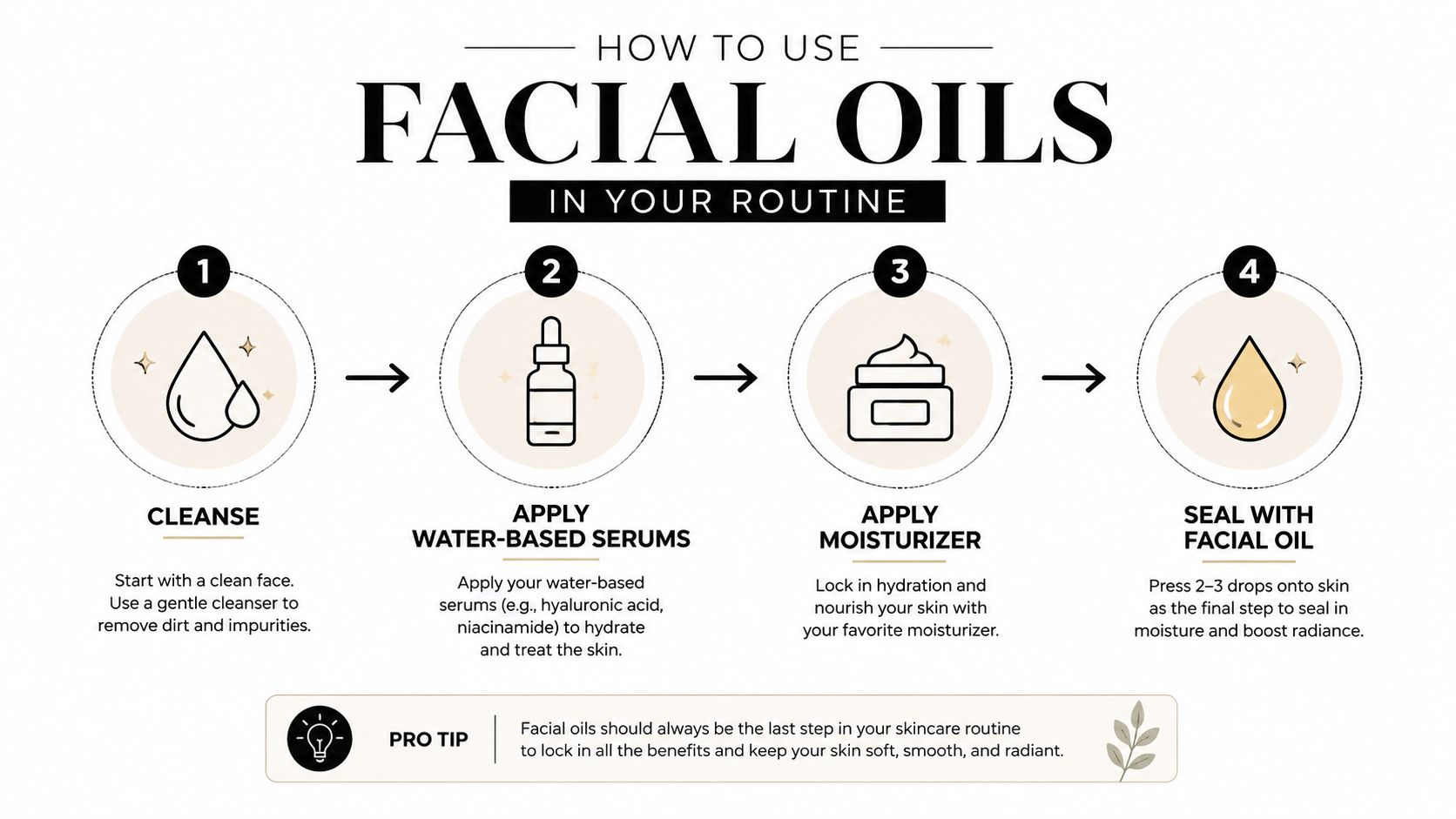
Facial oil works best as a sealing step, not as the whole routine. Think of it as the layer that helps slow water loss and support comfort, while the water-based parts of your routine do the hydration work.
The order that makes sense
- Cleanse with a gentle cleanser.
- Apply water-based serums to damp skin.
- Apply moisturizer if your skin likes that extra cushion.
- Seal with facial oil as the final step.
That final layer is where oil earns its keep. It doesn't replace the serum or moisturizer, it helps hold them in place. The research brief is clear on the functional distinction between hydration and lipids, and that distinction is the reason oils are usually used on top rather than underneath water-based products.
How much to use and how to apply it
Only a few drops are needed for the entire face. The goal is a thin, even film, not a glossy finish that sits on top of the skin. Pressing the oil into slightly damp skin usually feels better than rubbing it around, because the oil spreads more evenly and traps a bit of that surface moisture.
Morning use is fine if your skin likes it. Apply the oil before sunscreen, let it settle, then add your SPF. That keeps the sunscreen as your last protective layer without forcing the oil to do a job it isn't designed to do.
When oil alone makes sense
Some people use oil after cleansing and skip moisturizer, especially if their skin already feels balanced or if they're building a very simple routine. That can work for some skin types, but it's not the default answer for everyone. Oils are best understood as emollients and sealants, not universal replacements for every other moisturizing step.
Ella & Eden's organic plant oils fit this kind of routine because the brand's approach centers on single-ingredient, cold-pressed formulas rather than layered blends, which makes them straightforward to slot into a minimalist routine.
Safety, Comedogenicity, and Common Myths
“Natural” does not automatically mean gentle, and it does not automatically mean non-comedogenic either. That misunderstanding causes trouble when plant oils are treated like they all behave the same on skin.
What comedogenicity means
Comedogenicity is a measure of how likely an ingredient is to clog pores. The medical literature in the brief points to a clear pattern, coconut oil is considered highly comedogenic, while jojoba, argan, olive, and sunflower are discussed as more relevant emollients and barrier-support oils. That is why the ingredient itself matters more than the front label or the general idea of “natural.”
Skin that is sensitive or acne-prone usually does better with a slow start. Patch testing on a small area is still the clearest way to check tolerance, especially with a new oil. A little temporary adjustment can happen, but stinging, lasting redness, itching, or a rash usually means the oil is not a good fit.
Facial oils are not essential oils
This mix-up comes up often. Facial oils are the nourishing base oils applied directly to skin, while essential oils are concentrated aromatic extracts that are often too strong for direct facial use. If a product smells strongly, check whether the scent comes from the oil itself or from added fragrance.
A simple way to judge a new oil is how your skin feels after it settles. If it leaves your face hotter, itchier, or rougher instead of calmer, that is useful feedback.
The clean beauty standard here is straightforward. Natural should mean understandable, transparent, and suited to the skin in front of you, not a free pass to ignore irritation.
Sourcing, Sustainability, and Clean Beauty Standards
A facial oil can look clean and still be made with poor care. The details that matter are usually the quiet ones. How the oil was extracted, how fresh it is, whether the bottle blocks light, and whether the source can be traced all shape what ends up on your skin.
What to look for on a label
The most useful terms are cold-pressed, unrefined, and virgin. They usually point to less processing and a better chance that the oil still keeps the compounds it had at the start. If you want a clearer explanation of extraction, what is cold pressed oil gives a helpful foundation.
Packaging matters too. Dark glass helps protect oil from light exposure, which is a practical safeguard rather than a branding detail. Oils oxidize over time, and stronger packaging slows that process.
Why transparency matters in clean beauty
Traceability tells you more than a front label ever will. You want to know where the seeds or kernels came from, whether the oil was bottled in small batches, and whether the brand avoids hexane, synthetic fillers, and added fragrance. For an eco-conscious shopper, those details connect product quality with the values behind the purchase.
The minimalist standard
Single-ingredient oils fit minimalist beauty because they do one thing clearly. That makes them easier to judge for freshness, sensory feel, and skin response, since there is no long ingredient list masking what your skin is reacting to. The same logic applies to sourcing, because a shorter formula is easier to verify.
Cold-pressed oils often suit this approach well, especially when the brand is open about how the oil was made and stored. For readers who want a factual overview of that process, the Ella & Eden cold-pressed oil guide is a useful reference point for understanding why extraction method matters. Clean beauty is often less about bigger claims and more about fewer moving parts.
Your Plant Based Facial Oil Questions Answered
If you are standing in front of your bathroom shelf wondering whether a plant based facial oil will work for your skin, the answers usually come down to a few practical questions. The details matter, because a single-ingredient oil behaves very differently from a blended formula, and that is exactly why clean beauty shoppers often want the simplest possible starting point.
Can you use facial oil around the eyes? Yes, if the oil is gentle and fragrance-free. The skin there is thinner than on the cheeks or forehead, so a tiny amount is enough. Press it lightly around the orbital bone and avoid rubbing, since friction can make that area feel irritated.
How often should you apply it? For many people, once a day is enough, while drier skin may prefer it morning and evening. Start with a small amount and keep the routine steady for a few days before deciding whether your skin wants more or less. That gives you a clearer read on how the oil is performing.
Do plant oils expire? They do. If an oil begins to smell sharp, stale, or different from when you first opened it, treat that change as a warning sign. Some oils stay stable longer than others when they are stored well, which is one reason they are often chosen for minimalist routines.
Can you mix two oils together? You can, but mixing is not automatically better. If you are still learning how your skin responds, one oil at a time makes the result easier to understand. That way, you can tell whether a change in comfort, softness, or congestion comes from the oil itself.
Should every routine include facial oil? No. Some skin types do well with a moisturizer alone, while others benefit from an added sealing layer that helps slow moisture loss. The right routine is the one your skin can handle consistently, without leaving you guessing about what each product is doing.
A simple rule helps here. Choose the fewest ingredients you need, then pay attention to how your skin responds over time. That is the clean beauty approach in its most practical form, clear enough to follow and easy enough to trust.