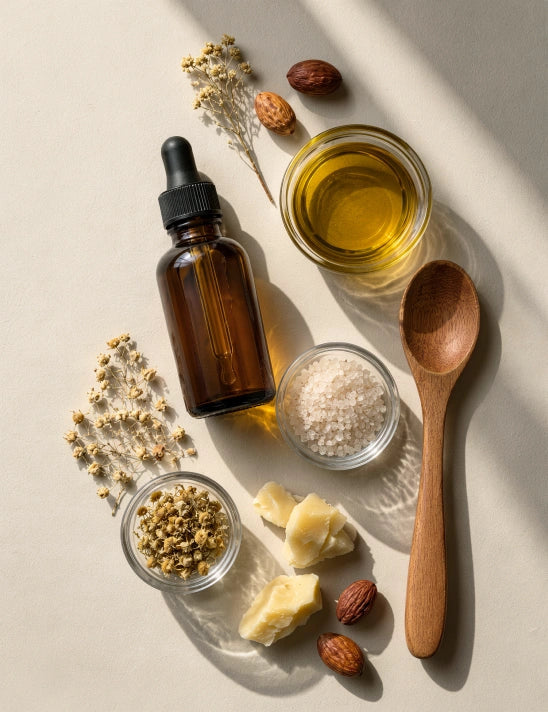
Cold Pressed Oil for Hair: Stronger, Healthier Locks
You’ve probably stood in the hair care aisle, or scrolled late at night, looking at bottles that promise repair, shine, growth, bounce, scalp renewal, and somehow a total reset for damaged strands. Then your bathroom shelf fills up, your routine gets longer, and your hair still feels dry at the ends, flat at the roots, or irritated at the scalp.
That’s usually the point where many people stop trusting the process. Not because they don’t care about their hair, but because the advice feels noisy. One product says oil your scalp. Another says never do that. One says use a mask for hours. Another says lightweight serums only. It’s confusing.
Cold pressed oil for hair brings the conversation back to something simpler. Instead of asking which trendy formula has the longest ingredient list, it asks a more useful question. What happens to an oil before it ever touches your scalp or strands, and does that affect results?
The answer is yes. The extraction method matters. It shapes how much of the oil’s natural character stays intact, how it behaves on the hair, and why one bottle can feel nourishing while another feels like a surface coating.
If you’re also exploring other routes for fuller-looking hair, it can help to understand where oils fit beside in-office options. BotoxBarb's PRP hair guide gives a useful overview of a very different approach, while this guide stays focused on daily, ingredient-first care. For a brand-specific look at why extraction matters, Ella & Eden also shares a helpful primer on cold pressed oil benefits.
Your Path to Healthier Hair Starts Here
Sunday night, you smooth an oil over dry ends and hope this will be the step that finally makes your hair feel softer by morning. Maybe your scalp has felt tight all week. Maybe your roots get greasy fast while your lengths still feel thirsty. That mix of problems is common, and it usually means your hair does not need more random products. It needs a routine that makes sense.
A simple routine is easier to repeat, and hair responds to repetition. Cold pressed oil for hair can become one of the most reassuring parts of that routine because it asks a better question before you even open the bottle. How was this oil made, and what does that mean for my scalp, my strands, and the results I can feel?
That question matters because oils are not all doing the same job. Some mainly sit on the surface and add slip. Others bring along naturally occurring compounds that support softness, shine, and a calmer scalp. The extraction method helps explain that difference, which is why Ella & Eden’s guide to cold pressed oil benefits is a useful companion read if you want a clear primer on why processing changes performance.
Healthy hair care also gets easier when advice is customized. Low-porosity hair often does better with lighter oils used sparingly, because heavy layers can sit on the cuticle like a raincoat and leave hair limp instead of supple. High-porosity hair usually benefits from richer oils or sealing blends that help slow moisture loss. Scalp type matters too. A dry, flaky scalp has different needs than an oily or easily irritated one.
That is what makes this approach more useful than one-size-fits-all oiling tips. You are not just choosing argan, coconut, jojoba, or castor. You are choosing an extraction method, a texture, and an application style that fit your hair’s structure.
The Cold-Pressed Difference Why Method Matters
If you want to understand cold pressed oil for hair, start in the bottle, not on the strand.
A cold-pressed oil is made by mechanically pressing seeds, nuts, or fruits without high heat. That sounds technical, but the idea is simple. The oil is extracted gently enough to keep more of its original character intact.
Think fresh juice, not concentrate
The easiest analogy is orange juice.
Fresh-squeezed juice tastes bright, alive, and close to the fruit it came from. Concentrate has gone through more processing. It may still be useful, but it’s not the same experience. Cold-pressed oils are the hair-care version of that difference.

When an oil is exposed to more aggressive processing, delicate compounds can be reduced or lost. That matters because those compounds are often the reason people reach for botanical oils in the first place.
Cold-pressed oils retain a substantially higher concentration of bioactive compounds, including essential fatty acids (omega-3 and omega-6), vitamin E, polyphenols, and carotenoids, compared to heat-extracted alternatives. Research referenced in this cold-pressed oils for hair care explainer notes that controlled temperatures at 120°F or below are key to preserving that nutrient profile.
What “bioavailable” really means in plain English
People hear the word bioavailability and tune out. Here’s the practical version.
If a nutrient remains intact, your scalp and hair have a better chance of reaping its benefits. If processing strips the oil down to a more basic, less complex form, you may still get slip or shine on the surface, but not the same depth of nourishment.
That’s why extraction method isn’t a marketing detail. It’s part of the product’s function.
What to look for on a label
When you shop for a cold pressed oil for hair, you want signals that the oil stayed close to its natural state.
A useful checklist:
- Cold-pressed or expeller-pressed wording: This tells you the oil was mechanically extracted rather than heavily refined.
- Unrefined language: This usually points to less processing after extraction.
- Single-ingredient formula: Fewer variables make it easier to understand how your hair responds.
- No fillers or synthetic fragrance: Sensitive scalps often do better with simpler formulas.
- Clear sourcing and handling details: Transparency matters because quality starts long before the oil reaches your shelf.
If you want a simple external explainer on the basics, Dollhouse Botanicals has a readable guide on natural cold pressed oil explained. For a closer look at the terminology from the Ella & Eden side, their post on what is cold pressed oil is a practical companion.
Practical rule: If an oil is chosen for its natural antioxidants, fatty acids, and plant compounds, the way it’s extracted can’t be an afterthought.
Why refined oils can feel different
Refined oils aren’t automatically useless. Some people like them for a lighter, more neutral finish. But if your goal is scalp support, softness with substance, and ingredient integrity, heavily processed oils can feel like a shortcut that leaves out the most interesting parts.
A refined oil may sit nicely on the surface and add gloss. A cold-pressed oil is more likely to bring the fuller nutrient profile that made the original plant valuable in the first place.
That’s the heart of the cold-pressed difference. Before you think about growth routines, scalp massage, or shine, you need an oil that still carries what nature put into it.
How Cold-Pressed Oils Nourish Hair and Scalp
Once a cold-pressed oil keeps its natural compounds, the next question is simple. What does that do on your head?
Hair has two broad needs. The strand itself needs protection and flexibility, and the scalp needs a calm, balanced environment. The most useful oils support both, but they don’t all work in the same way.
Inside the strand, not just on top
One of the clearest examples is coconut oil. Cold-pressed coconut oil penetrates hair deeper than mineral oil and prevents up to 90% of protein loss from hair strands. The explanation centers on lauric acid, which forms protective bonds within the hair cortex. That penetration is preserved because cold-pressing avoids heat exposure above 120°F.
That’s an important distinction. Surface shine is nice, but protein retention is a structural benefit. Hair that keeps more of its internal strength tends to feel less brittle and less weak during washing, detangling, and styling.

A simple analogy for penetration
Think of a raincoat versus a fabric conditioner. A raincoat covers the outside. A conditioner works into the fabric so it feels different all the way through.
Some oils mostly coat. Some can move further into the fiber because of their molecular structure. For damaged or porous hair, that difference can be felt as less roughness, better elasticity, and a softer wash day.
Why scalp nourishment matters too
Hair doesn’t grow from the middle of the strand. It grows from follicles in the scalp, so scalp comfort matters.
Cold-pressed oils contain fatty acids and antioxidant compounds that can support the skin environment of the scalp. In practical terms, that can mean a scalp that feels less tight, less flaky from dryness, and more comfortable during seasonal changes or after frequent styling.
A gentle scalp massage adds another layer. The act of massaging helps distribute oil, loosens buildup at the surface, and supports circulation in the area. That doesn’t mean every scalp wants a heavy overnight oiling session. It means the right oil, in the right amount, can become part of a healthier rhythm.
Surface lubrication versus meaningful support
A useful comparison comes from the broader oil literature. The cold-pressed vs refined oils overview notes three important points: a 2021 study in Molecules identified ricinoleic acid in castor oil as a compound that improves blood flow on the scalp and supports hair loss control, a 2003 Journal of Cosmetic Science study showed coconut oil’s deep penetration and protein-loss prevention, and a 2015 study found that mineral oil provides surface lubrication without deep penetration.
That helps clear up a common confusion. Not all “moisturized” hair is equally supported. Hair can look smoother for a day and still be structurally vulnerable. A cold-pressed oil with the right fatty acid profile may do more than polish the outside.
If your hair feels good only until the next wash, you may be getting coating without enough internal support.
Tangible benefits you can usually notice
People don’t use oils because they love ingredient theory. They use them because they want hair that feels better in daily life.
Cold pressed oil for hair can support:
- Less friction during detangling: Smoother strands catch less on each other.
- Better softness: Hair often feels less straw-like, especially at the ends.
- More flexible strands: Hair that bends instead of snapping usually styles more easily.
- A calmer scalp feel: Gentle oils can soften the sensation of dryness or tightness.
- A steadier self-care ritual: The application itself slows you down and creates consistency.
That final point matters more than it gets credit for. The ritual of warming a few drops in your hands, massaging your scalp, or coating dry ends before washing can shift hair care from reactive to intentional.
Your Guide to Single-Ingredient Hair Oils
A bottle can say “nourishing” and still be wrong for your hair type. That’s why single-ingredient oils are so useful. They let you match a texture and benefit to what your hair needs, instead of guessing through a blend with too many variables.
Castor oil for scalp-focused care
Castor oil is thick, rich, and usually best used with intention rather than in large amounts. Its standout component is ricinoleic acid, which a 2021 Molecules study identified as a key compound that improves blood flow on the scalp and supports hair loss control, as summarized in the earlier-cited Allpa Botanicals review.
That makes castor oil a common choice for people who want a scalp massage oil or a targeted treatment along sparse-feeling areas. But texture matters. Because it’s dense, many people do better applying it in small amounts, focusing on the scalp or mixing a few drops into a lighter oil.
Best fit:
- Dry scalp that enjoys richer oils
- Thick, curly, coily, or coarse hair
- People who like a treatment-style ritual rather than a daily finish
Possible downside:
- It can feel too heavy on fine hair or oily scalps if overused
Jojoba oil for balance and lightness
Jojoba oil feels different because it’s often lighter and more elegant on the skin and scalp. It’s a smart choice for people who want softness and shine without the weight of a thicker oil.
Many readers with fine hair make the same mistake. They assume oils aren’t for them because they’ve only tried heavy ones. Jojoba often changes that experience. Used sparingly, it can smooth frizz, soften ends, and help the scalp feel more comfortable without turning the hair flat.
Best fit:
- Fine to medium strands
- Oily or easily weighed-down roots
- Daily or near-daily use on ends
Argan oil for softness and polish
Argan oil tends to shine in the lengths and ends. If your main concerns are rough texture, frizz, dullness, or heat-styled ends that never feel silky enough, this is the kind of oil many people reach for first.
It usually works best as a finishing or sealing oil. A few drops warmed between the palms can take the “crispy” feeling out of dry ends and make the hair look more settled without making it stiff.
Best fit:
- Dry, frizz-prone lengths
- Wavy, curly, or color-treated hair that needs softness
- Blow-dried or heat-styled hair that needs a smoother finish
Rosemary oil for a scalp ritual
Rosemary oil is often chosen for scalp care, especially by people who want to make scalp massage a regular practice. In pure essential-oil form, rosemary needs to be diluted before it touches the scalp. That’s why many people pair it with a carrier oil such as jojoba or argan.
Rosemary is less about immediate shine and more about turning scalp care into a consistent habit. If your roots feel neglected, tense, or overloaded from styling products, a diluted rosemary blend can be a useful reset step before shampooing.
Best fit:
- Scalp massage routines
- People who want a pre-wash treatment
- Those who prefer a purposeful ritual over a quick cosmetic fix
Coconut oil for strength support
Coconut oil deserves a place in this guide because the research around hair penetration is so meaningful. The 2003 Journal of Cosmetic Science work discussed earlier showed that coconut oil penetrates the hair shaft and helps reduce protein loss, while mineral oil mainly lubricates the surface.
That makes coconut oil especially interesting for strands that feel weak, overwashed, or damaged from repeated styling. It often works best as a pre-wash treatment on the lengths rather than an all-purpose leave-in for everyone.
Best fit:
- Hair that breaks easily
- Medium to coarse strands
- Pre-shampoo care for dry or stressed lengths
Choosing by feel, not hype
Many people ask, “Which oil is best?” The better question is, “Which oil matches my hair’s behavior?”
If your roots get oily fast, “best” probably doesn’t mean thick. If your curls lose moisture as soon as you wash them, “best” may mean richer and more sealing. If your issue is breakage through the mid-lengths, strand penetration matters more than shine claims.
Here’s a quick comparison.
Choosing Your Cold-Pressed Hair Oil
| Oil | Primary Benefit | Best For Hair Type | Texture |
|---|---|---|---|
| Castor | Scalp-focused nourishment | Thick, coarse, curly, dry scalp types | Heavy |
| Jojoba | Lightweight balance and softness | Fine, medium, oily-prone, easily weighed-down hair | Light |
| Argan | Smoother ends and frizz control | Dry, frizzy, heat-styled, wavy or curly lengths | Light to medium |
| Rosemary | Scalp massage support when diluted | Most hair types as a pre-wash scalp step | Depends on carrier oil |
| Coconut | Strength support and less protein loss | Medium to coarse, fragile or damaged lengths | Medium |
A good oil doesn’t need to do everything. It needs to do the right thing for your hair.
If you want help comparing textures and uses across different botanical options, Ella & Eden’s guide to best carrier oils for hair is a useful reference point.
One realistic way to start
If you’re overwhelmed, don’t buy four oils at once. Start with the concern that bothers you most.
- Breakage after washing: try coconut oil as a pre-wash treatment on lengths.
- Flat roots but dry ends: try jojoba or argan on the ends only.
- Dry, tight scalp: try a small amount of castor blended into a lighter carrier for massage.
- You want a simple scalp ritual: use diluted rosemary in a carrier oil before shampooing.
Ella & Eden offers single-ingredient options such as cold-pressed castor, jojoba, and argan oils, which can be useful if you want to test one variable at a time instead of guessing through blends.
How to Choose and Use Cold-Pressed Oils Correctly
A beautiful oil can still disappoint if you use too much, apply it in the wrong place, or choose a texture your hair can’t handle. These common missteps often lead to frustration. The internet tends to give one set of instructions to everyone.
That’s a real gap. Most advice fails to explain how absorption changes with hair porosity and scalp condition, or how to adjust timing and amount to avoid greasiness.

Read the bottle like a minimalist
Before you apply anything, check the label.
Look for:
- Single ingredient first: You should recognize exactly what you’re buying.
- Cold-pressed and unrefined wording: These tell you the oil likely kept more of its natural profile.
- No added fragrance: Helpful for sensitive scalps and easier troubleshooting.
- No filler oils unless disclosed clearly: Mixed formulas can be useful, but only if you know what’s inside.
If you react easily, patch test first near the hairline or behind the ear.
Match the oil to your porosity
Hair porosity affects how easily moisture and oils move in and out of the strand. You don’t need a lab test to work with it. You just need to observe your hair.
Low porosity hair
Low porosity hair often resists product absorption. Oils can sit on top and feel greasy fast.
Try this:
- Use lighter oils like jojoba or a small amount of argan.
- Apply to slightly damp lengths, not soaking wet hair.
- Keep treatments shorter and lighter.
- Focus more on mid-lengths and ends than the scalp unless your scalp is dry.
What to avoid:
- Heavy, thick layers of castor oil on the full head
- Frequent reapplication before the previous layer is washed out
Medium or normal porosity hair
This hair type tends to be the easiest to work with. It can handle more flexibility.
Try this:
- Rotate oils by need, such as jojoba for light days and argan for dry ends
- Use pre-wash oiling when your hair feels rough or overstyled
- Apply a tiny amount as a finishing step after styling if your ends need shine
High porosity hair
High porosity hair often absorbs product quickly but loses moisture quickly too. It usually benefits from richer support.
Try this:
- Use argan, coconut, or a small amount of castor blended with a lighter oil
- Apply after a hydrating wash routine to help seal softness in
- Spend more time on the ends, which are usually the thirstiest part
The right amount of oil should make your hair feel calmer, not coated.
Adjust for scalp type, not just hair type
Your hair texture and your scalp condition aren’t always the same story. You can have coarse hair with an oily scalp, or fine hair with a dry scalp.
A few practical pairings:
- Oily scalp, dry ends: Keep oil off the roots. Use a tiny amount on the bottom half of the hair.
- Dry scalp, thicker hair: Use a small scalp massage treatment before shampooing.
- Fine hair: Start with one or two drops. Add more only if your hair still feels rough.
- Coarse or curly hair: You can usually tolerate richer oils and slightly longer treatment times.
Three ways to use oil without overdoing it
Pre-shampoo treatment
This is often the safest place to start. Apply oil to dry lengths, or to scalp and lengths if your scalp enjoys oiling. Leave it on for a short treatment window, then shampoo thoroughly.
This method works well for:
- Breakage-prone strands
- Hair that tangles during wash day
- People who dislike the feel of leave-in oils
Scalp massage
Use a small amount, not a soaking amount. Part the hair in sections and apply the oil where your fingers can reach skin.
Massage with the pads of your fingers, not your nails. The goal is comfort and distribution, not friction.
Finishing or sealing step
Rub a small drop between your palms and press it into the ends. This is ideal for frizz, dullness, and protecting dry tips from rubbing against clothes.
Common mistakes that make oils seem “bad”
Sometimes the oil isn’t the problem. The dosage is.
Watch for these habits:
- Using too much: More oil doesn’t mean more benefit.
- Applying heavy oils to fine roots: This often causes limp hair by morning.
- Skipping shampoo after a rich treatment: Residue can make hair feel waxy.
- Using one method for every oil: Castor and jojoba do not behave the same way.
When people say cold pressed oil for hair “didn’t work,” they often mean it didn’t fit their porosity, scalp type, or application style.
Simple DIY Treatments for Your Hair Routine
A small bowl, clean fingertips, five quiet minutes before you wash your hair. DIY oil treatments are useful because they turn abstract advice into something you can feel. The texture of the oil, how easily it spreads, and how your hair responds after rinsing all teach you whether an oil suits your scalp type and porosity.
Cold-pressed oils are especially good for this kind of simple routine. Because they are extracted with less heat, more of the oil’s natural fatty acids and minor compounds stay intact. That matters in practice. A well-preserved oil tends to spread more evenly, cushion dry strands better, and leave less of that flat, coated feeling that makes people give up on hair oiling.

Scalp massage blend
Combine a small amount of castor oil with a lighter oil such as jojoba. If you add rosemary essential oil, dilute it properly in the carrier oil before it touches the scalp.
Use this before shampooing and keep it focused on the scalp. Castor oil is thick, almost like a rich balm, so blending it with jojoba makes it easier to spread in a thin, comfortable layer. That is helpful for dry or tight-feeling scalps that want cushioning, but it is usually too rich for oily or buildup-prone scalps. If your scalp gets greasy quickly, use more jojoba and less castor, or skip castor altogether.
Softness booster for dry ends
Mix a few drops of argan oil into a plain, fragrance-free conditioner in your palm right before applying it. Smooth it through the mid-lengths and ends, then leave it on while you finish the rest of your shower.
This works well because conditioner gives slip on the surface, while the oil helps reduce that rough, straw-like feel many dry ends have after washing. Low-porosity hair often does better with just a drop or two. High-porosity hair can usually handle a little more because it tends to lose moisture faster.
Lightweight shine finish
Warm one or two drops of jojoba oil between your palms and press it over dry ends after styling. Keep it away from the roots.
Jojoba works a bit like a light finishing veil. It adds polish without the heavy, glassy coating some richer oils leave behind. Fine hair usually responds best to a single drop. Coarse, curly, or very porous hair may like two or three drops pressed into the ends and outer layer where frizz shows up first.
A simple rule helps here. If your hair feels greasy before it feels soft, the oil is too heavy, the amount is too high, or both.
Ritual works better than intensity. A small, repeatable treatment usually beats an occasional, overloaded one.
Embrace the Power of Pure and Simple Hair Care
Hair doesn’t always need a dramatic overhaul. Often, it needs less confusion, better ingredients, and a routine you can repeat without second-guessing every step.
That’s why cold pressed oil for hair matters. The extraction method affects what stays in the oil. Those preserved compounds affect how the oil behaves on the scalp and strand. And your results improve when you match the right oil to your porosity, texture, and scalp needs instead of following one-size-fits-all advice.
Simple doesn’t mean basic. A well-made cold-pressed oil can support softness, shine, strength, and a calmer scalp experience in a way that feels grounded and realistic.
If you’ve been chasing healthier hair through product overload, this is a good place to pause. Choose one oil. Use it with intention. Notice how your hair responds. That kind of care tends to be slower, quieter, and far more sustainable.
If you want to build a cleaner, simpler routine, Ella & Eden offers single-ingredient oils designed for hair, skin, and everyday self-care. It’s a practical place to start if you’d like to explore cold-pressed options without adding unnecessary complexity.