Jojoba Oil for Dry Hair: Your Complete User Guide
Your hair feels rough by the second day after washing. The ends catch on your sweater. You smooth on a serum, get a few hours of shine, and by evening it looks flat or frizzy again. If your scalp is dry too, the cycle gets even more confusing. You can have flakes at the roots and brittle lengths at the same time.
That's where many people get stuck. They assume dry hair only needs more moisture, so they keep layering richer masks, heavier oils, and leave-ins. Sometimes that helps for a day. Sometimes it makes the roots feel coated while the ends still seem thirsty.
Jojoba oil for dry hair works differently. It isn't just about adding a glossy layer on top. Its real strength is balance. Jojoba is unusual because it closely resembles the scalp's own natural sebum, which is why it can support a dry scalp and soften stressed hair without feeling as heavy as many traditional oils. When you understand that, jojoba becomes much easier to use well.
From Brittle to Balanced A New Approach to Dry Hair
A lot of dry hair routines are built around rescue. You notice split-looking ends, puffiness, dullness, or a tight scalp, then reach for the richest product you own. It helps briefly, but the next wash resets everything. Hair feels fragile again, and your scalp still doesn't feel comfortable.
That's frustrating because dry hair usually isn't just one problem. It can mean the hair shaft is losing softness, the cuticle is rough, and the scalp's own oil balance is off. If you only treat the strands and ignore the scalp, the routine can feel incomplete. If you only focus on the scalp, the ends may still need support.
Dry hair often improves most when you stop thinking only about “adding oil” and start thinking about restoring the conditions that help hair stay comfortable and flexible.
Jojoba oil fits this approach well. Instead of acting like a thick blanket over the hair, it behaves more like a familiar surface to the skin and scalp. That matters because your scalp already knows how to work with sebum. When an ingredient resembles that natural oil, it can feel more intuitive in a routine.
Why this feels different from other oils
Some oils are excellent for sealing, shine, or softness, but they can sit on top of the hair in a way that feels obvious. Jojoba often feels lighter and more adaptable. People with dry hair tend to notice that it helps in two places at once:
- At the scalp: It can soften the feel of dryness and help the scalp feel less stripped.
- On the lengths: It can reduce that straw-like texture that makes hair snag, frizz or look dull.
- In the routine overall: It supports a balanced look instead of swinging between parched and greasy.
That's the shift. Instead of chasing moisture with stronger and stronger products, you're working with an ingredient that supports the scalp's natural rhythm while helping brittle hair feel smoother.
Why Jojoba Oil Is a Dry Hair Savior
Jojoba oil is often grouped with facial and hair oils, but it's technically a liquid wax ester. That sounds like chemistry class, but the practical takeaway is simple. Its structure is remarkably similar to human sebum, the natural substance your scalp produces to protect both skin and hair.
That similarity is the reason jojoba stands apart. If your scalp has a lock, jojoba oil has the key. It doesn't mean jojoba becomes your scalp's oil. It means the ingredient is unusually compatible with the environment of the scalp and hair, so it can support comfort and softness without behaving like a heavy coating.

The biomimetic key idea
A useful way to think about jojoba is that it's biomimetic, meaning it mimics something your body already makes. In this case, that “something” is sebum.
Sebum has a job. It helps keep the scalp comfortable and gives hair some natural slip and protection. When the scalp is dry, over-cleansed, weather-stressed, or irritated by harsh products, that balance can feel off. Hair may then look rough, static-prone, or lifeless.
Jojoba can help because it speaks the scalp's language more fluently than many heavier oils. It can sit on the scalp in a way that feels less occlusive, while also helping the hair shaft feel smoother and less brittle.
Why balance matters more than sheer richness
Many people hear “dry hair” and assume they need the thickest oil possible. But more richness isn't always the answer. If an oil only coats the outside, the roots can feel overloaded while the strands underneath still feel dry.
Jojoba's advantage is its dual role:
- It softens the hair shaft so lengths feel more pliable and less rough.
- It supports scalp comfort by behaving similarly to the scalp's own protective oil.
- It helps seal in softness rather than leaving hair with a waxy, weighed-down finish.
If you want a broader overview of how people use pure jojoba in simple beauty rituals, Ella & Eden has a helpful guide on jojoba oil benefits and simple rituals.
Practical rule: If your roots get greasy easily but your ends stay dry, jojoba is often easier to work with than denser oils because the goal is balance, not overload.
What this means for a dry scalp
A common point of confusion arises for readers. They ask, “If my scalp is dry, shouldn't I avoid anything oily?” Not necessarily. Dryness and oiliness are not opposites in the simple way they seem. A scalp can feel stripped, tight, flaky, or reactive, and still not benefit from aggressive cleansing.
Because jojoba resembles sebum, it can help create a more comfortable environment on the scalp. For some people, that means less tightness. For others, it means the scalp doesn't feel as desperate for constant product. The point isn't to force the scalp to do something. The point is to support conditions that feel more even.
That's why jojoba oil for dry hair often works best as a regular, moderate ritual instead of a dramatic one-time fix.
Four Essential Ways to Use Jojoba Oil for Hair
Knowing why jojoba works is helpful. Knowing how to use it is what changes your routine. The good news is that you don't need a complicated system. You just need the right method for the problem you're trying to solve.

If you want a brand-specific walkthrough before trying these techniques, this guide on how to use jojoba oil shows a few simple ways people fit it into everyday care.
Pre-shampoo treatment for deep softness
This is the method I suggest when hair feels brittle, especially before wash day. Apply jojoba oil to dry hair, focusing on the mid-lengths and ends first, then use a smaller amount on the scalp if it feels dry. Let it sit before shampooing.
Why it helps: shampoo can remove debris and excess oil, but it can also leave dry hair feeling more exposed. A pre-shampoo treatment gives the hair a cushion before cleansing, so the wash feels less harsh.
Try it this way:
- Start with dry hair. Dry hair lets you see where the roughness really is.
- Warm a small amount in your palms. Press it into the ends first.
- Massage lightly into the scalp if needed. Use your fingertips, not your nails.
- Leave it on for a while. Then shampoo and condition as usual.
This ritual works well for hair that feels crunchy, overstyled, or weather-worn.
Leave-in serum for frizz and dull ends
You don't need much for this one. Rub a very small amount between your hands and smooth it over damp or dry lengths, avoiding the roots unless your hair is very coarse.
The goal here is surface polish and flexibility. Jojoba can help the cuticle lie flatter, which makes hair look smoother and feel less snaggy. That's especially useful if your ends puff up after blow-drying or air-drying.
A simple way to remember it is this: use leave-in jojoba where your hair looks tired first. Usually that's the last few inches.
Use less than you think you need. You can always add another touch to the ends, but it's harder to undo over-application.
Scalp massage for dryness and flakes
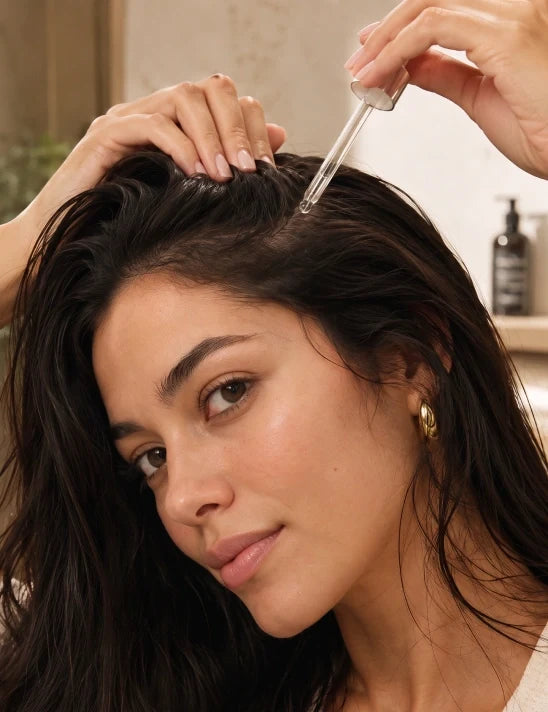
When the discomfort is happening at the scalp, direct application makes more sense than coating the whole head. Place a small amount on your fingertips and work section by section. Massage gently so the oil spreads over the skin, not just the hair roots.
This method is useful when your scalp feels tight, especially after cleansing or during dry weather. The massage itself can help distribute the oil and make the ritual feel calming.
A few reminders make this work better:
- Part the hair as you go. That helps you reach the scalp instead of skimming the surface.
- Keep pressure gentle. You're soothing, not scrubbing.
- Wash afterward if desired. Some people like it as a pre-wash step, others use a tiny amount and leave it on.
Product booster for a simpler routine
If you know you won't keep up with separate oil treatments, add jojoba to what you already use. Mix a few drops into your conditioner in your palm, or smooth a little through a hair mask before application.
This method works because it lowers the barrier to consistency. You don't need a new ritual. You're just making your current one a little more supportive.
Best times to use this approach:
- With conditioner when hair feels rough after shampooing
- With a mask when you want extra softness on wash day
- With a curl cream or styling cream when your texture needs slip and less frizz
Each method serves a different purpose. Pre-shampoo helps protect dry hair before cleansing. Leave-in use helps with daily polish. Scalp massage targets comfort at the root. Mixing jojoba into existing products helps people who want minimal effort.
Simple DIY Jojoba Oil Hair Recipes
DIY blends can be useful when you want to tailor jojoba oil for dry hair to one specific need. The key is to keep recipes simple. More ingredients don't automatically mean better results. In fact, simpler formulas are often easier to tolerate and easier to repeat.

Intense hydration mask
This is a good option when your hair feels both dry and rough. Jojoba helps seal and soften, while aloe vera brings a water-based, soothing element that can make hair feel less parched.
You'll need
- Jojoba oil
- Aloe vera gel
- A spoonful of plain conditioner
How to use it Mix until smooth, then apply to damp hair from mid-length to ends. Leave it on for a bit before rinsing thoroughly.
Why these ingredients work together: aloe vera gives slip and light hydration, while jojoba helps keep that softness from disappearing right away. Conditioner helps the blend spread more evenly through the hair.
Scalp serum with rosemary
This blend is for readers who want a scalp-focused ritual. Jojoba makes a useful carrier because it spreads easily and feels comfortable on the skin. Rosemary oil is often chosen for scalp massage blends because it pairs well with a focused root-care routine.
You'll need
- Jojoba oil
- A small amount of rosemary essential oil
How to use it Mix the rosemary into the jojoba, then apply sparingly to the scalp in sections. Massage gently and use it as a pre-wash treatment unless you know your scalp prefers leave-on oils.
Important note: essential oils are potent. Keep the blend diluted and patch test first, especially if your scalp is reactive.
Keep it simple: If your scalp is sensitive, start with pure jojoba alone before adding essential oils.
Shine and detangling mist
This recipe is helpful for hair that tangles easily or loses shape during the day. Since oil and water don't stay blended on their own, shake before each use.
You'll need
- Water
- A small amount of jojoba oil
- An empty spray bottle
How to use it Spritz lightly onto the mid-lengths and ends, then finger-comb or detangle gently with a wide-tooth comb. Use it on slightly damp hair or as a refresh step between washes.
This kind of mist won't replace a rich mask, but it can make dry hair more manageable. It's especially handy if you want softness without a full styling product.
A good DIY rule is to change only one thing at a time. If a recipe works, you'll know why. If it doesn't, you'll have a much easier time adjusting it.
Getting It Right Amount Frequency and Quality
Most jojoba mistakes come down to two things. People either use too much, or they buy a version that doesn't match the clean, simple routine they want.
For application, less usually works better at first. Jojoba spreads easily, so a small amount can go farther than you expect. Fine hair often needs only a light touch on the ends, while dense, curly, or coily hair may handle more.

Jojoba Oil Usage by Hair Type
| Hair Type | Suggested Amount (as leave-in) |
|---|---|
| Fine hair | A tiny touch, focused on the ends |
| Medium hair | A small amount through mid-lengths and ends |
| Thick hair | A modest amount, added gradually as needed |
| Curly hair | Enough to lightly coat dry areas without flattening the pattern |
| Coily hair | A more generous layer on the ends or over damp hair |
How often should you use it
Frequency depends on how dry your hair is and where the dryness shows up.
- For very dry ends: leave-in use can make sense whenever hair looks rough or puffy.
- For scalp discomfort: a pre-wash scalp treatment may feel best as part of wash day.
- For general maintenance: mixing jojoba into conditioner or using it as a finishing oil can keep the routine simple.
If hair starts looking limp, reduce the amount rather than giving up on the ingredient. That's usually the fix.
What quality terms actually mean
If you're buying a single-ingredient jojoba oil, the label matters. Cold-pressed generally means the oil was extracted in a way that helps preserve its natural character. Unrefined means it hasn't been heavily processed to strip out its original qualities. Organic matters to many shoppers because it aligns with a cleaner ingredient philosophy.
Those terms don't just sound nice on a bottle. They help you understand whether you're getting a straightforward oil or something that's been processed into a more generic ingredient.
If you want a single-ingredient option that fits those standards, Ella & Eden Jojoba Oil is one example marketed as cold-pressed and unrefined for skin, scalp, and hair use.
Your Jojoba Oil Questions Answered
Can jojoba oil make my hair greasy
Yes, if you use more than your hair needs. That doesn't mean jojoba is too heavy for you. It usually means the amount or placement needs adjusting. Start with the driest area first, which is often the ends, and keep the scalp application lighter unless dryness is your main concern.
Is it safe for color-treated hair
In general, jojoba is commonly used as a simple conditioning oil for hair that needs extra softness, including hair that has been colored. The safest approach is still to use a modest amount, avoid aggressive rubbing, and patch test if your scalp is sensitive or freshly treated.
How long until I see results
Some benefits are immediate. Hair can feel smoother, softer, and easier to detangle after the first good application. The balancing side of jojoba usually takes more patience because scalp comfort and routine consistency build over time.
You're not looking for a dramatic overnight transformation. You're looking for hair that becomes easier to manage, less brittle, and more comfortable week by week.
That's the heart of jojoba oil for dry hair. It supports moisture, but its deeper value is that it helps dry hair and scalp move toward balance.
If you want a cleaner, simpler way to care for dry hair, explore Ella & Eden for single-ingredient oils and straightforward routines built around everyday use.