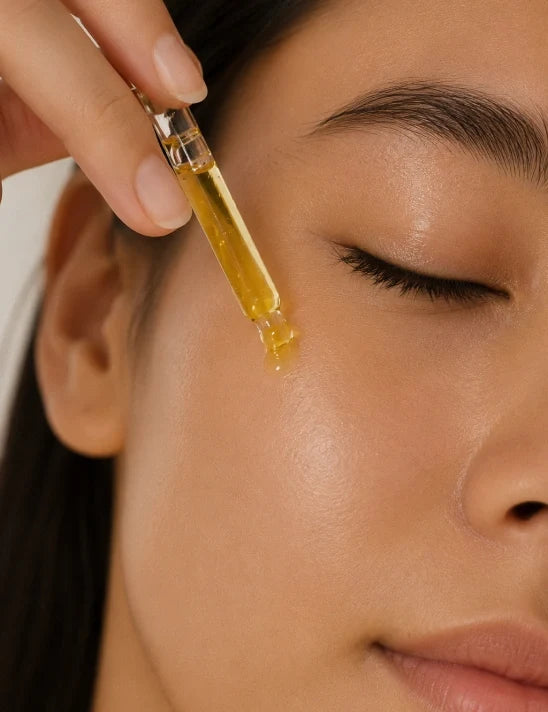
A Guide to Facial Oil for Mature Skin
Your moisturizer used to be enough. A little cream in the morning, maybe something richer at night, and your skin felt comfortable.
Then something shifted. Your cheeks started feeling tight by midday. Fine lines looked more noticeable, even when you were diligent about skincare. Products that once felt nourishing now seem to sit on the surface or disappear too quickly.
That change can feel confusing, but it's also very normal. Mature skin doesn't just need “more moisture.” It often needs more lipids, the natural oils that help keep skin soft, calm, and resilient. That's why the right facial oil for mature skin can make such a noticeable difference. Not because it's trendy, but because it supports something your skin naturally makes less of over time.
Your Guide to Natural Radiance with Facial Oils
A good facial oil for mature skin works differently from many traditional moisturizers. Creams often contain water, humectants, and some oils. They can feel lovely, but mature skin often needs extra help holding onto that hydration.
Facial oils step in by strengthening the surface of the skin and helping reduce moisture loss. Think of them as a soft seal over your skincare, one that helps comfort dry areas and bring back that supple, cushioned feel. For many people, that's the missing piece.
This also helps shift the conversation around aging. You don't need to “fight” your skin. You need to understand what it's asking for now. Mature skin often becomes drier, more delicate, and less bouncy because its natural support system changes. Oils work with that reality.
If you've felt overwhelmed by long ingredient lists, simple oils can feel refreshing. A single-ingredient oil lets you see how your skin responds without guessing which one of twenty ingredients is helping or irritating.
Facial oils aren't a replacement for every other product. They're often the layer that makes the rest of your routine feel more complete.
Used well, oils can help skin feel calmer, look smoother, and reflect light in that healthy way people often describe as glow. The key is knowing why they work, how to choose one, and how to apply it so it supports your skin instead of overwhelming it.
Why Mature Skin Thrives on Facial Oils
Skin barrier health becomes more important with age. The easiest way to understand it is with a wall analogy. Your skin cells are the bricks. The lipids between them are the mortar.
When that mortar is strong, the wall stays solid. Skin feels comfortable, holds water better, and stands up to daily stress more easily. When the mortar gets thin, the wall becomes leaky. Moisture escapes faster, and skin can start to feel rough, dull, or sensitive.

The missing mortar problem
Mature skin often produces fewer of its own protective oils. That doesn't just mean dryness. It can also mean your skin has a harder time staying soft and springy. Fine lines may look sharper because the surface is less cushioned.
Facial oils help because they're made of lipids. In plain terms, they supply the kind of richness the skin barrier recognizes and can use well. Instead of adding another watery layer that may evaporate, oil helps keep hydration where you want it.
This is one reason so many people find that oils feel more satisfying than lotion once their skin changes. They don't just moisten the surface. They help reinforce the barrier that keeps skin comfortable.
Why oils often feel different from creams
Creams can absolutely have a place in a routine. But many are built around water. That can be helpful for immediate hydration, yet mature skin often benefits from something that also locks in that hydration.
A well-chosen oil can do that while delivering naturally occurring fatty acids and antioxidants. In a 2016 clinical study on formulas with Silybum marianum seed oil, participants saw wrinkles decrease by 14.07%, elasticity improve by 8.79%, and dermal density increase by 27.63% in four weeks. Those results support what many mature-skin routines are already telling us in practice. Lipid-rich botanical oils can help skin feel firmer, smoother, and better supported.
Practical rule: If your skin feels dry even after moisturizing, the issue may not be a lack of products. It may be a lack of barrier-supporting lipids.
That's also why some people combine a simple at-home oil routine with professional care.
What this means in real life
If your face feels tight after cleansing, makeup clings to dry patches, or your skin looks tired by afternoon, oils can help soften that cycle.
Here's the simple takeaway:
- Barrier support matters: Mature skin often needs help replacing lost surface lipids.
- Oils reduce water loss: They help hold hydration in the skin.
- Texture can improve: Skin often looks smoother because dryness is less pronounced.
- Simplicity helps: Single-ingredient oils make it easier to match the product to your skin's needs.
Key Ingredients to Look for in an Anti-Aging Oil
Not all oils do the same job. That's where many people get stuck. They hear “facial oil” and assume every bottle offers the same benefit.
The better approach is to look at what the oil naturally contains. A few ingredient families matter most for mature skin, and once you know them, labels become much less intimidating.
Fatty acids that feed the barrier
Fatty acids are one of the main reasons oils feel supportive on mature skin. They help soften roughness and reinforce the outer layer of the skin.
Two names come up often:
- Oleic acid tends to feel richer and more cushioning. Many people with very dry skin enjoy oils that lean in this direction.
- Linoleic acid is often associated with a lighter, more balancing feel and can be helpful when skin is dry but still prone to congestion.
You don't need to memorize chemistry to shop well. Just remember this. Some oils feel plush and intensely comforting, while others feel lighter and more balancing. That difference usually comes back to their fatty acid profile.
Antioxidants and protective compounds
Mature skin also benefits from oils that contain antioxidants, such as vitamin E and plant polyphenols. These compounds help support skin that looks dull or stressed.
They don't replace sunscreen or a full routine, but they can add a useful layer of support. In single-ingredient oils, these naturally occurring compounds are part of what makes the formula feel active rather than just greasy.
Fewer ingredients often make troubleshooting easier. If your skin reacts, you can identify the cause much faster.
Bakuchiol for retinol-like support
One ingredient worth knowing is bakuchiol. It's plant-derived and often discussed as a gentler alternative to retinol.
A 2018 British Journal of Dermatology finding summarized here reported that bakuchiol reduces fine lines and improves elasticity as effectively as retinol but with significantly better tolerance. That matters because mature skin can become more reactive, and not everyone enjoys the dryness or irritation that retinoids may bring.
Bakuchiol won't appear in every single-ingredient oil, but it's useful to recognize if you're considering a simple oil-based serum and want plant-based support for texture and tone.
How to read a label with confidence
When you pick up a bottle, ask three basic questions:
- Is it simple enough to understand? A short ingredient list is often easier to work with.
- Does it match my skin's current need? Dryness, sensitivity, dullness, and congestion don't all need the same oil.
- Can I use it consistently? The “right” oil is one your skin likes enough to use regularly.
If you want a closer look at one of the most skin-friendly minimalist options, this article on jojoba oil for skin is a good place to start.
How to Choose the Best Facial Oil for Your Skin
Choosing a facial oil for mature skin gets easier when you stop asking, “Which oil is best?” and start asking, “What does my skin need most right now?”
Some mature skin is very dry and fragile. Some is sensitive. Some still gets clogged easily. Many people have a mix of all three depending on the season, stress, and where they are in life.
Match the oil to the concern
This quick table can help narrow things down.
| Skin Concern | Recommended Oil | Primary Benefit |
|---|---|---|
| Dryness and loss of softness | Argan Oil | Nourishes and helps skin feel supple |
| Combination or congestion-prone mature skin | Jojoba Oil | Balances and gives lightweight comfort |
| Fine lines and uneven-looking tone | Rosehip Oil | Supports a smoother, more radiant look |
| Sensitivity and reactivity | Jojoba Oil | Gentle feel and simple barrier support |
| Dull, tired-looking skin | Argan Oil | Adds richness and healthy-looking glow |
The point isn't to build a shelf full of bottles on day one. Start with the concern you notice most.
If your skin feels tight and thirsty, a richer oil may make the biggest difference. If your skin feels dry but also gets shiny or clogged, jojoba is often a smart place to begin because it tends to feel balanced rather than heavy.
Why single-ingredient oils make sense
Single-ingredient oils are especially helpful for mature skin because they remove the guesswork. You can test one oil, learn how your skin responds, and adjust from there.
That's very different from trying a complex formula with fragrance, botanical extracts, and multiple actives all at once. If your skin loves it, great. If it doesn't, it's hard to know why.
This is also where brands focused on minimalist skincare can be useful. Ella & Eden's Pure Argan Oil is one example of a straightforward option for dry, dull, or mature skin when you want nourishment without a long ingredient list.
A simple way to decide
If you're standing in front of a product page and feeling unsure, use this filter:
- Choose argan oil if your skin feels dry, depleted, or less elastic.
- Choose jojoba oil if you want something adaptable and lightweight.
- Choose rosehip oil if your focus is visible aging plus uneven-looking tone.
You can also think in terms of texture preference. Some people won't use an oil that feels too rich, even if it works. Others love that cocooning finish at night. Your routine only helps if it fits your real habits.
The best facial oil for mature skin is the one that matches both your skin's needs and your willingness to use it consistently.
If you're new to oils, start with one bottle. Use it for a few weeks. Notice how your skin feels in the morning, how makeup sits, and whether tightness fades. That tells you more than trendy marketing language ever will.
Your Step-by-Step Guide to Using Facial Oils
Application matters almost as much as the oil itself. A beautiful oil can feel underwhelming if you use too much, apply it to bone-dry skin, or layer it in a confusing order.

Morning use
In the morning, keep it light. Cleanse gently if needed, then apply any water-based serum or hydrating mist first. While your skin is still slightly damp, warm a few drops of oil between your hands and press it into the face.
That dampness matters. Oil doesn't add water to the skin on its own. It helps hold onto the hydration already there.
Apply facial oil to slightly damp skin, not a completely dry face. That's how you trap hydration instead of just adding surface slip.
If you wear moisturizer, you have options. You can apply oil after moisturizer for a more sealed-in finish, or mix a drop into your cream if you prefer a lighter feel. The right choice depends on how dry your skin feels and how much glow you want under makeup.
Evening use
Nighttime is a good time to be a little more generous. After cleansing, apply your hydrating layers first. Then press oil into the skin, focusing on drier areas like the cheeks, around the mouth, and the neck.
Use your hands more than your fingertips. Palms create gentle, even pressure and help distribute the oil without tugging.
A simple evening rhythm looks like this:
- Cleanse gently: Remove makeup, sunscreen, and the day's buildup.
- Apply watery products first: Serums, essences, or rosewater go on before oil.
- Press in the oil: Don't scrub or rub hard.
- Seal if needed: Add moisturizer after oil if your skin wants extra comfort.
Layering without overthinking it
One reason people get confused is that oil doesn't always follow a strict rule. In many routines, it goes after water-based products. But depending on texture, you can also use it with moisturizer in different ways.
Try one of these:
- Before moisturizer if you want a softer, more absorbed finish.
- After moisturizer if you want to lock everything in.
- Mixed into moisturizer if straight oil feels too rich.
If you're still fuzzy on what counts as a base oil versus an active blend, this guide on what is a carrier oil clears it up in simple language.
Press and pat. Don't rub. Mature skin usually responds better to gentle placement than vigorous massage.
Troubleshooting Common Facial Oil Concerns
A lot of people want to use oil, then stop themselves with one worry. “Won't this make me greasy?” “What if it breaks me out?” “What if it just sits on top of my skin?”
Those concerns are common, and most of them come down to choosing the wrong oil, using too much, or applying it in the wrong way.

If oil feels too heavy
The fix is often simple. Use less.
Many people only need a few drops for the whole face. If your skin feels slick long after application, try pressing the oil onto damp skin or mixing a drop into moisturizer instead of applying a full layer on its own.
If you're oily and dry at the same time
This is more common than people think. Skin can produce visible oil and still have a weak barrier. In that case, a lightweight oil may help your skin feel more balanced.
Jojoba is often a comfortable starting point because it tends to sit lightly on the skin. If your barrier feels compromised, this article on how to repair skin barrier offers useful support habits to pair with your oil routine.
If you want a more personalized feel
You don't have to choose one oil forever. Once you know how your skin responds, you can try custom blending in your palm.
For example, someone might use jojoba as a daily base, then add a drop of argan at night when the skin feels more depleted. That gives you a routine that changes with your skin instead of forcing your skin to adapt to one fixed formula.
A few easy blending ideas:
- For daytime comfort: Start with a lighter oil and keep the finish soft.
- For nighttime nourishment: Add a richer oil when skin feels tight or rough.
- For seasonal changes: Use less in humid weather, more in cold or dry indoor air.
The mistake isn't using oil. The mistake is assuming every oil should feel the same on every face. Once you treat oils as flexible tools instead of one-size-fits-all products, they become much easier to use well.
Embrace Your Glow with Clean Conscious Skincare
Mature skin isn't failing. It's changing, and it often needs more lipid support than it used to. That's why a facial oil for mature skin can be such a useful part of a routine. It helps replenish what the skin gradually loses and brings comfort, softness, and a healthier-looking finish.
Simple oils also give you something many modern routines don't. Clarity. You can tell what you're using, why you're using it, and how your skin responds.
That's liberating. You don't need a crowded shelf or a complicated system to care for mature skin well. A thoughtful, clean routine built around a few well-chosen oils can be enough, and for many people, it feels better than chasing every new formula.
If you're ready to build a simpler routine, Ella & Eden offers clean, single-ingredient oils and educational guides that make it easier to choose what fits your skin. Start with one oil, use it consistently, and let your routine grow only if your skin asks for more.