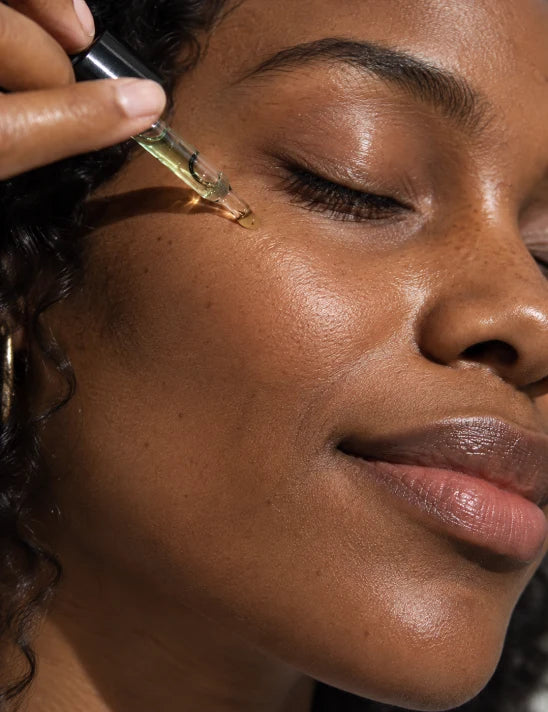
Clean Beauty Hair Oil: How to Choose and Use the Right One
“Natural” doesn't automatically mean clean, and “clean” doesn't automatically mean safe. A hair oil can come in an amber glass bottle, feature a botanical name, and still contain fragrance allergens, siloxanes, or other ingredients that sensitive users may prefer to avoid.
The better question is more practical: What's in the bottle, how was it processed, where does it belong in your routine, and does it suit your scalp as well as your hair? Clean beauty hair oil is moving beyond the old promise of instant shine. More shoppers now want lightweight, targeted scalp care, transparent sourcing, and formulas that support the hair fiber without unnecessary additives.
What Clean Beauty Hair Oil Really Means
A clean beauty hair oil should be judged by its formula and documentation, not by words such as “natural,” “botanical,” or “pure” printed on the front label. Those terms can describe a product's marketing position without telling you whether it contains added fragrance, undisclosed blends, processing residues, or ingredients that may concern people with sensitive skin.
In practical terms, a clean beauty hair oil usually has a short, understandable ingredient list. It identifies the plant oil clearly, explains whether it's cold-pressed or refined, and gives shoppers enough information to assess sourcing and quality. A single oil, such as jojoba, argan, or castor oil, is easier to evaluate than a proprietary blend whose proportions and supporting ingredients remain unclear.
Clean is a process, not a color palette
The clean beauty standard also involves what a formula leaves out. Independent testing reviewed 38 hair oils and found that only 7 were free from a selected set of problematic chemicals, while 14 contained ingredients of concern and 17 received the worst rating because of suspected endocrine-disrupting or otherwise problematic substances. The finding doesn't mean every conventional oil is unsafe, but it does challenge the assumption that a plant-inspired label guarantees a simple formula.
Potential red flags include:
- Siloxanes, which are often used to create slip and a smooth cosmetic finish.
- Added fragrance and fragrance allergens, which may be irritating for reactive scalps.
- Phenoxyethanol, a preservative found in a portion of hair-growth cosmetics in independent analysis cited by ChemTrust.
- Unclear blends, where the label doesn't show the percentage or purpose of each ingredient.
Practical rule: Treat “clean” as a claim to verify. Look for a complete ingredient list, transparent processing details, and a brand willing to explain its sourcing.
Ingredient literacy matters because hair and scalp care now overlap with the broader clean beauty movement. A major industry report values the global clean beauty market at USD 10.49 billion in 2025 and projects it to reach USD 35.30 billion by 2033, with a projected 16.8% CAGR from 2026 to 2033. The same clean beauty market report identifies North America as the leading region with a 34.7% share in 2025, reflecting strong demand in developed markets for ingredient transparency, safety, and sustainability.
For a deeper explanation of how transparent formulas fit into a low-toxin routine, see this guide to toxin-free beauty products. The key takeaway is simple: clean beauty hair oil should be traceable, legible, and appropriate for your actual scalp and hair needs.
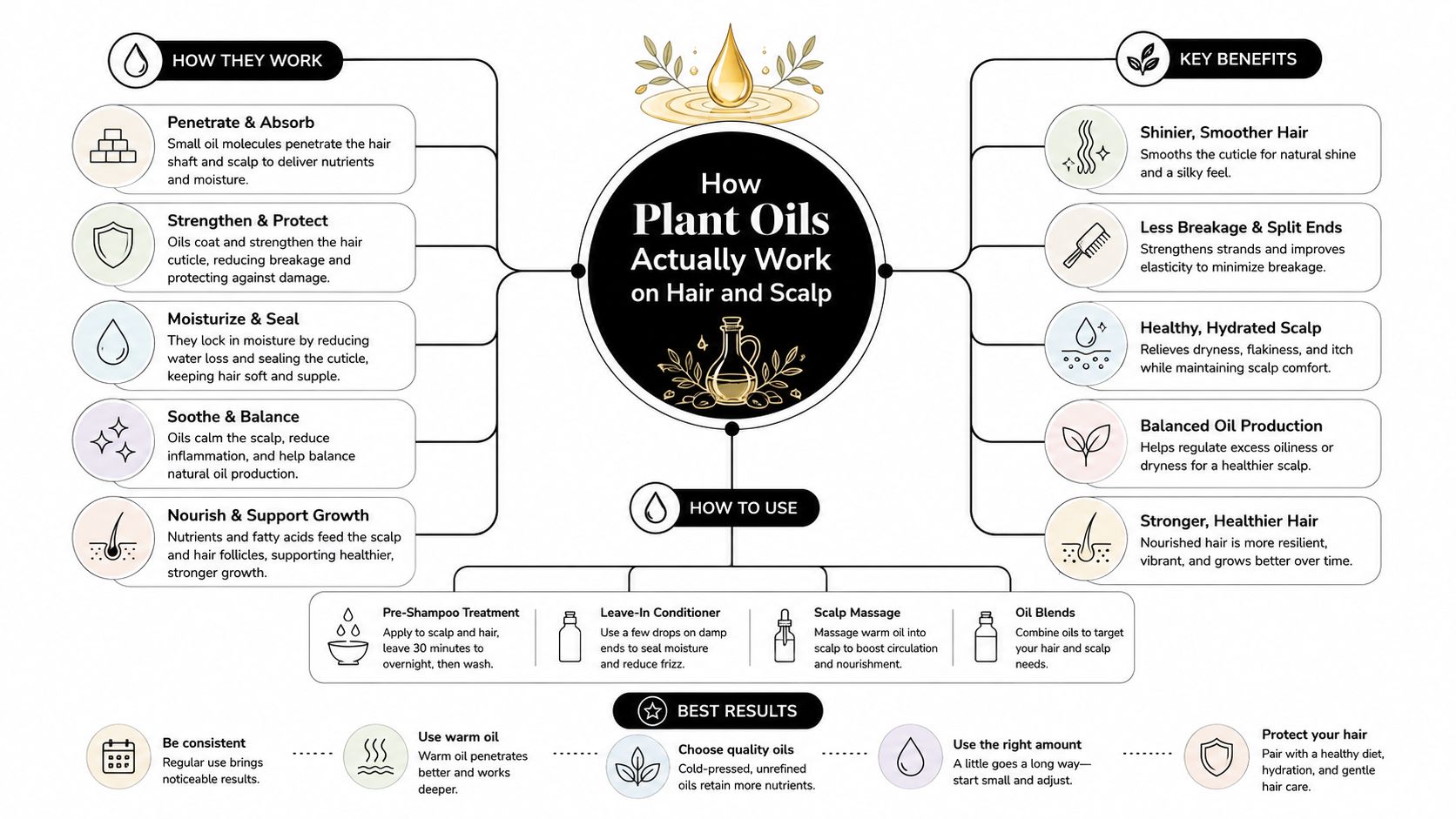
How Plant Oils Actually Work on Hair and Scalp
Hair oil doesn't work through one universal mechanism. Its performance depends partly on the oil's molecular structure and partly on whether you apply it to the fiber, the scalp, or both.
Think of the hair cuticle as a layered roof. Some oils remain mostly on the outer surface, smoothing raised cuticle edges and increasing shine. Others contain triglycerides with a structure that allows them to move farther into the fiber. Shorter-chain and more saturated triglycerides generally penetrate hair more effectively, while polyunsaturated oils tend to remain closer to the cuticular region.
Penetration changes the job an oil can do
Coconut oil offers one of the clearest examples. Independent spectroscopy found that it can enter the cortex and cell-membrane complex, while also reducing protein loss during washing. Mineral oil, by contrast, remains largely surface-bound. A surface film isn't useless. It can reduce friction and make hair feel smoother, but it doesn't offer the same penetration-based rationale as an oil that can move into the fiber.
This distinction helps you match an oil to a routine:
- Pre-wash oils can reduce the stress of cleansing, especially when the goal is to protect the fiber before shampoo.
- Leave-in oils are usually selected for slip, shine, and frizz control, where a light surface film can be useful.
- Scalp oils need a separate evaluation because the scalp is living skin, not dead keratin. A heavy product may feel comforting on a dry scalp but can also feel congesting or difficult to remove.
Hair fiber and scalp skin need different decisions
A coarse, porous, or chemically processed strand may benefit from a richer pre-shampoo treatment. Fine hair often needs only a tiny amount on the ends, because excess oil can flatten the style before it improves softness. For the scalp, start with a narrow purpose, such as reducing the feeling of dryness or supporting a massage ritual, rather than coating the entire head automatically.
A carrier oil is also not the same thing as an essential oil. Carrier oils are fatty plant oils used directly on skin or hair, while essential oils are concentrated aromatic materials that generally require careful dilution. This guide to what a carrier oil is can help clarify that distinction before you build a scalp formula.
The most useful mental model is this: penetrating oils are often better candidates for pre-wash fiber protection, while lighter surface oils can suit finishing and shine. Neither category is universally superior. The right choice depends on porosity, density, scalp sensitivity, and how often you cleanse.
Clean Versus Problematic Ingredients to Watch For
Reading a hair oil label becomes easier when you separate the base oil from everything added around it. A bottle may contain a nourishing plant oil but still rely on fragrance, volatile silicones, preservatives, or an undisclosed blend to create a particular sensory experience.
The concern isn't that every listed ingredient causes harm to every person. People have different sensitivities, and preservatives can serve a legitimate role in formulas that contain water. The issue is whether the ingredient matches your definition of clean beauty and whether the brand explains why it's present.
What to look for on the label
A straightforward formula may identify the plant source, extraction method, and certification status. Terms such as cold-pressed, unrefined, and certified organic can provide useful information, although they still need to be supported by a complete ingredient list and credible brand documentation.
| Clean Ingredients to Seek | Problematic Ingredients to Avoid |
|---|---|
| Clearly named single oils, such as jojoba, argan, or castor | Siloxanes that may be included for slip or a silky finish |
| Cold-pressed oils with disclosed sourcing | Added fragrance, especially when the label doesn't identify allergens |
| Unrefined oils when the natural color and aroma are acceptable to you | Phenoxyethanol when avoiding this preservative is part of your routine |
| Certified organic oils with verifiable standards | Proprietary blends that hide the amount and identity of ingredients |
| Fragrance-free formulas for reactive scalps | Products marketed as natural without a full ingredient list |
| Oils with clear processing and bottling information | Oils with unclear extraction methods or sourcing |
Hexane extraction deserves a nuanced explanation. Some brands avoid hexane because they want a more minimal processing story, while others use different extraction methods depending on the oil and production goals. Don't assume that “cold-pressed” alone proves purity. Look for the complete production statement, testing practices, and whether the product contains fillers.
Why “natural” can still mislead
Fragrance is a common source of confusion. A product may smell herbal or luxurious because of added aromatic materials, not because the base oil naturally carries that scent. Sensitive users may prefer fragrance-free products because a pleasant aroma isn't worth scalp discomfort.
The same caution applies to hair-growth marketing. A formula can be natural and still make claims that exceed the evidence. For example, testing cited by ChemTrust found phenoxyethanol in 32.8% of women's hair-growth cosmetics and synthetic fragrances in 25.9%, showing why ingredient transparency remains important in products positioned around scalp care.
Read the back before trusting the front. The ingredient list tells you what the marketing language leaves out.
Use a patch test for any new scalp product, especially if it contains aromatic oils. Stop if you experience burning, swelling, persistent itching, or a rash, and seek professional guidance for ongoing scalp symptoms.
Choosing the Right Oil for Your Hair and Scalp Concerns
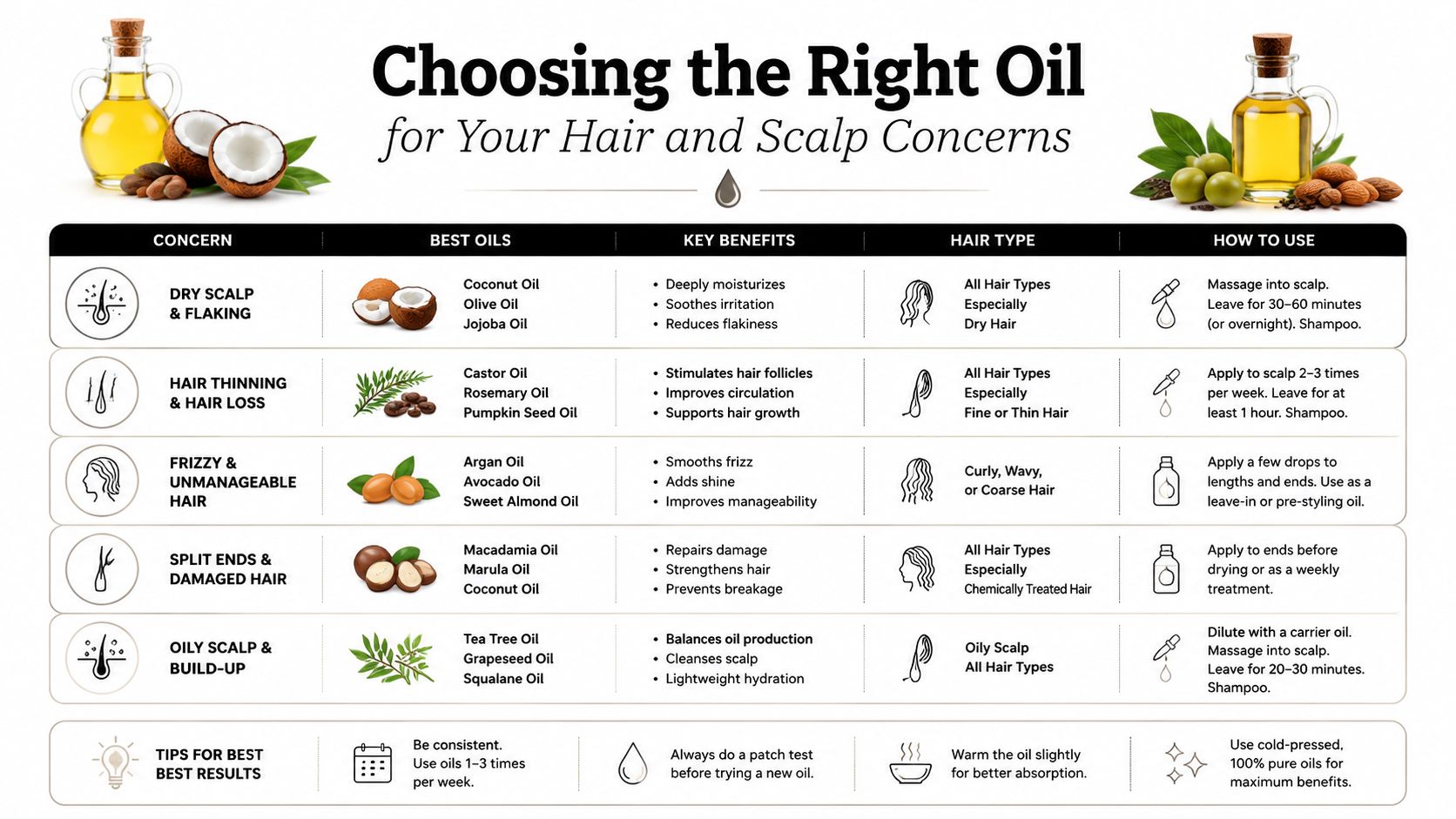
Start with the problem you want to solve, not the oil that happens to be trending. Shine, frizz, dryness, scalp discomfort, and fuller-looking hair are different goals, so one bottle may not be the right answer for all of them.
Scalp-first care has become a more important use case because shoppers are looking for targeted approaches to scalp health and hair-loss prevention. Independent trend coverage describes hair oils shifting from heavy traditional treatments toward lighter, more focused scalp products. That shift makes sense, but it also requires realistic expectations.
Match the oil to the goal
For shine and frizz control, argan oil is a reasonable benchmark. Research on pre-treatment with argan oil found reduced protein loss after oxidative damage, and ATR spectroscopy detected oil deposition even after washing, suggesting a persistent conditioning film. That supports argan oil as a fiber-protective and shine-enhancing ingredient, not as a proven follicle stimulant. Use a small amount through mid-lengths and ends, particularly if your roots become oily quickly.
For a thicker-feeling scalp massage, castor oil has a rich, viscous texture that suits people who want a slower, more deliberate ritual. However, the dermatology review cited in the clinical evidence on argan and castor oils found no strong evidence that castor oil or argan oil improves hair growth. The evidence for castor oil is weaker and relates more to luster than follicle stimulation, so describe it as a conditioning or massage oil rather than a guaranteed growth treatment.
For a lightweight, balanced feel, jojoba oil is often easier to spread than thick castor oil and can work well in small amounts on the scalp or ends. Its appeal is practical, especially for people who dislike a greasy finish. Still, scalp irritation, flaking, or sudden shedding deserves a medical evaluation rather than repeated oiling.
For rosemary-focused routines, use a product designed for scalp application and follow its dilution instructions. Rosemary oil is an essential oil, not a casual substitute for a carrier oil, so never apply concentrated essential oil directly to the scalp.
Use quality as your final filter
Choose the oil that fits your texture and tolerance, then check whether the bottle states the botanical name, extraction method, certification, and storage guidance. Fine hair usually needs a lighter touch, while dense or highly textured hair may tolerate a richer pre-wash application.
Ella & Eden offers single oils including Organic Castor Oil, Jojoba Oil, Argan Oil, and Rosemary Oil, alongside a Hair Growth Oil made with rosemary, castor, peppermint, and biotin. Treat a blend like any other product: read the full label, check whether the aromatic ingredients are diluted, and decide whether the formula matches your scalp preferences.
Real Routines for Using Clean Hair Oils
“Clean” does not make every oil suitable for every routine. The better starting point is placement and restraint: match the oil to the scalp or hair area that needs it, then use enough to coat that area without leaving a heavy film.
A pre-wash routine for dryness and buildup
For a dry-feeling scalp and rough ends, section dry hair and apply a small amount of jojoba or argan oil only where needed on the scalp. Massage with your fingertips instead of scratching. Smooth a little argan oil through the mid-lengths and ends, leave it on long enough to coat the hair, then shampoo the scalp thoroughly and condition the lengths.
Oil works like a light coating, not a replacement for cleansing. Aim for even coverage that shampoo can remove without repeated, aggressive cleansing.
A finishing ritual for fine hair
Fine hair often responds better when oil stays away from the roots. Place a tiny amount between your palms and rub until it spreads into a thin layer. Touch only the ends and visible flyaways, wait, then add more only if the hair still feels rough.
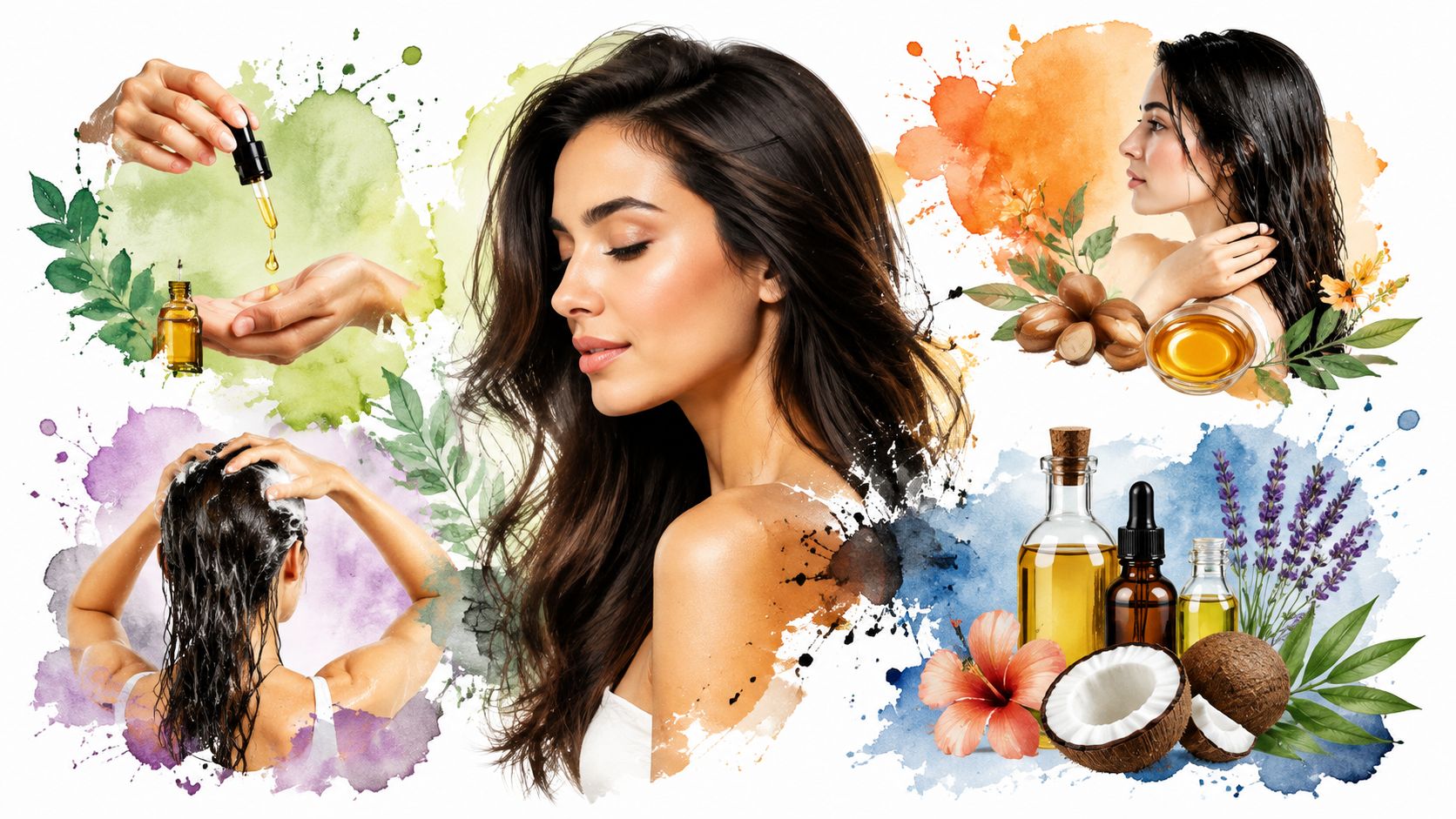
A deeper routine for thick or curly textures
Dense, curly, or highly porous hair may handle a richer oil on damp mid-lengths and ends after cleansing. You can also use the oil before shampooing as a pre-wash treatment. Work in sections so the product reaches the hair instead of remaining on the outer layer. For an overnight treatment, a satin bonnet or pillowcase may reduce transfer, but protect bedding and wash the hair thoroughly the next morning.
A rosemary scalp massage requires more care. Dilute rosemary essential oil in a suitable carrier oil, apply sparingly along the part lines, and massage gently. Wash it out if the scalp feels coated or irritated. Essential oil is concentrated, so using more increases irritation risk rather than guaranteeing better results.
For a step-by-step application sequence, follow this guide on how to use hair oil. Ella & Eden's single oils, including Organic Castor Oil, Jojoba Oil, Argan Oil, and Rosemary Oil, can suit different routine steps, while its Hair Growth Oil combines rosemary, castor, peppermint, and biotin. Whichever product you select, adjust frequency according to scalp comfort, cleansing needs, and whether the hair stays buoyant or begins to look coated.
Why Single-Ingredient Oils From Transparent Brands Matter
“Clean” on a label does not automatically mean safe for every scalp. A single-ingredient oil gives you a clearer answer to What am I putting on my scalp and hair? If irritation appears, you can investigate one likely source instead of sorting through a blend of fragrance, essential oils, silicones, and preservatives. This scalp-first view matters because an oil that suits dry ends may feel heavy or uncomfortable at the roots.
Processing changes the oil's character too. Cold-pressing can help preserve naturally occurring compounds without the same treatment used for highly processed or deodorized oils. Unrefined oils may keep more natural color and aroma, while refined oils can provide a more neutral sensory experience. Neither option is automatically better. Check whether the brand names the process and explains why it fits the intended use.
Transparency supports better decisions
A transparent brand should explain:
- The exact ingredient, including botanical identity where relevant.
- The extraction method, such as cold-pressing or another disclosed process.
- Testing and sourcing, including how quality is checked.
- Certifications, such as organic, vegan, or cruelty-free standards, when those claims matter to you.
- Packaging and storage, since light, heat, and air can affect oil quality over time.
A short formula can also make routines easier to adjust. One suitable oil might work as a pre-wash treatment, a small amount on dry ends, or a carrier for a properly diluted essential oil. Match that oil to the need rather than assuming every plant oil belongs on the scalp. For example, a richer oil may suit dense, dry lengths, while a lighter option may feel more comfortable near roots that become coated quickly.
A short ingredient list doesn't replace quality control. It makes quality easier for you to inspect.
Sourcing and packaging belong in the evaluation as well. Traceable materials, responsible bottling, and clear storage guidance do not prove that an oil suits your scalp, but they show how carefully the brand manages its claims and product. The same label-reading habit can guide other personal-care choices, including a fragrance-free bar soap for sensitive skin.
Ella & Eden describes its approach as centered on single-ingredient, cold-pressed and unrefined oils, certified organic ingredients, vegan and cruelty-free standards, and sourcing and bottling practices intended to avoid fillers, synthetics, pesticides, and hexane. That approach does not make every oil suitable for every person. It gives shoppers clearer information for matching an oil to a specific hair or scalp routine than an unnamed cosmetic blend does.
Common Questions About Clean Beauty Hair Oils
Can clean hair oil support hair growth?
Some products are marketed for growth, but the evidence should shape your language. The clinical review discussed earlier found no strong evidence that argan or castor oil improves hair growth, so use those oils for conditioning, shine, fiber protection, or massage rather than promising follicle stimulation. Persistent shedding or visible thinning warrants evaluation by a dermatologist.
How often should you oil your scalp?
There isn't one schedule for every scalp. Begin with occasional, targeted application and observe whether your scalp feels comfortable, clean, and calm afterward. If oil increases itching, residue, or flaking, stop using it and reassess the formula, amount, and application area.
Can you use clean oil on color-treated hair?
Yes, but keep the purpose clear. A pre-wash or mid-length treatment may help condition a dry-feeling fiber, while excessive oil can make cleansing more demanding. Use a small amount first and follow your colorist's guidance, especially after chemical processing.
How should you store hair oil?
Keep the bottle tightly closed, away from heat, direct sunlight, and repeated exposure to air. Follow the brand's storage instructions and pay attention to changes in scent, color, or texture. If the oil smells rancid or noticeably different, don't apply it to your scalp.
What makes a clean beauty hair oil effective?
Effectiveness means matching the oil to the job. Choose a penetrating option for a pre-wash fiber routine, a lighter oil for finishing, and a properly diluted scalp formula for targeted massage. Clean describes ingredient and sourcing standards, not a guarantee that every oil will suit every person.
Ella & Eden offers simple, multi-purpose oils for hair, scalp, skin, and everyday self-care, including single-ingredient options for shoppers who want transparent formulas. Visit Ella & Eden to compare the oils, review ingredient details, and choose a routine that fits your hair texture and scalp needs.