The Best Oils for Acne Prone Skin a Complete Guide
It might sound counterintuitive, but one of the biggest myths in skincare is that you should keep oils far, far away from acne-prone skin. The thinking makes sense on the surface—why add more oil to skin that’s already oily? But here’s the secret: the right plant oils can actually be the key to unlocking a clearer, more balanced complexion.
The Truth About Using Oils on Acne Prone Skin
Think of it this way: like dissolves like. The gunk clogging your pores—those stubborn blackheads and pimples—is made of hardened, waxy sebum. When you use harsh, oil-stripping cleansers, you send your skin into panic mode, causing it to produce even more oil to make up for what it lost. It's a frustrating, vicious cycle.
A high-quality, non-comedogenic oil works differently. It gently mixes with the solidified oil in your pores, helping to dissolve the blockages and lift away impurities. All this happens without wrecking your skin's natural moisture barrier, which is your first line of defense against irritation and breakouts.
Rebalancing Your Skin for Lasting Clarity
Instead of trying to get rid of your skin’s oil, the goal is to get it back in balance. Here's something fascinating: studies have shown that the sebum in acne-prone skin is often low in an essential fatty acid called linoleic acid. This deficiency makes your natural sebum thick, sticky, and far more likely to clog your pores.
When you apply a facial oil rich in linoleic acid—like jojoba or rosehip—you're giving your skin exactly what it's missing. You’re essentially retraining it to produce healthier oil. This helps thin out your natural sebum so it can flow freely out of your pores instead of getting stuck.
This rebalancing act leads to some incredible benefits:
- Fewer Clogged Pores: When sebum is less sticky, it's less likely to form the plugs that cause blackheads and pimples.
- Calmer Skin: Many of these oils have amazing anti-inflammatory properties that help soothe the redness and swelling that comes with breakouts.
- A Stronger Skin Barrier: A healthy, intact barrier is essential for keeping acne-causing bacteria out and locking precious moisture in.
The key takeaway is this: using the right facial oil doesn't make your skin oilier; it helps regulate your skin's own oil production, leading to a more balanced and clear complexion.
To help you get started, here’s a quick-reference table that breaks down some of the best (and worst) oils for acne-prone skin.
Quick Guide to Acne-Friendly Oils
This table summarizes some of the most effective oils, highlighting their key properties so you can easily distinguish between what helps and what might harm your skin.
| Oil Type | Key Benefit | Comedogenic Rating | Best For |
|---|---|---|---|
| Jojoba Oil | Mimics natural sebum to balance skin | 2 (Low) | Oily, Combination, Acne-Prone |
| Rosehip Oil | Reduces scars and inflammation | 1 (Very Low) | Inflamed Acne, Scarring |
| Grapeseed Oil | Lightweight and antioxidant-rich | 1 (Very Low) | Very Oily, Sensitive Skin |
| Argan Oil | Hydrating without being greasy | 0 (Non-Clogging) | Dry, Mature, Acne-Prone |
Choosing the right oil is all about understanding what your unique skin needs. With this guide, you're well on your way to finding the perfect match to calm, clear, and rebalance your complexion.
Why Some Oils Heal Breakouts While Others Cause Them
Ever felt like you're playing Russian roulette with facial oils? One seems to magically clear your skin, while the next one unleashes a fresh wave of breakouts. It’s frustrating, but I promise you, it's not random—it's all about skin science.
The reason some oils are friends to acne-prone skin and others are definite foes comes down to two simple things: their comedogenic rating and their fatty acid profile. Getting a handle on these two concepts is like finally getting the secret key to your own skincare. It lets you look at a label and make a really good guess about how an oil will behave on your skin, taking all the frustrating guesswork out of the equation.
Decoding the Comedogenic Scale
First up, let's demystify the comedogenic scale. It sounds super technical, but it’s really just a simple 0-to-5 rating system that predicts how likely an ingredient is to clog your pores.
Think of it as a traffic light for your face:
- 0-1 (Green Light): These are considered non-comedogenic or have a very low risk. They’re highly unlikely to cause blockages, making them a safe bet for even the most reactive, acne-prone skin. Argan oil, for instance, scores a perfect 0.
- 2-3 (Yellow Light): Proceed with caution. These oils have a low-to-moderate chance of clogging pores. Lots of people use them without a single issue, but for others, they might trigger a breakout. Jojoba oil sits at a 2, which is why it's a well-tolerated option for so many.
- 4-5 (Red Light): High alert for pore-clogging. These ingredients are very likely to lead to congestion, blackheads, and pimples if you're prone to them. A classic example is coconut oil, which has a rating of 4 and is a common culprit behind mysterious breakouts.
Key Insight: A low comedogenic rating is the first green flag you should look for in an oil. It’s the gatekeeper that separates the pore-friendly options from the potential troublemakers.
The right oils don't just sit on your skin; they actively work to rebalance it from within. They help dissolve existing hardened sebum, regulate your skin's own oil production, and soothe that angry redness that comes with a breakout.
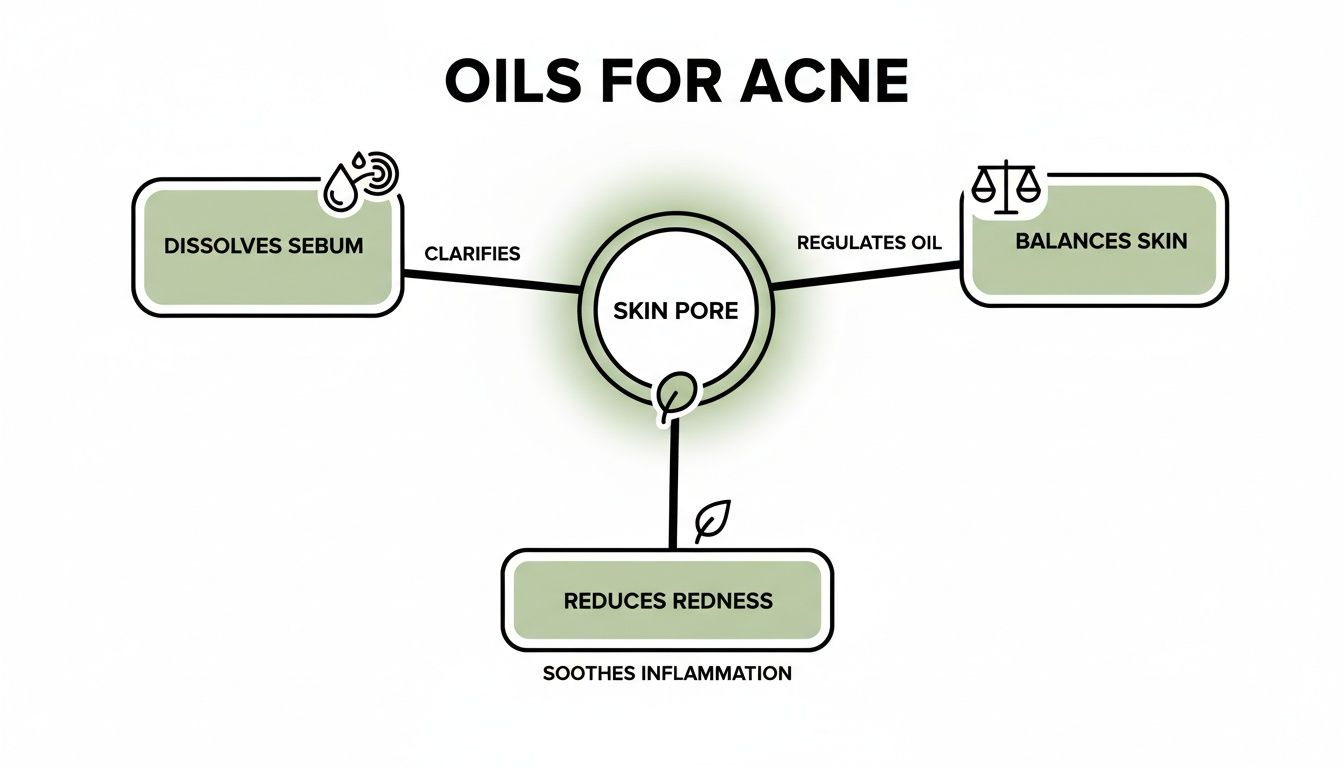
This multi-tasking approach is what makes them so effective—they’re not just moisturizing, they’re helping to restore your skin's natural harmony.
The Linoleic vs. Oleic Acid Battle
Beyond that initial rating, the real magic—or mayhem—happens at a molecular level with fatty acids. Every single plant oil is a unique blend of these acids, but for our purposes, the two most important names to know are linoleic acid and oleic acid.
Here's the piece of the puzzle that changes everything: research shows that people with acne-prone skin often have lower-than-normal levels of linoleic acid in their sebum. This deficiency makes their natural oil thick, sticky, and waxy—the perfect recipe for a clogged pore.
-
Linoleic Acid (The Hero): This is a beautifully thin, fluid fatty acid. When you apply oils that are high in linoleic acid, you're essentially giving your skin back what it's missing. It helps thin out that thick, sticky sebum, letting it flow freely from your pores instead of getting trapped and causing a blemish. This is precisely why oils like grapeseed and rosehip are such game-changers for so many people.
-
Oleic Acid (The Potential Villain): In contrast, this fatty acid is much richer and heavier. It's an absolute dream for very dry or mature skin that needs serious moisture, but it can be a real problem for acne-prone complexions. If your sebum is already on the thick side, adding more thick oleic acid can make congestion even worse. Oils like olive and avocado are packed with oleic acid.
The anti-inflammatory power of certain oils also plays a huge role. We know that excess sebum is a major driver of breakouts, contributing to an estimated 90% of acne cases worldwide. One fascinating study on natural acne treatments compared a cream with 3% tea tree oil to a standard 3% erythromycin (antibiotic) cream. After 30 days, the tea tree oil group saw their acne severity index drop by an incredible 66.7%, blowing past the erythromycin cream's 49.7% reduction. This really highlights how potent natural anti-inflammatories can be at calming down overactive sebaceous glands.
So, the winning formula is simple: look for an oil with a low comedogenic score and a high concentration of linoleic acid. This one-two punch helps decongest your pores, balance your skin's oil production, and calm the inflammation that makes breakouts so angry and red. It's the most reliable path to clearer, healthier skin.
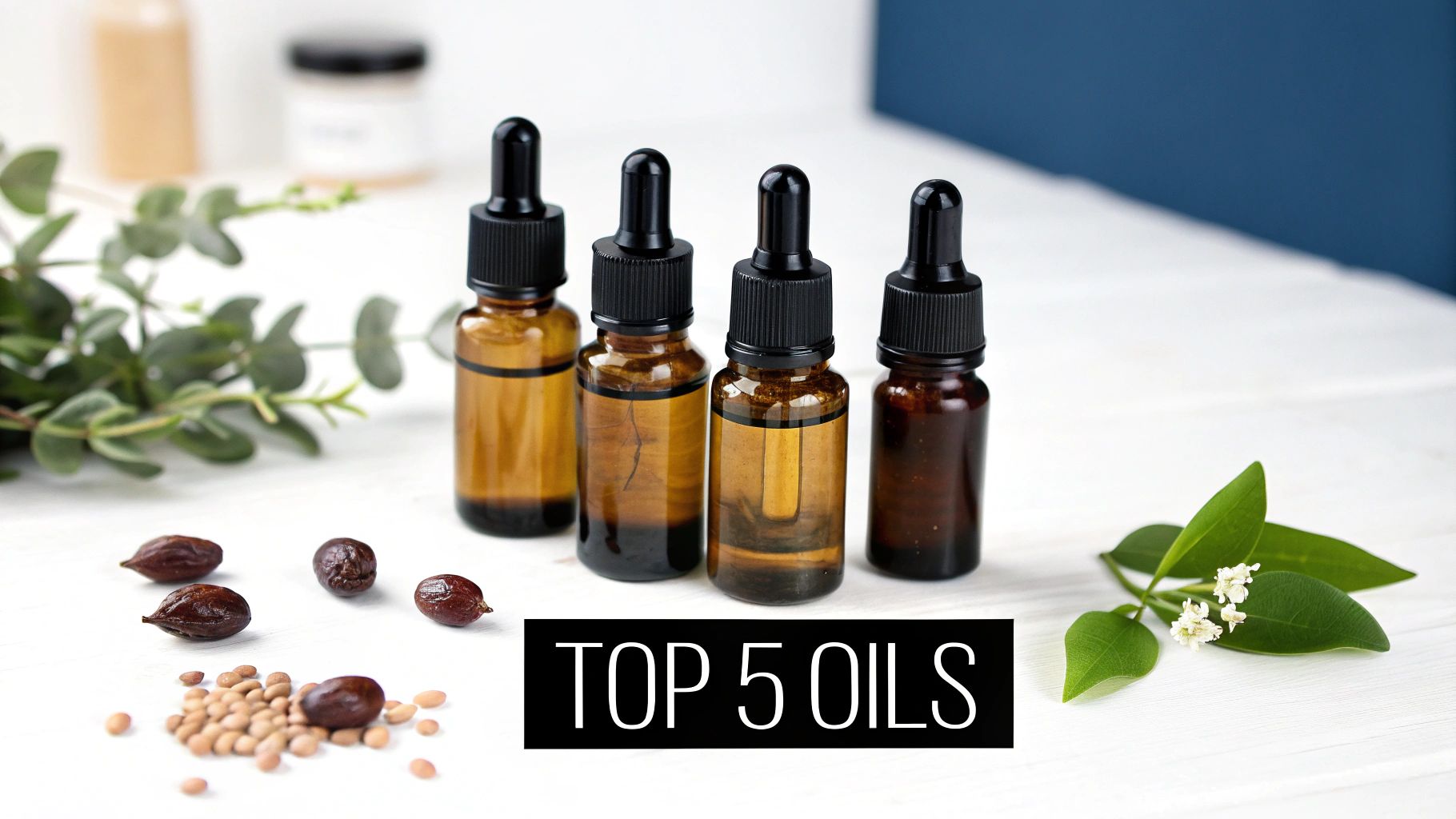
The Top 5 Non-Comedogenic Oils for Clear Skin
Alright, we've covered the science of what makes an oil a friend or foe to acne-prone skin. Now for the fun part—let's talk about the all-stars. These are the oils I see deliver calming, balancing, and clearing results time and time again. They all have low comedogenic ratings and beautiful, linoleic acid-rich profiles that work with your skin, not against it.
Let's dive into five of the absolute best oils for acne-prone skin. I'll break down what makes each one special and how you can start using it. This is where the theory becomes a real, practical part of your routine.
Jojoba Oil: The Great Balancer
If there's one oil celebrated for breakout-prone complexions, it's Jojoba. The reason is incredible—its molecular structure is a near-perfect match for your skin's own sebum. This isn't just a cool science fact; it's the secret to its power.
When you apply Jojoba, your skin essentially gets a signal that it has produced enough oil already. This clever trick helps dial down your natural sebum production, preventing the excess that leads to clogs in the first place. With a comedogenic rating of 2, it hits a sweet spot for most people.
- Key Benefits: Regulates oil production, helps dissolve hardened sebum plugs, and has anti-inflammatory properties that calm redness.
- Best For: Oily, combination, and mild-to-moderate acne. It's a fantastic starting point if you're new to using facial oils.
- How to Use: Warm 3-4 drops between your palms and gently press it into your skin. Make it the last step of your evening routine. You can explore the pure benefits of Jojoba Oil in our detailed guide to learn more.
Rosehip Seed Oil: The Regenerator
Struggling with the aftermath of a breakout? Those lingering red marks and stubborn acne scars can be frustrating, but Rosehip Seed Oil is your champion here. It's packed with vitamins A and C, making it a true powerhouse for regeneration and repair.
This beautiful, amber-colored oil has a very low comedogenic rating of 1, so it's an incredibly safe bet for reactive skin. Its high linoleic acid content helps keep sebum thin and fluid, while its regenerative magic speeds up cell turnover to help fade discoloration and smooth out skin texture.
Expert Tip: Because of its natural vitamin A content (a gentle, natural form of retinoic acid), Rosehip can make your skin a bit more sun-sensitive. It's best to apply it at night and always, always wear your sunscreen during the day.
Grapeseed Oil: The Lightweight Protector
For anyone with very oily skin who cringes at the idea of putting anything heavy on their face, Grapeseed Oil is a game-changer. It's unbelievably lightweight, sinks in almost instantly, and leaves zero greasy residue behind.
With a comedogenic rating of just 1, it's one of the kindest oils for skin that's both acne-prone and sensitive. It also contains powerful antioxidants called proanthocyanidins, which help shield the skin from environmental damage while soothing inflammation. As a bonus, its natural astringent properties can even help gently tone and tighten pores.
- Key Benefits: Extremely lightweight, fast-absorbing, rich in antioxidants, and helps get surface oiliness under control.
- Best For: Very oily, sensitive, and congested skin. It’s also a brilliant choice for humid summer months when you want something that feels like nothing.
- How to Use: A little goes a long way. Apply just 2-3 drops to clean, damp skin. Its light texture makes it perfect for both morning and night, even under makeup.
Argan Oil: The Non-Clogging Hydrator
Argan oil is often called 'liquid gold,' and for good reason. It delivers deep, lasting hydration without the risk of clogging pores, proudly holding a perfect comedogenic rating of 0. This makes it a fantastic choice for anyone whose acne-prone skin is also feeling dry or dehydrated.
It strikes a lovely balance between linoleic and oleic acids, giving it enough nourishment to fortify the skin barrier without feeling heavy. By improving skin elasticity and delivering a potent dose of Vitamin E, Argan oil helps soothe active breakouts and support the healing process.
Castor Oil: The Targeted Spot Treatment
Now, Castor Oil is different from the others on this list. It's thick, viscous, and not meant for all-over facial use. With a comedogenic rating of 1, its true power is unlocked when used as a highly effective spot treatment.
The magic ingredient is ricinoleic acid, a unique fatty acid with powerful anti-inflammatory and antimicrobial properties. When you dab it directly on a pimple, it helps reduce swelling, fight acne-causing bacteria, and draw out impurities, which can significantly speed up healing time.
- Key Benefits: Potent anti-inflammatory and antibacterial properties make it a targeted blemish-buster.
- Best For: Treating individual cystic or inflamed pimples that need extra attention.
- How to Use: Use a clean cotton swab to apply a tiny amount directly onto a blemish before bed. Remember, this is a spot treatment only—do not apply it over your entire face, as its thick texture can be occlusive.
Oils to Approach with Caution
While the right plant oil can be a total game-changer for acne-prone skin, it's just as crucial to know which ones to steer clear of. Some popular and seemingly "healthy" oils are notorious for causing breakouts, often because they have the exact opposite properties of the skin-clearing oils we love.
Learning to navigate the world of natural skincare means understanding that not all oils are created equal. An oil that feels like a miracle for dry, mature skin could spell disaster if your pores are easily congested. The main culprits are typically high in oleic acid and carry a high comedogenic rating, creating the perfect storm for clogged pores.
Let's break down a few common oils that deserve a healthy dose of skepticism if you're on a quest for clear, balanced skin.
Coconut Oil
Coconut oil is easily one of the most debated ingredients in skincare. While it's an incredible moisturizer for the body and a fantastic hair mask, it’s a major red flag for your face if you're prone to acne. It has a high comedogenic rating of 4, which means it has a very high likelihood of clogging pores.
Its composition is rich in thick, saturated fats that can form a film over the skin. This film easily traps dead skin cells and sebum, and for many, that leads directly to new blackheads and inflamed pimples. Although some people can use it without issue, it's a huge gamble for an acne-prone complexion.
Olive Oil
A staple in every healthy kitchen, olive oil is another one that's better left on your salad than in your skincare routine. Much like coconut oil, it's very high in oleic acid—that richer, heavier fatty acid that can make congestion worse for breakout-prone skin.
With a comedogenic rating of 2-3, it falls into that tricky "proceed with caution" zone. Its high oleic acid content, however, often tips the scales, making it too heavy and occlusive for skin already battling excess oil and blockages.
Flaxseed Oil
Flaxseed oil (also known as linseed oil) is an interesting case. It’s packed with anti-inflammatory omega-3 fatty acids, which sounds great. The problem? It also carries a high comedogenic rating of 4. This means that despite its internal health benefits, applying it topically can easily lead to clogged pores.
The Bottom Line: An oil's internal benefits don't always translate to topical success for acne. Always check the comedogenic rating and fatty acid profile before putting any new oil on your face.
To really drive this point home, let's look at a hero oil side-by-side with a common pore-clogger.
Acne-Friendly vs. Pore-Clogging Oils: A Clear Comparison
This table gives you a side-by-side breakdown, highlighting the critical differences between an acne-safe oil and a problematic one. Seeing the properties laid out like this makes it crystal clear what to look for—and what to avoid.
| Property | Jojoba Oil (Acne-Friendly) | Coconut Oil (Pore-Clogging) |
|---|---|---|
| Comedogenic Rating | 2 (Low) | 4 (High) |
| Key Fatty Acid | Balanced Profile | High in Saturated Fats |
| Texture & Feel | Lightweight, mimics skin's sebum | Thick, greasy, forms a film |
| Primary Effect on Acne | Balances oil, dissolves plugs | Often traps sebum, clogs pores |
The more you understand why certain oils don't work, the more empowered you become as a shopper. You can scan ingredient lists and confidently sidestep products with potential breakout triggers, saving yourself a ton of frustration.
And while we highlighted castor oil as a powerful spot treatment in the previous section, it's important to remember its targeted use. To learn more about its unique properties, check out our guide on the benefits of castor oil for skin and hair. Making the right choice is the first step toward a clearer complexion.
How to Introduce Oils into Your Skincare Routine
Okay, so you've picked out a great oil for your acne-prone skin—that's a huge first step! But how you bring it into your daily routine is just as crucial. Getting the application right means you reap all the rewards without accidentally overwhelming your complexion.
The secret? Start slow. Think of it like trying a new, spicy dish. You wouldn't dive into a giant portion right away; you’d take a small bite first to see how you handle it. The same logic applies here. A patient, methodical approach is your best bet for building confidence and getting that clear-skin glow.
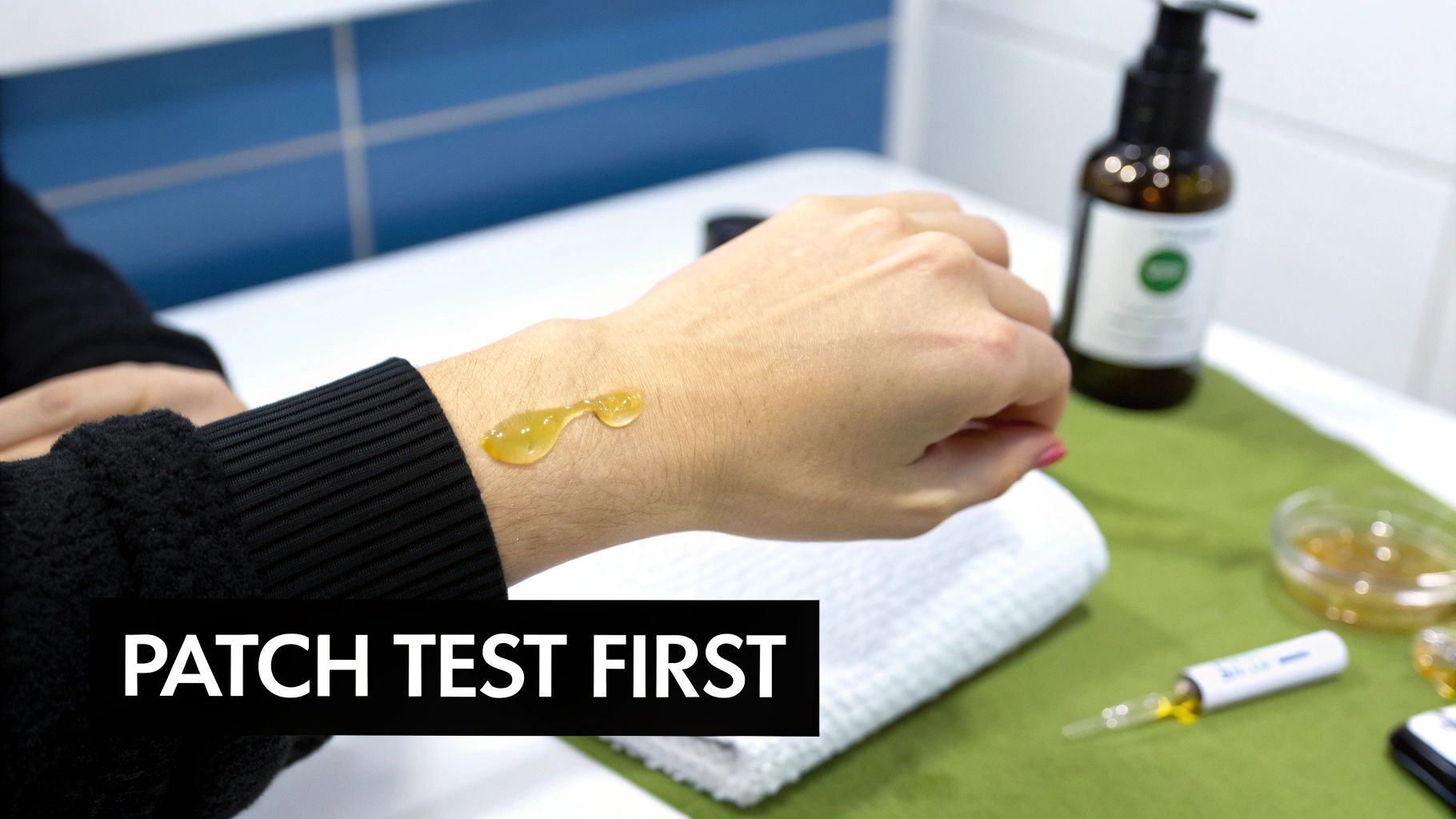
Always Start with a Patch Test
Before you even think about putting a new oil all over your face, a patch test is non-negotiable. This is your personal safety check. It’s a super simple step that helps you spot any potential irritation or allergic reactions in a small, out-of-the-way area.
Here’s the right way to do it:
- Choose a Discreet Spot: Dab a tiny amount of the oil somewhere inconspicuous, like the inside of your wrist or just behind your earlobe.
- Wait and Observe: Now, play the waiting game. Leave the oil on for a full 24 to 48 hours. Try to keep the area dry and just pay attention to what happens.
- Check for Reactions: Look for any signs of trouble—redness, itchiness, bumps, or any irritation. If you see something, wash the area immediately and don't use the oil. If your skin looks perfectly happy and calm, you’re good to go.
Less Is More: Start with Just a Few Drops
Once your patch test comes back clear, it’s time to move to your face. The golden rule here is that a little goes a very long way. You don't need to slather it on. In fact, just 2-3 drops is usually plenty for your entire face and neck.
To apply, warm the drops between your palms and gently press the oil into your skin. This "patting" or "pressing" motion is much better than rubbing, as it helps the oil absorb beautifully without tugging at your skin.
Remember, the goal is a thin, breathable layer that seals in moisture and delivers nutrients—not a heavy, greasy film. If your skin feels overly slick, you’re definitely using too much.
If you're curious about other powerful plant extracts, our guide on the benefits and uses of rosemary oil dives deeper into how to work these natural wonders into your skincare.
Finding the Right Place in Your Routine
So, where exactly does a face oil fit in? The general rule in skincare is to layer products from thinnest to thickest. Oils are occlusive, which is a fancy way of saying they create a protective barrier on your skin. Because of this, they should almost always be the final step in your nighttime routine.
Applying an oil last does two brilliant things:
- It locks in all the hydrating goodies from your serums and moisturizers, stopping them from just evaporating away.
- It forms a shield that protects your skin from environmental junk while you sleep.
For many, the right natural oil can be a total game-changer. Take a groundbreaking 1990 study that put 5% tea tree oil gel up against the standard 5% benzoyl peroxide. While tea tree took a bit longer to kick in, it eventually matched benzoyl peroxide's effectiveness—but without the harsh dryness and irritation that 44% of the peroxide users experienced. Fast forward to a 2017 clinical trial, which saw total acne lesions plummet by a massive 55% (from 23.7 to 10.7) with tea tree oil. These results are consistently supported by a large-scale review of 35 studies highlighting its power against acne bacteria. You can explore the full research behind these compelling findings.
Here’s what a simple but effective evening routine looks like with your new oil:
- Cleanse: Wash your face with a gentle cleanser to get rid of makeup, dirt, and oil.
- Treat (Optional): Apply any targeted acne treatments or serums you use, like salicylic acid or niacinamide.
- Hydrate: Follow up with a lightweight, non-comedogenic moisturizer.
- Seal: Finish by gently pressing 2-3 drops of your chosen oil onto your skin to lock it all in.
Your Simple Path to a Calmer, Clearer Complexion
Finding what works for your skin shouldn't feel like a constant battle. Forget complicated routines and harsh, stripping chemicals. The real secret to balancing acne-prone skin often lies in working with it, not against it, using simple, pure ingredients from nature.
It all comes down to a few key ideas. First, you'll want to stick with oils that have a low comedogenic rating—that's just a fancy way of saying they won't clog your pores. Second, look for oils rich in linoleic acid, an essential fatty acid that helps thin out the thick, sticky sebum that so often leads to breakouts.
This simple shift is about giving your skin what it's actually asking for. When you choose the right oils, you're not just fighting acne; you're restoring balance from the inside out.
Think of it as hitting the reset button. Instead of waging war on your skin, you’re providing the targeted nourishment it's been craving. With a little consistency and the right botanical allies—like gentle Jojoba or healing Rosehip oil—you can guide your skin back to a place of strength and clarity.
Your Questions About Oils and Acne, Answered
Diving into the world of facial oils can feel a little intimidating, especially when you're trying to get a handle on breakouts. It makes sense to be cautious. Let's tackle some of the most common questions and clear up any confusion so you can feel good about finding a balanced, happy complexion.
But My Skin Is Already Oily. Won't Face Oil Make It Worse?
This is probably the biggest myth in all of skincare, and the answer is a definite no! Using the right kind of oil won't make your skin greasier; it can actually do the opposite and bring it into balance.
Think about it: when you use harsh products that strip your skin, it panics and goes into oil-production overdrive to compensate. By giving your skin a high-quality, non-comedogenic oil like Jojoba, you're sending a signal that says, "Hey, you're hydrated and protected, you can relax now." Over time, this helps your skin calm down and regulate its own sebum production.
Okay, So How Long Until I Actually See a Difference?
When it comes to skincare, patience is everything. While you might feel your skin is softer and calmer almost right away, you'll need to give it about 4 to 6 weeks to really see significant changes.
This timeframe gives your skin cells a chance to turn over and for your oil production to truly rebalance. Stick with it! Consistency is the secret to getting those real, lasting results.
Don’t get discouraged if you don’t see a miracle overnight. Building a healthy skin barrier is a marathon, not a sprint. Gentle consistency will always win out over aggressive, short-term fixes.
Should I Put Oil on Damp or Dry Skin?
Always, always apply your facial oil to damp skin. Imagine a dry sponge versus a damp one—the damp sponge soaks up water so much more effectively, right? Your skin is no different.
Applying a few drops of oil right after cleansing, while your skin is still slightly damp, helps to trap all that wonderful moisture. This simple step not only boosts hydration but also helps the oil sink in beautifully, so you get all the benefits without any greasy feeling.
Can I Slather Castor Oil All Over My Face?
I'd advise against using castor oil as your main, all-over facial oil. Even though it has a low comedogenic rating and fantastic anti-inflammatory perks, it's incredibly thick and heavy.
Its real superpower is as a targeted spot treatment. A tiny dab directly on a pimple can work wonders to reduce redness and help it heal faster. For the rest of your face, you'll be much happier with a lighter, fast-absorbing oil like Jojoba or Argan.
Ready to find the perfect, pure oil to bring your skin back into balance? At Ella & Eden, we've curated a collection of single-ingredient, certified organic oils designed to bring clarity and calm to your complexion. Discover your ideal match and start your journey to healthier skin today. Shop our clean beauty oils at Ella & Eden.