Finding the Best Rosemary Oil for Hair Growth
When you're looking for the best rosemary oil for hair growth, it's less about the brand name on the bottle and more about a handful of non-negotiable qualities. For real results, you absolutely need an oil that is 100% pure, certified organic, and cold-pressed. This trio of traits is your ticket to ensuring maximum potency and keeping your scalp happy and safe.
What Makes Rosemary Oil a Hair Growth Powerhouse?
You’ve probably seen rosemary oil popping up all over social media, but its reputation as a hair-helper is built on a solid foundation, not just fleeting trends. It has truly earned its place as a powerful, natural option for anyone aiming for healthier, thicker-looking hair. The secret is all in how it nurtures the scalp to wake up sluggish hair follicles.
Think of your scalp like a garden. For anything to grow well, the soil needs to be rich in nutrients and get plenty of water. Rosemary oil acts in a similar way, boosting blood circulation right where you apply it. This improved blood flow is like a superhighway for delivering vital oxygen and nutrients directly to your hair follicles, creating the perfect conditions for them to thrive.
What Does the Science Say?
So, is there any hard evidence behind the hype? Absolutely. The science supporting rosemary oil is pretty compelling.
A pivotal 2015 clinical trial put it to the test, directly comparing its effects to 2% minoxidil (the active ingredient in many commercial hair growth products) over a six-month period. The results were genuinely impressive. Both groups experienced a significant increase in hair count, and there was no statistical difference between the two.
Here’s the kicker: the group using rosemary oil reported far less scalp itching, pointing to it as a gentler—yet equally effective—alternative. You can get a great breakdown of this study over on.
At its heart, rosemary oil works by getting to the root of the problem: improving scalp health to revitalize the follicles. It's not magic, but a botanical powerhouse with solid science backing it up.
To get these benefits, though, choosing the right product is everything. A high-quality oil ensures you’re getting all the potent compounds that deliver results, without any unwanted pesticides or fillers. Understanding what to look for is the first real step on your journey to stronger, healthier hair.
For a deeper dive into its amazing properties, you can explore more about the beauty of rosemary oil and its many uses.
How Rosemary Oil Revives Hair Follicles
To really get why rosemary oil has become such a big deal for hair, you have to think about what your hair needs to thrive. It all starts with the scalp. A healthy scalp is like fertile soil for a garden—without it, you can't expect strong, vibrant growth.
Rosemary oil gets to work right at the source, improving the very foundation your hair grows from. Its main superpower is boosting circulation.
When you massage it into your scalp, the oil helps wake everything up, increasing blood flow right to the hair follicles. Think of it as opening up a direct supply line, delivering a fresh rush of oxygen and nutrients to those tiny hair-producing factories. This extra nourishment can jolt dormant follicles back into their active growth phase, leading to stronger hair from the get-go.
Counteracting Hair-Thinning Hormones
For many people struggling with hair loss, particularly pattern baldness (androgenetic alopecia), a specific hormone is the main culprit: DHT (dihydrotestosterone). DHT essentially miniaturizes hair follicles. It latches on, causing them to shrink over time, which shortens the hair growth cycle until they eventually just give up.
This is where rosemary oil really shines as a natural alternative. It contains a powerful active compound called carnosic acid, which has been studied for its ability to heal tissue and nerve damage. Research suggests that this very compound helps shield the hair follicles from DHT's damaging influence.
It works by preventing DHT from binding to the receptors in your follicles. By running interference like this, rosemary oil helps keep your follicles from shrinking, making it a compelling natural option for holding onto the hair you have and encouraging new growth.
Creating a Healthier Scalp Environment
Beyond the hormonal and circulatory benefits, rosemary oil is brilliant at general scalp maintenance. A clean, balanced, and calm scalp is absolutely essential for healthy hair, and the oil’s natural properties create that perfect environment.
It tackles this in a few key ways:
- Soothing Inflammation: An irritated, inflamed scalp puts stress on hair follicles, which can easily disrupt growth. Rosemary oil’s anti-inflammatory properties help calm things down, reducing redness and creating a more peaceful environment for hair to grow.
- Fighting Off Damage: The oil is packed with antioxidants that neutralize free radicals. These are nasty little molecules from things like pollution and UV rays that can damage the cells of your hair follicles.
- Keeping Things Clean: Its antimicrobial and antifungal actions help clear out the gunk—like bacteria and fungus—that can clog follicles or cause issues like dandruff. This ensures there's nothing blocking the path to healthy hair.
By improving circulation, defending against DHT, and reducing inflammation, rosemary oil provides a multi-faceted approach to hair care. It doesn’t just mask problems—it addresses the root causes of weakened follicles, paving the way for thicker, fuller hair. This makes finding the best rosemary oil for hair growth an investment in your scalp’s long-term health.
How to Choose a High-Quality Rosemary Oil
Stepping into the world of essential oils can feel a bit overwhelming. You're faced with countless bottles, all promising amazing results. But when you’re looking for the best rosemary oil for hair growth, you can cut through the noise by focusing on a few key quality markers.
Think of it like shopping for groceries. You instinctively reach for fresh, organic produce over something processed because you know quality directly impacts the nutritional benefit. The same exact logic applies here.
Not all rosemary oils are created equal. A lower-quality oil might be stretched with cheap fillers, extracted using harsh chemicals, or sourced from plants sprayed with pesticides. These impurities don't just weaken the oil’s effectiveness—they can actually irritate your scalp, completely undermining your hair growth goals. To really nourish your follicles, you need a product that is pure, potent, and clean.
Look for 100 Percent Pure and Certified Organic
Your first checkpoint should always be the ingredient list. Look for a label that proudly states "100% pure Rosmarinus officinalis (rosemary) oil"—and nothing else. This is your guarantee that you’re getting an undiluted product without any synthetic fragrances, additives, or mystery carrier oils already mixed in. Purity ensures potency, meaning every single drop is packed with the beneficial compounds your scalp is craving.
Just as important is the certified organic seal. This certification tells you the rosemary plants were grown without synthetic pesticides or herbicides. Since you're applying this oil directly to your scalp, which is a highly absorbent part of your skin, keeping those chemicals out of the picture is essential for preventing irritation and fostering a healthy scalp environment.
Prioritize Cold-Pressed Extraction
How the oil gets out of the plant is just as important as how the plant was grown. The gold standard for extraction is cold-pressing.
Imagine the difference between fresh, cold-pressed juice and juice made from concentrate. The cold-pressing process uses mechanical pressure without any heat to gently squeeze the oil from the plant. This preserves all the delicate, heat-sensitive compounds like carnosic acid that do the heavy lifting for your hair.
Other methods, like solvent extraction, use chemicals like hexane to pull the oil out. These processes can leave behind trace chemical residues and, worse, degrade the oil’s therapeutic properties. Choosing a cold-pressed oil ensures you get the most nutrient-rich and effective product possible.
When an oil is pure, unrefined, and free from contaminants, its antioxidant and anti-inflammatory benefits are maximized. This purity ensures that every drop can effectively enhance scalp circulation and deliver bioactive compounds where they are needed most.
A recent review highlighted rosemary oil’s key benefits for pattern baldness, noting that its effectiveness is highest when the oil is free from pesticides or hexane. This is why brands that are transparent about their sourcing are so important. You can find out more about these findings on the benefits of pure rosemary oil for hair.
By focusing on these key standards—purity, organic certification, and cold-pressed extraction—you can confidently pick a high-quality product. For instance, Ella & Eden's Rosemary Oil checks all these boxes, offering a single-ingredient, certified organic, and cold-pressed formula designed for maximum effectiveness and safety. Making an informed choice is the first and most important step on your journey toward your hair growth goals.
Your Step-By-Step Rosemary Oil Application Ritual
Alright, you understand what makes a high-quality rosemary oil. Now for the fun part: putting it to work. This simple ritual is about more than just slathering oil on your head; it’s about creating a moment of scalp-stimulating self-care that encourages healthy hair growth.
The number one rule? Always dilute it. Never, ever apply pure rosemary essential oil directly to your scalp. It's far too potent and can cause some serious irritation. We'll pair it with a carrier oil to deliver all the benefits safely and effectively.
Remember, consistency beats intensity every time. Making this a regular, relaxing part of your routine is the real secret to seeing results.
The Foundation: Dilute For Safety And Success
First things first, let's mix up your treatment. Think of the carrier oil as the gentle chauffeur that safely escorts the powerful rosemary oil to your hair follicles.
- Choose Your Carrier Oil: Jojoba oil is a personal favourite because its structure is incredibly similar to your scalp's own natural oils. Argan and sweet almond oils are also fantastic, lightweight choices that won't leave you feeling greasy.
- Get the Ratio Right: A 2% dilution is the sweet spot for being both safe and effective. An easy way to measure this is to mix 3-5 drops of rosemary oil for every tablespoon of carrier oil.
- Mix Thoroughly: Just give them a good stir in a small bowl or, even better, combine them in a glass dropper bottle. This makes application a breeze and you can store any leftovers in a cool, dark spot for next time.
A quick word of advice from experience: more is not better with essential oils. Proper dilution is what allows your scalp to soak up all the goodness without any redness or sensitivity, making this a sustainable habit you can stick with.
Knowing your hair type can also help you fine-tune your blend. Some carrier oils are better suited for fine hair, while others provide the deep moisture that coarse or dry hair craves.
Rosemary Oil Dilution Ratios for Different Hair Types
This table is a handy guide to help you customize your rosemary oil treatment.
| Hair Type | Recommended Carrier Oil | Rosemary Oil to Carrier Oil Ratio |
|---|---|---|
| Fine or Oily | Jojoba or Grapeseed Oil | 3 drops per 1 tbsp carrier oil |
| Normal or Combination | Sweet Almond or Argan Oil | 4 drops per 1 tbsp carrier oil |
| Dry or Coarse | Coconut or Castor Oil | 5 drops per 1 tbsp carrier oil |
Choosing the right carrier oil ensures the treatment addresses your hair's specific needs without weighing it down or causing irritation.
Your Scalp Massage Method
With your custom blend ready to go, it’s time to apply it. This massage isn't just to help the oil absorb; it's a critical step for waking up your scalp and boosting circulation right at the roots.
- Step 1: Preparation: Start with dry or towel-dried hair. Part your hair into a few sections so you have a clear path to your scalp.
- Step 2: Application: Use a dropper or just your fingertips to apply the oil mixture directly to the skin along your parts. Pay a little extra attention to any areas where you feel your hair is thinning.
- Step 3: Massage: Using the pads of your fingers (no nails, please!), gently massage your entire scalp with small, circular motions for a good 5-10 minutes. Feel the blood flow increase. It's invigorating!
- Step 4: Absorption: Let the oil work its magic for at least 30 minutes. If you have the time and want a deeper conditioning treatment, you can leave it on for a few hours or even overnight (just protect your pillowcase!).
- Step 5: Cleansing: Hop in the shower and wash your hair thoroughly. You’ll likely need to shampoo twice to get all the oil out, which is perfectly normal.
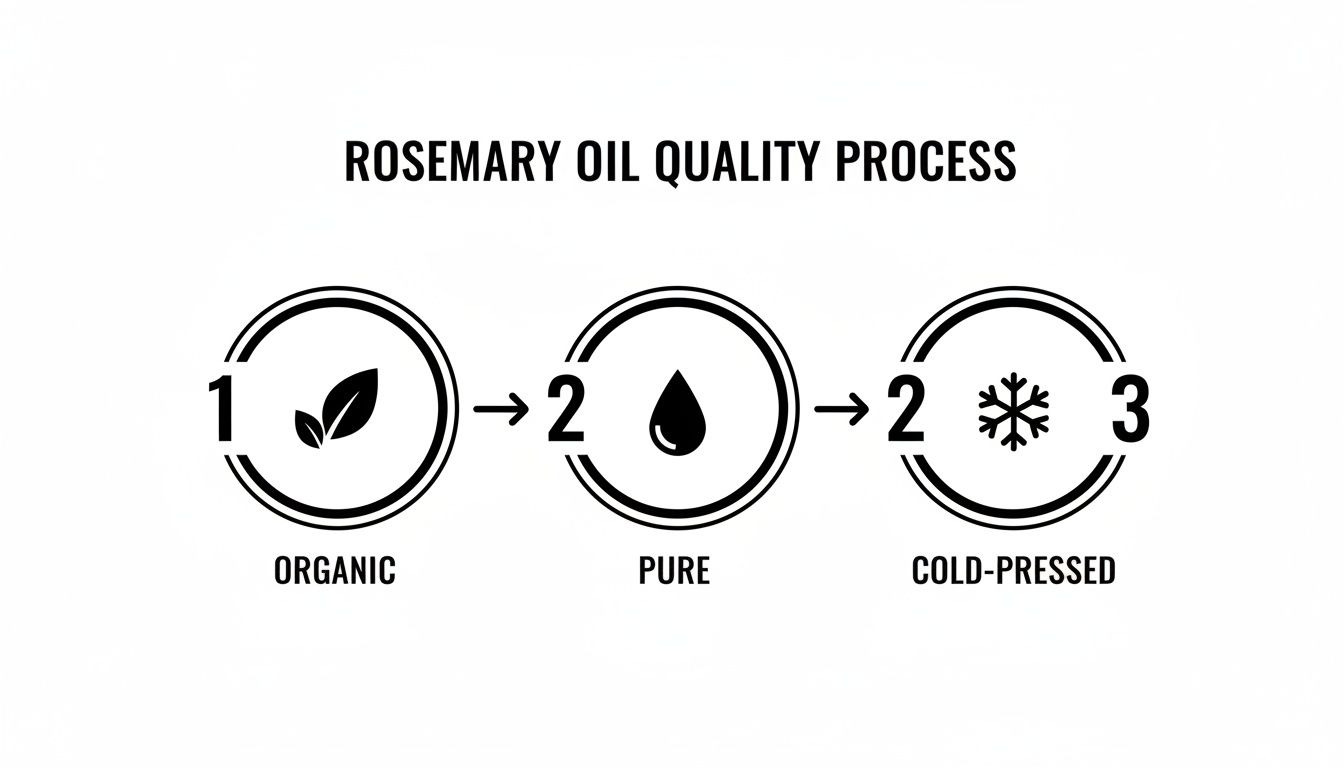
To make sure the oil you're using is top-notch, look for these three quality markers: organic, pure, and cold-pressed. This ensures you're getting a potent, clean product.
Stick with this routine 2-3 times per week. If you're looking for an expertly-blended, ready-to-use option, our own hair growth oil with rosemary, castor, and peppermint oils takes the guesswork out of it for you.
A Realistic Timeline for Hair Growth Results
When you start a new hair care ritual, it's natural to be eager for results. But let's be real: hair growth is a marathon, not a sprint. Your hair follicles run on their own schedule, and nudging them in the right direction takes time and consistency.
You won't wake up with a thicker mane overnight, and that's completely okay. I like to think of it like tending a garden. You can’t just plant a seed and expect a flower the next day. You have to water it, make sure the soil is right, and give it time to sprout. Rosemary oil works the same way—you're consistently nurturing your scalp to create the perfect environment for growth.
For most people, the most noticeable changes start to appear after three to six months of dedicated use. Don't let that timeline discourage you! It’s actually a great sign that deep, biological changes are happening right where they need to.
Spotting the Early Signs of Progress
Long before you see new baby hairs sprouting, your scalp will send you little signals that things are moving in the right direction. These early wins usually show up within the first month or two and are fantastic motivators to keep going.
Here's what to look for in the beginning:
- Less Shedding: You might start to see fewer strands in your hairbrush or circling the shower drain.
- A Happier Scalp: Many people first notice that their scalp feels less itchy, irritated, or flaky.
- Softer, Shinier Hair: As your scalp's health improves, your existing hair can start to feel softer and look more vibrant.
These are the milestones that matter. They tell you that you're building a solid foundation for new growth, so you can feel confident sticking with it for the long haul.
The journey to thicker, fuller hair is all about patience and consistency. Real progress is measured in months, not days. Celebrate the small victories along the way—they're proof that you're on the right track.
This isn't just wishful thinking; clinical data backs up this timeline. While rosemary oil isn’t an overnight miracle, its effects are real and measurable. Studies on alopecia areata have shown impressive 42-44% improvement rates in participants using rosemary oil blends, blowing past the results of control groups.
For those with androgenetic alopecia, research shows that after six months, rosemary oil delivers results on par with minoxidil, with users gaining a significant 5-6 hairs in the areas being studied. You can discover more about these findings on Elicit.com to see the science for yourself.
Got Questions About Rosemary Oil? We’ve Got Answers.
As you start exploring rosemary oil for your hair, it’s natural to have a few questions. Getting clear on the details is the best way to feel confident and get the results you’re looking for.
To help you out, we’ve tackled the most common questions we hear and even busted a few myths. Consider this your go-to guide for using rosemary oil like a pro.
Can I Use Rosemary Oil on My Hair Every Day?
It’s tempting to think that more is better, but daily use can sometimes be a bit much for the scalp, potentially causing irritation. A great starting point is 2-3 times per week. This gives you a chance to see how your scalp reacts and helps you build a routine you can actually stick with.
Remember, consistency over several months is what really drives hair growth, not how often you apply it in a single week. If your scalp is happy and shows no signs of sensitivity after a few weeks, you could try using it more often. But the golden rule is to always listen to your skin and never, ever skip diluting the oil.
Seriously, How Long Until I See a Difference?
This is the big one, and the honest answer is: patience is your best friend here. Hair growth is a slow and steady process, and there’s no magic bullet for overnight results.
Clinical studies have found that it takes about six months of consistent use for most people to see a significant increase in hair count. But don’t get discouraged! You’ll likely spot some positive changes—like less hair shedding and a healthier-feeling scalp—within the first two or three months.
The key is to stick with it. Trust the process and treat those early wins as proof that you’re on the right track.
Is This Going to Make My Hair Greasy?
When you do it right, rosemary oil shouldn’t turn your hair into an oil slick. The secret is all about how you apply it and which carrier oil you choose to pair it with.
The main trick is to focus the oil directly on your scalp and roots—where the magic happens—rather than coating all of your hair strands.
Here are a few tips to keep things grease-free:
- Pick a Light Carrier Oil: Jojoba oil is a fantastic choice because its structure is very similar to your scalp's natural oils, so it absorbs beautifully.
- A Little Goes a Long Way: You don't need to drench your head. Use a dropper to apply just a few drops along your part lines.
- Wash It Out Well: If you’re using it as a pre-shampoo treatment, make sure you shampoo thoroughly. A double-shampoo is perfectly fine and often necessary to get everything out.
If you have very fine hair, you might find that a shorter treatment time is perfect. Try leaving it on for just 30-60 minutes before washing to get all the benefits without any heavy residue.
Isn't Rosemary-Infused Oil the Same Thing?
Nope, and this is a crucial distinction. Getting the right product is the difference between seeing results and just having scented hair.
- Rosemary Essential Oil: This is the good stuff. It's a super-concentrated liquid created by steam-distilling the rosemary plant. This process extracts the potent compounds, like carnosic acid, that have been shown to support hair growth. It’s powerful and must be diluted.
- Rosemary-Infused Oil: This is simply a carrier oil (like olive or coconut) where rosemary leaves have been left to steep. It’s much, much weaker and won’t provide the same therapeutic benefits you’re looking for.
To get the kind of results seen in scientific studies, you need a pure, high-quality rosemary essential oil that you dilute yourself.
Ready to start with a rosemary oil you can count on? The Ella & Eden Rosemary Oil is 100% pure, certified organic, and cold-pressed, preserving all the potent goodness your hair needs. It's the perfect, clean foundation for your hair wellness journey. Explore our pure Rosemary Oil on our website.